

The person who stays silent when they could destroy someone with the truth is exercising a kind of power most people never develop


My friend Elena sat across from me at a restaurant last autumn, turning her wine glass slowly, and told me about the moment she almost ended a twenty-year friendship. She had the information. She had the receipts, the screenshots, the timeline that would have unravelled everything her friend’s husband had carefully constructed. Elena knew about the affair. She knew who. She knew when. She knew details that would have detonated the entire architecture of someone else’s life. And she said nothing. Not because she didn’t care, but because she understood something that took me years of meditation practice and difficult conversations to even begin grasping: that possessing the truth and deploying the truth are entirely different acts, governed by entirely different parts of who we are.
Most people believe that honesty is inherently virtuous. We’re raised on the idea that the truth shall set you free, that speaking up is always courageous, that silence equals complicity. The conventional wisdom frames restraint as weakness, as cowardice, as enabling. But that misses something fundamental about the nature of power and the psychology of self-control. The person who stays silent when they could destroy someone with the truth isn’t avoiding conflict. They’re exercising a form of discipline that operates at a level most people never access, because most people never have to choose between the satisfaction of being right and the burden of being kind.
I’ve been thinking about this distinction for months now, ever since Elena told me her story. What struck me wasn’t that she stayed silent. What struck me was how she described the physical experience of holding that silence. Her jaw ached from clenching. She couldn’t sleep for weeks. The information sat in her chest like something swallowed wrong. Restraint, it turns out, is not passive. It is an active, ongoing, bodily negotiation with your own impulse to act.
There’s a reason for that. Self-control isn’t simply about resisting temptation. It involves the capacity to override an automatic response in favour of a more considered one, and that override costs something. Research on emotion regulation suggests it depletes cognitive resources and creates internal friction. The person who bites their tongue in a moment when they could annihilate someone’s reputation, their marriage, their sense of reality, is doing something neurologically expensive. They’re choosing the harder path in a moment when the easier one would feel spectacular.
And that’s precisely why so few people manage it.
Think about how good it feels to be right. Think about the rush that comes from dropping a truth bomb in an argument, from watching someone’s false narrative crumble under the weight of what you know. That feeling has a chemical signature. Studies suggest that vindication and being right activate reward pathways in the brain. Being right, especially publicly, feels like winning. The person who refrains from that is essentially declining a neurological reward because they’ve determined the cost to someone else is too high.
I want to be careful here, because I’m not talking about emotional neglect disguised as restraint. There are people who stay silent because they’re afraid, because they’ve been conditioned to suppress, because they’ve confused peace-keeping with peace-making. That silence serves the self. It protects the person staying quiet from discomfort, from confrontation, from the messy aftermath of truth-telling. That’s avoidance. What I’m describing is something categorically different.
The silence I’m describing is chosen from a position of strength, not fear. The person has the ammunition. They’ve loaded the weapon. And they put it down. They put it down not because they can’t fire it, but because they’ve looked ahead, past the satisfaction of the moment, and seen what the blast radius would actually look like.
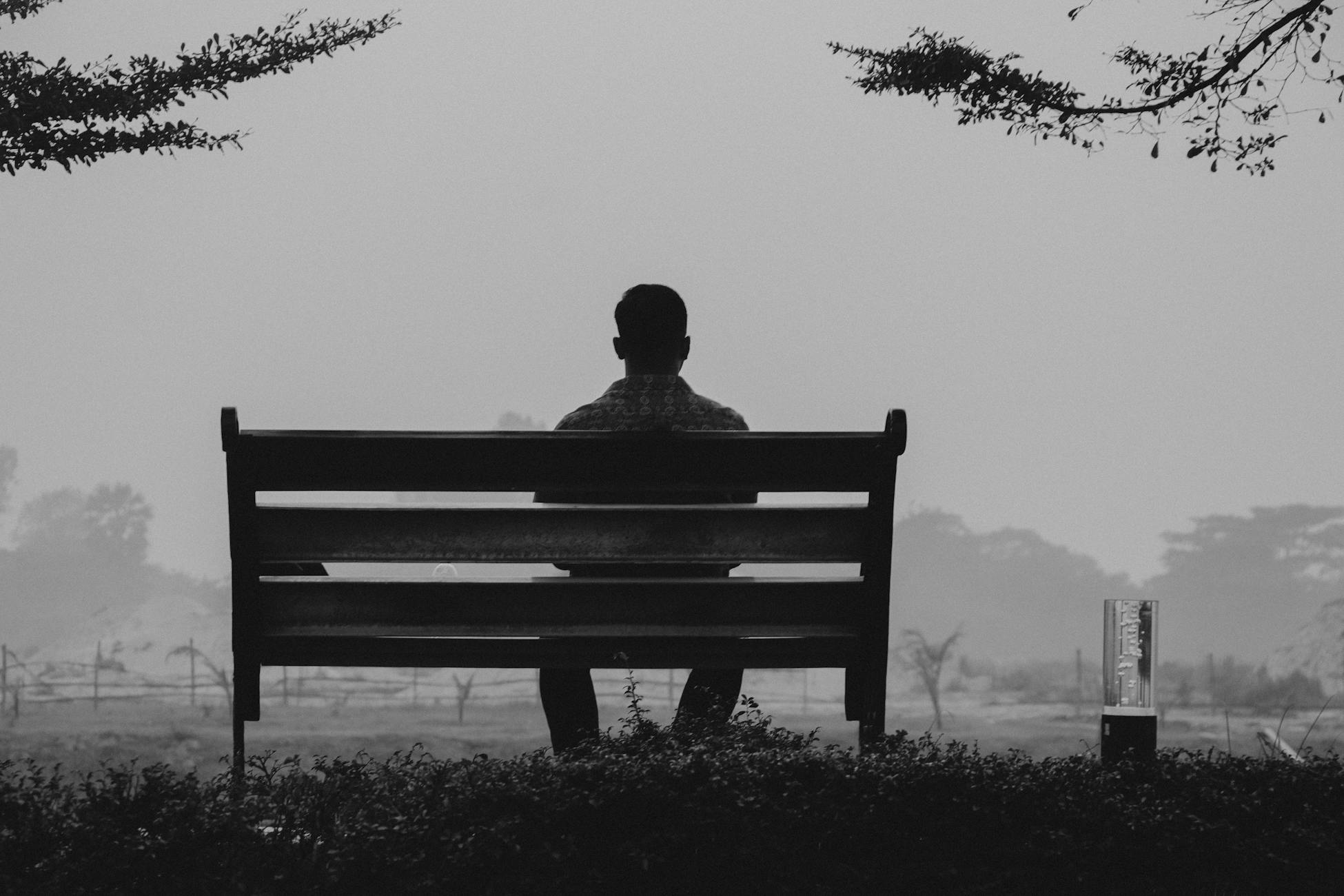
My mother modelled something adjacent to this, though I didn’t recognise it for what it was until much later. My parents’ marriage was troubled in ways that were invisible to anyone outside the house. My father was charming, the centre of every gathering. My mother was quiet, contained, precise with her words. I remember a dinner party where someone made a joke about how easy my father was to live with, how lucky my mother must be. She smiled. She said nothing. I was young, maybe twelve, and I remember thinking she simply didn’t have a response. Now I understand she had dozens. She chose none of them.
Was that always healthy? No. I’ve written before about how silence can wound when it becomes a pattern of withdrawal, when it replaces communication entirely. My mother’s restraint came at a cost to herself. She gave up painting. She stopped reading the books she loved. Her silence was layered: part discipline, part erosion. And I think that’s what makes this topic so difficult to write about cleanly. The line between powerful restraint and self-destructive suppression isn’t always visible from the outside.
But the distinction matters enormously. Suppression is silence driven by fear or habit. Restraint is silence driven by awareness. One contracts you. The other expands you, even as it hurts.
David and I had an argument a few months ago. One of those slow-burning disagreements about something logistical that became, as they always do, about something much deeper. At one point, I had a sentence ready. It was accurate. It was devastating. It would have referenced something he’d confided in me during a vulnerable moment, and it would have proved my point beyond any possibility of rebuttal. The sentence sat right behind my teeth.
I didn’t say it.
The argument resolved. We moved on. He never knew what I’d held back, and that’s part of the architecture of the whole thing. Restraint done well is invisible. The person on the receiving end never learns how close they came to being undone. And the person exercising it carries the weight of what they chose not to say, sometimes for years.
I’ve noticed that people who develop this capacity tend to share certain characteristics. They’re often individuals who have experienced the consequences of unrestrained honesty, either their own or someone else’s. They’ve watched a room change temperature when someone says the unsayable. They’ve seen families fracture over a single sentence spoken in anger. And something in those experiences taught them that truth, while valuable, is also volatile. It requires handling with the same care you’d give anything powerful enough to alter the landscape permanently.

There’s a connection here to the psychological framework distinguishing reactive behaviour from proactive behaviour. Reactive behaviour is automatic: someone provokes you, and you respond with the sharpest tool in your kit. Proactive behaviour involves a pause, a gap between stimulus and response, where intention enters. That gap is where restraint lives. And building that gap takes deliberate, sustained effort that goes far beyond mere willpower.
My meditation teacher once told me that the space between knowing something and saying it is where character is built. I thought it was poetic at the time. Now I think it’s literally true. Every time you choose not to weaponise what you know, you strengthen a particular kind of muscle. Not a moral muscle exactly, though morality is involved. More like an attentional muscle. A capacity to hold complexity without collapsing it into action.
This is different from manipulation. I need to name that clearly, because research suggests that narcissists also withhold information strategically, using silence as a tool for control, as leverage, as a way to keep others destabilised and dependent. The difference is in the direction of care. The narcissist withholds truth to serve themselves. The person I’m describing withholds truth to protect someone else, often at a cost to their own sense of vindication, their own need to be seen as right.
The cost is real. Carrying unsaid truths changes your posture toward people. You know something about them that they don’t know you know. That knowledge creates an asymmetry. It can breed distance if you’re not careful, a kind of loneliness that comes from seeing more than you can share. The emotionally intelligent person in any family or group often carries this burden. They see patterns others don’t. They hold information others couldn’t handle. And they do so quietly, often without recognition, because the very nature of their restraint makes it invisible.
Elena eventually did tell her friend about the affair. But she waited. She waited until the friendship could hold it. She waited until she could deliver the information without rage, without triumph, without I-told-you-so woven into the syllables. She waited until she could be honest and kind simultaneously, which is an almost impossible thing to do when you’ve been holding a grenade for months.
That waiting was the power. Not the telling.
I think about this in the context of our broader cultural moment, where the impulse to expose, to call out, to publicly dismantle has become almost reflexive. There is genuine value in accountability. There are truths that must be spoken, systems that must be challenged, silences that are themselves a form of violence. I am not arguing for some blanket ethic of keeping quiet. I’m arguing for discernment. For the recognition that the decision about when and how to speak the truth is just as morally significant as the decision to speak it at all.
The loneliest people in any room are often the ones who see everything and say little. They carry the awareness of what they could say, the knowledge of who is pretending, who is lying, who is performing a version of themselves that wouldn’t survive scrutiny. And they sit with that. They sit with it because they’ve learned that not every truth needs a voice, and not every moment deserves a reckoning.
Sometimes the most powerful thing you can do with the truth is nothing.
I keep returning to a line from my meditation practice, something I’ve turned over so many times it’s become smooth: the strongest people are not the ones who show strength in front of others, but the ones who win battles we know nothing about. Those battles are often internal. They’re fought in the gap between what you know and what you say. In the space between the loaded sentence and the closed mouth.
Elena told me she still thinks about the months she held that secret. She said it changed something in her. Not in a dramatic way, not a before-and-after transformation. More like a deepening. A settling into a version of herself that could hold contradictions: loyalty and anger, love and knowledge, honesty and silence. She said she felt heavier and lighter at the same time.
I understood exactly what she meant.
The power to destroy someone and the choice not to. That’s the quietest form of strength I know. And I think it’s worth talking about precisely because the people who practise it will never bring it up themselves.