

There is a particular kind of closeness that can never develop between two people when one of them is managing a secret, because intimacy requires the absence of surveillance and a secret turns every conversation into something that must be carefully navigated.

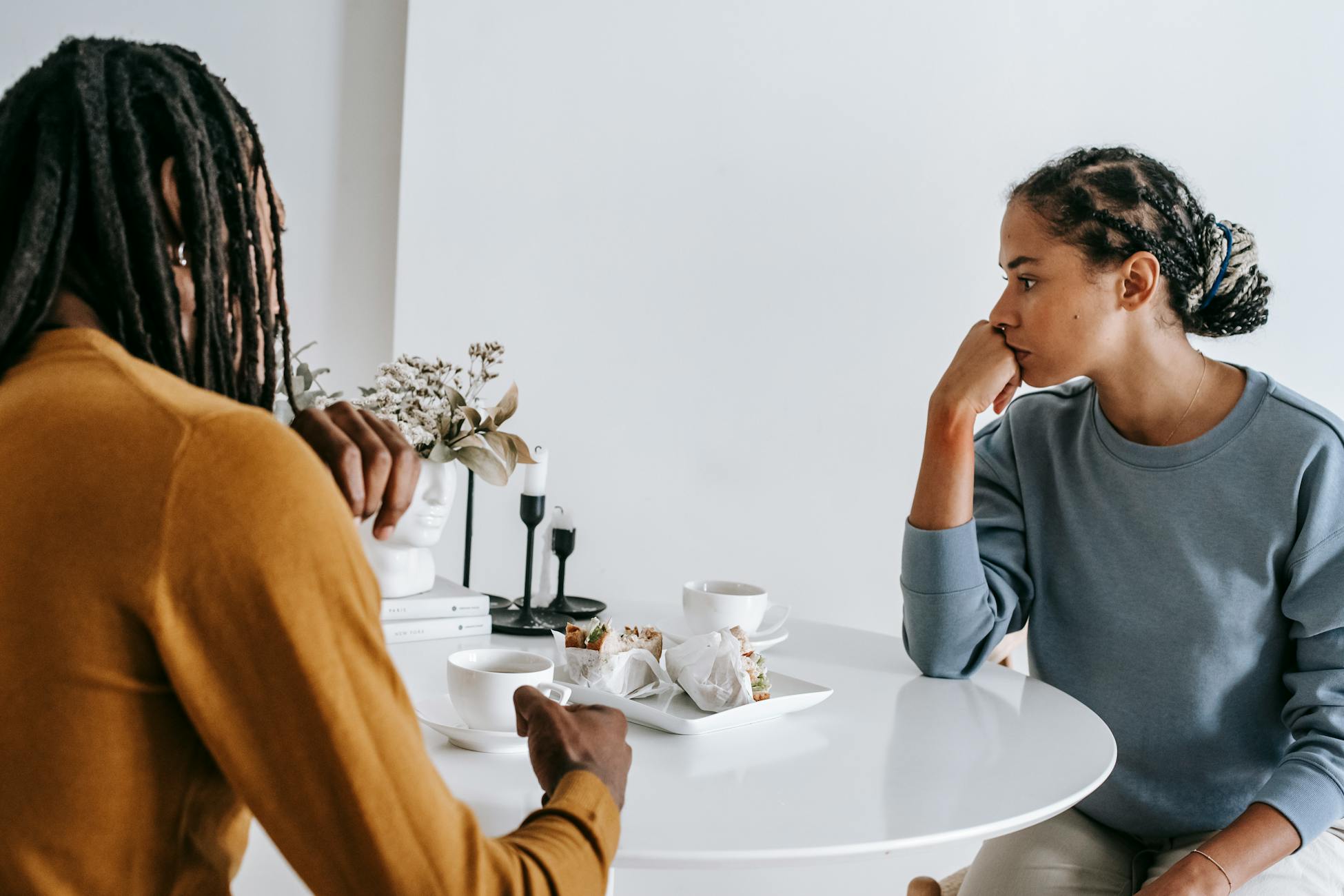
For years I thought my parents had a good marriage. They held hands at restaurants. My father told stories that made entire tables laugh. My mother smiled in all the right places. It wasn’t until I was much older, well into my own marriage with David, that I began to understand what I had actually been watching: two people performing proximity while something unspoken filled the space between them like furniture you had to keep walking around. My mother knew things she never said. My father knew she knew. And the energy required to maintain that arrangement drained both of them of the kind of ease that real closeness demands.
Most people believe that secrets damage relationships when they’re revealed. The betrayal, the shock, the sense of having been lied to. The conventional wisdom centres the moment of discovery as the point of rupture. But that misses something fundamental about what secrets actually do. The damage doesn’t begin when the secret comes out. The damage begins the moment the secret is formed, because from that point forward, every interaction between two people becomes an act of navigation rather than an act of connection.
The distinction matters enormously. A navigated conversation and a connected conversation can look identical from the outside. Both involve eye contact, responsive language, appropriate emotional cues. But the internal experience is entirely different. In a navigated conversation, one person is running a constant background calculation: What can I say here? How close can I get to this topic? Does that question mean she knows something? That calculation is a form of surveillance turned inward, and it produces the same physiological effects as being watched.
I’ve been thinking about this a great deal since writing about how research suggests that keeping secrets activates similar brain regions as physical pain. What struck me then, and what I keep returning to now, is that the heaviness people describe when carrying a secret has less to do with guilt and more to do with the constant labour of monitoring. You can’t rest inside a conversation when part of your mind is always scanning for danger. And rest, I’ve come to believe, is the precondition for intimacy.
Intimacy requires a particular kind of carelessness. I don’t mean recklessness. I mean the ability to speak without first running your words through a filter. The ability to let a pause sit without wondering what the other person is reading into it. The ability to be boring, to be incoherent, to say something half-formed and trust that the other person will hold it loosely rather than weaponise it. That carelessness is what disappears when someone in the relationship is managing a secret. Every moment of potential spontaneity becomes a moment of potential exposure.
Psychologists who study relational dynamics have observed that emotional surveillance erodes intimacy by turning emotional availability into a system of hyper-vigilance. One partner begins tracking emotional data the way an anxious nervous system tracks threats. The secret-keeper becomes both the surveilled and the surveiller: watching themselves, watching the other person’s reactions, watching for the conversational tripwire that might pull the whole thing apart.
This dual surveillance is exhausting. And the exhaustion changes the texture of the relationship in ways that are almost impossible to articulate to someone who hasn’t lived inside it. You stop lingering at the dinner table. You develop a preference for activities over conversation: films instead of walks, restaurants instead of quiet evenings at home. Anything that provides a structure around which silence becomes normal rather than suspicious.
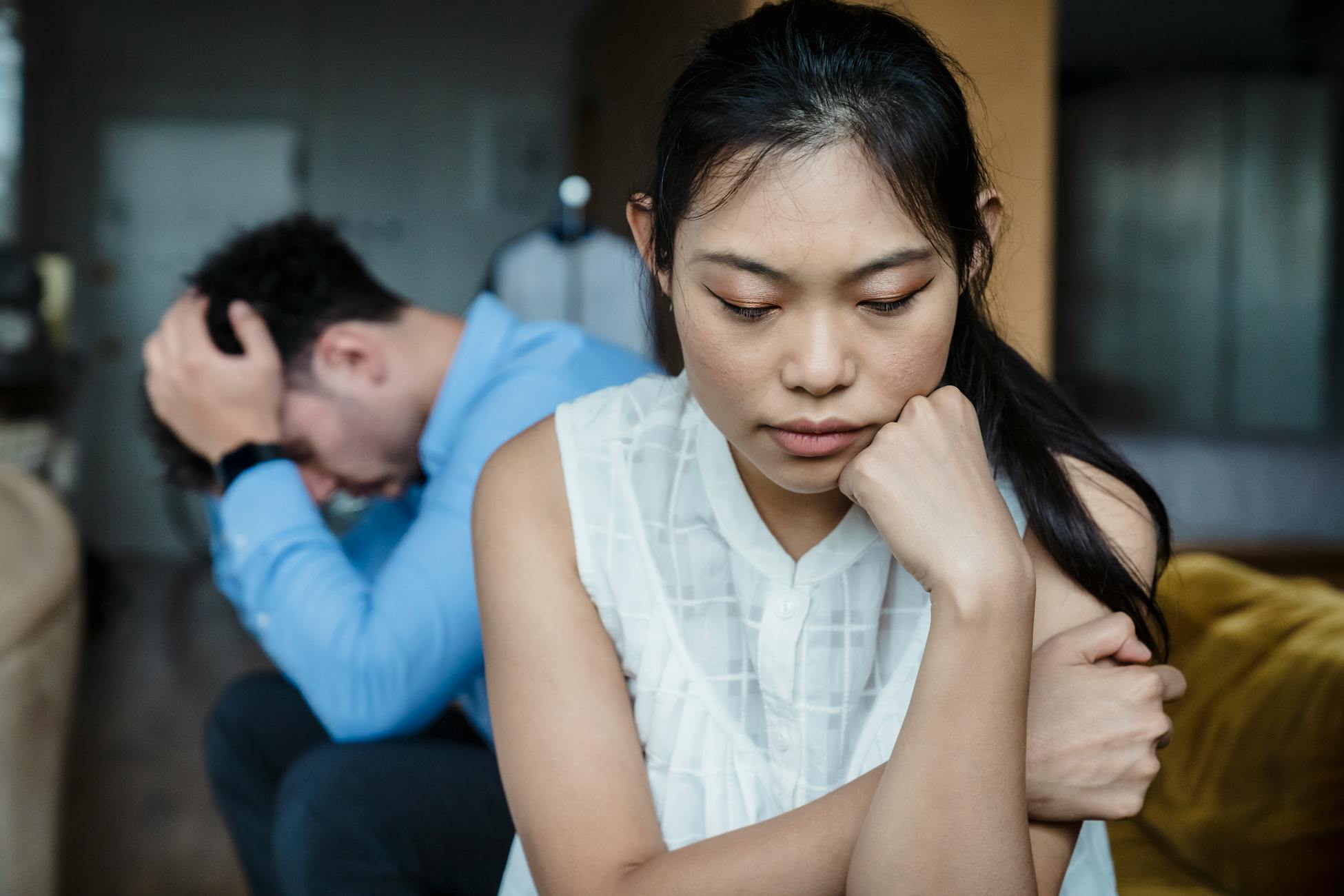
I watched my mother do this for years. She filled the house with projects. The garden. The kitchen renovation that seemed to have no end point. The volunteer work that kept her away three evenings a week. At the time I thought she was simply a woman with an extraordinary capacity for productivity. I didn’t understand that productivity was serving a specific function: it reduced the number of unstructured hours she had to spend in close proximity to my father without the conversation drifting somewhere she couldn’t control.
What I’ve come to understand is that a secret doesn’t just conceal information. It restructures the entire architecture of a relationship. The secret-keeper begins to unconsciously redesign the terms of engagement so that depth is always managed, always contained, always just shallow enough to be safe. And the other person feels this. They may not know what they’re feeling, but they feel it.
David once told me, years into our marriage, that his favourite moments with me are the ones where I say something I clearly haven’t thought through. Something unpolished. He said those moments make him feel like he’s with the real version of me rather than the considered version. I knew exactly what he meant, because I feel the same way when he does it. That unpolished quality is what secrets make impossible.
When you’re holding a secret, you become the considered version permanently. There is no unpolished moment, because every moment carries the risk of accidental honesty. The effort required to maintain this isn’t always conscious. I’ve written before about how people who grew up around family secrets often develop extraordinary abilities to read rooms, and many of them don’t recognise this hypervigilance as a learned behaviour. They think they’re simply attentive. Perceptive. Good at reading people. They don’t see that the skill was forged under conditions that required them to monitor everything, always.
The person on the other side of the secret experiences something different but equally corrosive. They feel a wall. They may describe it as distance, or as a sense that their partner is “somewhere else,” or as a vague feeling that conversations never quite land. They try harder. They ask more questions. They suggest couple’s activities. They read articles about effective communication in relationships and try the techniques. None of it works, because the problem was never communication style. The problem is that one person has turned every conversation into a minefield, and the other person keeps stepping forward without understanding why they never seem to reach solid ground.
This is where secrets differ from privacy, and the distinction deserves attention. Privacy is the right to have an interior life that belongs to you. We all have thoughts, memories, experiences that we hold separately from our partners, and this doesn’t damage intimacy. In many cases, it strengthens it. The knowledge that your partner has a rich inner world you’ll never fully access can deepen respect and curiosity. Privacy says: There are parts of me I haven’t shared with you yet. A secret says: There are parts of me I am actively preventing you from seeing.
The word “actively” is key. Privacy is passive. Secrets require labour. They require the constant recalibration of what can be said, what must be avoided, what story needs to be slightly altered to remain consistent with the version of reality you’ve constructed. That labour is what transforms a relationship from a place of refuge into a kind of job.
I think about this when I consider the specific kind of exhaustion that comes from always serving others and never yourself. Secret-keepers experience something adjacent to this. They are perpetually serving the secret. Every decision about what to say, how to say it, when to change the subject is made in service to the secret’s survival, not in service to the relationship’s growth. The relationship becomes secondary to the concealment.
And the concealment always leaks. Not as confession, necessarily, but as mood. As irritability. As the sudden, seemingly irrational anger that flares when a partner innocently asks a question that edges too close to the protected territory. The secret-keeper snaps, and neither person fully understands why. What happened is simple: the partner’s innocent question triggered the surveillance system, and the surveillance system responded with aggression because aggression creates distance, and distance is safety.
This pattern, aggression-as-distance-creation, is one of the most misunderstood dynamics in intimate relationships. The partner on the receiving end often assumes they did something wrong. They become more careful, more measured, more cautious. Now both people are navigating. Both are filtering. Both are performing a version of closeness that involves none of the actual vulnerability that closeness requires.
My meditation teacher once told me that the opposite of intimacy isn’t hostility. It’s strategy. Two people who are hostile with each other are at least being honest about their experience. Two people who are strategic with each other are building something that looks like a relationship but functions as a mutual performance. The secret is what introduces the strategy.
I noticed this in my own life during a period when I was carrying something I hadn’t told David about. The specifics don’t matter. What matters is what I noticed in myself: I started anticipating his questions before he asked them. I started rehearsing my responses. I started choosing which rooms to be in based on the likelihood of conversation. I was still in the apartment. I was still present. But I was present the way an actor is present on stage: fully committed to the performance, entirely absent from the reality.
I came across a video recently by Justin Brown about his decade with ayahuasca that examines this same tension—the way certain paths toward authenticity can create their own kind of performance, their own careful management of what gets said and what stays hidden. It’s a different context entirely, but the observation about how we curate our most supposedly unguarded moments felt uncomfortably familiar.

The moment I told him, something physical changed. My shoulders dropped. My breathing slowed. The background hum of calculation went quiet. And in the silence left behind, I could actually hear him. I could hear the question he was asking without simultaneously running it through a threat-assessment filter. The conversation became a conversation again, rather than a negotiation.
This is what people mean when they say honesty is the foundation of intimacy, but I think the usual framing misses the mechanism. Honesty doesn’t build intimacy because it transfers information. Honesty builds intimacy because it dismantles the surveillance apparatus. When there’s nothing to protect, there’s nothing to monitor. When there’s nothing to monitor, there’s nothing standing between you and the other person. You can finally be careless. You can finally be boring and half-formed and incoherent. You can finally rest.
The people who understand this most viscerally are often the ones who spent years inside relationships where rest was never available. People who stayed somewhere long past the point of diminishment because leaving would mean admitting how long they’d tolerated the distance. They know what it feels like to be technically together and fundamentally alone.
My mother eventually left my father, years after I moved out. She told me once, quietly, that the hardest part hadn’t been the secret itself. The hardest part had been pretending she didn’t know. Pretending the distance was normal. Pretending that the careful, navigated conversations they had every evening over dinner constituted a marriage.
She said something else that has stayed with me. She said that by the end, she couldn’t remember what her own voice sounded like without the filter. She’d been managing conversations for so long that she’d lost access to her unmanaged self. The secret hadn’t just separated her from my father. It had separated her from herself.
That, I think, is the final cost. A secret doesn’t just prevent closeness between two people. It prevents the secret-keeper from being close to anyone at all, because the surveillance apparatus doesn’t shut off when you leave the room. It follows you. It becomes the way you process every interaction, every relationship, every moment of potential openness. You become a person who is always slightly performing, always slightly edited, always slightly somewhere else.
The closeness that can never develop between two people when one of them is managing a secret is the closeness that requires absolute freedom from performance. The kind where you forget to be careful. The kind where silence is just silence, and a question is just a question, and neither person is scanning the other’s face for evidence of suspicion or doubt. That closeness is built on the absence of strategy. And a secret, no matter how small, is always a strategy.