

There’s a particular kind of patience that only develops after you’ve lived long enough to realize that most of the things you worried about didn’t matter. That patience is what makes certain people irreplaceable in the lives of those around them.


Patience is not a personality trait. That reframing changed how I understand nearly every relationship I’ve had in the last decade. We talk about patience as though some people are born with a longer fuse, a calmer disposition, a genetic gift for waiting. But the patience that actually matters in human relationships has almost nothing to do with temperament. It comes from accumulation. It comes from having lived long enough to look back at the landscape of your worries and realize that most of them were ghosts. That kind of patience can’t be taught at twenty-five. It has to be earned.
Most people believe patience is about self-control. That tidy narrative has almost nothing to do with how patience actually works. We’re told patient people are the ones who can white-knuckle through frustration, who count to ten, who bite their tongues. But the patience I’m describing isn’t about suppressing anything. It emerges when you’ve genuinely stopped being alarmed by things that used to send you into a spiral. You’re not gritting your teeth. You’re simply not activated by the same triggers anymore, because experience has shown you, a hundred times over, that the crisis you’re bracing for probably won’t arrive.
I spent thirty-five years in the insurance industry. The entire business model runs on anxiety about the future. What might happen. What could go wrong. I was good at my job, which meant I was professionally trained to imagine catastrophe. And I brought that habit home with me every single night.
When my daughter Sarah was applying to colleges in the mid-2000s, I was convinced that the wrong choice would ruin her life. I pushed her toward schools I thought were sensible, practical. I was controlling about it, and I’ve written before about the damage that kind of rigidity does to a family. She went where she wanted to go. She’s thirty-eight now. She’s fine. More than fine. Every catastrophe I projected onto that decision was fiction.
When my son Michael went through his divorce a few years back, I sat with him one evening in his kitchen and said nothing for almost forty minutes. He talked. He cried a little. He stared at the counter. I didn’t offer a single piece of advice. Ten years earlier, I would have been incapable of that. I would have filled the silence with solutions, reassurances, hollow promises that everything would work out. But by then I’d been through enough of my own wreckage to know that my solutions weren’t what he needed. He needed someone who could sit in the room without flinching.

That capacity to tolerate someone else’s sadness without rushing to fix it is, I think, the single most valuable thing an older person can offer a younger one. And you can’t fake it. You either have the lived experience of surviving your own pain, which teaches you that pain is survivable, or you don’t. No amount of reading about empathy will substitute for that bone-deep knowing.
I had a heart scare at fifty-eight. Nothing life-threatening, as it turned out, but for about seventy-two hours I genuinely believed I might be dying. What surprised me most, once the fear subsided, was how radically it reordered my priorities. Overnight, about sixty percent of the things I’d been worrying about simply evaporated. They didn’t matter. They had never mattered. I’d been giving my limited energy to anxieties that couldn’t survive contact with actual mortality.
Psychology has a term for this pattern. Anxiety fools us into thinking it’s protecting us, whispering that vigilance equals safety. But the data on this is consistent: the vast majority of feared outcomes never materialize, and the ones that do are rarely as devastating as the anticipation suggested. Anxiety’s trick is that it takes credit for the good outcomes. You worried about the flight, the flight was fine, and some corner of your brain concludes that the worrying helped. It didn’t.
Once you’ve seen through that trick enough times, something shifts. You stop responding to every alarm your nervous system sounds. Not because you’re suppressing the alarm, but because you’ve learned to evaluate it first. That evaluation takes time. Years. Decades, sometimes.
My friend Bob and I have been neighbors for thirty years. We disagree on nearly everything political, which used to bother me. In my forties, I’d get genuinely agitated after our conversations. I’d replay his arguments in my head and compose rebuttals while mowing the lawn. Now I just listen. I ask questions. Sometimes I change my mind about something small, and sometimes I don’t. The agitation is gone. Not because I’ve trained myself to be tolerant, but because I’ve genuinely stopped believing that Bob’s opinions pose a threat to anything. They’re just his opinions. He’s still my friend. The friendship matters more than being right, and it took me an embarrassingly long time to internalize that.
This is the patience I’m trying to describe. It isn’t noble. It isn’t a virtue you cultivate through discipline. It’s what remains after decades of unnecessary worry have been stripped away.
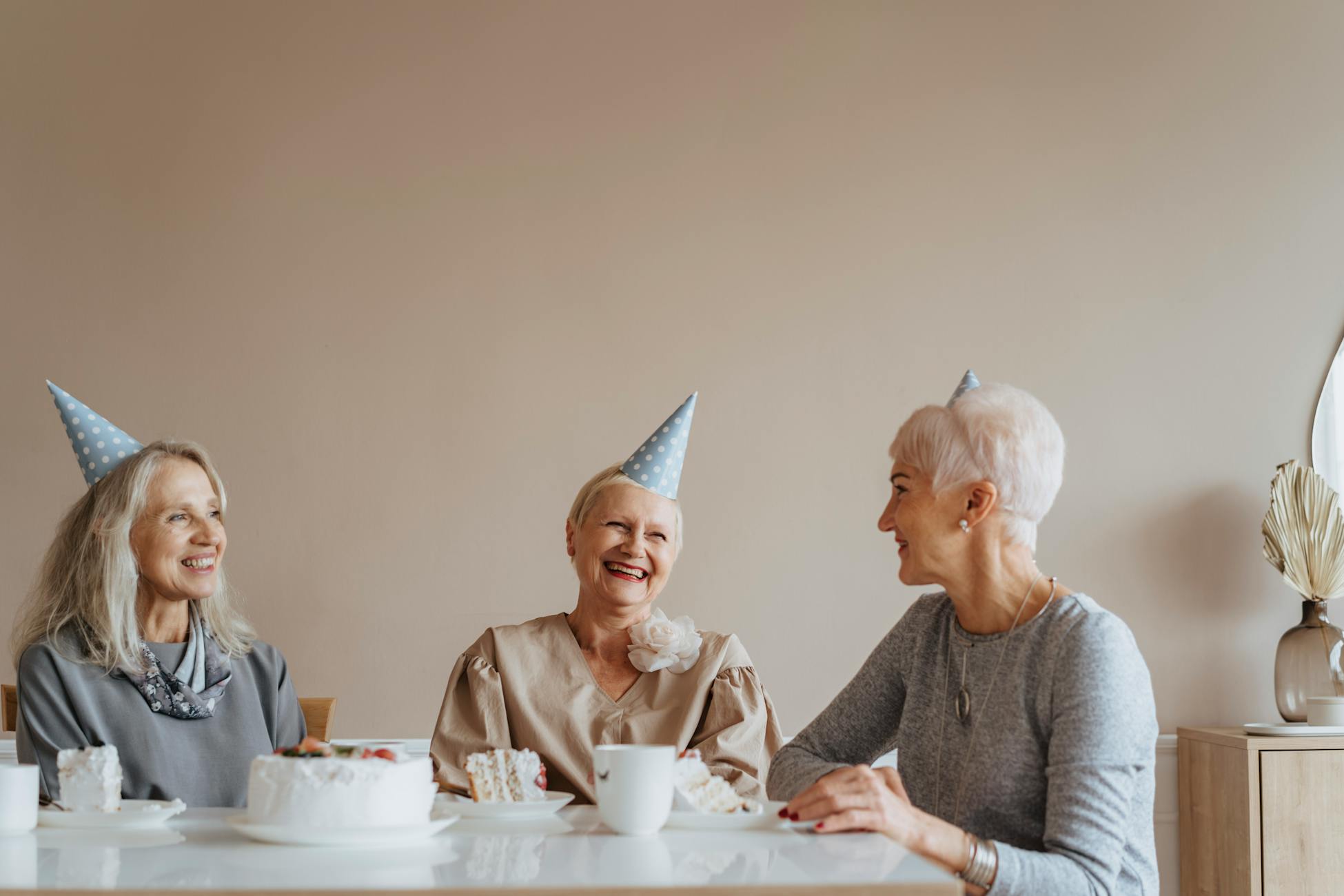
And here’s what I’ve noticed about people who have it: they become load-bearing walls in other people’s lives. My wife has it. She had it before I did, if I’m honest. When she went through breast cancer treatment in her late forties, something in her relationship with fear changed permanently. She became the person in our family who could absorb a crisis without amplifying it. Our kids started calling her first when something went wrong. Not because she had better advice, but because her presence itself was calming. She’d already faced the worst thing she could imagine and come through the other side. That gave her a steadiness that no amount of positive thinking could replicate.
I’ve written before about how the generation now entering retirement faces thirty years of unstructured time with no cultural script for filling it. One thing I didn’t explore enough in that piece is how retirement can actually deepen this kind of patience, if you let it. When you’re no longer performing competence eight hours a day, when you’re no longer managing crises for a paycheck, you have the space to notice how much of your professional urgency was manufactured. I spent decades treating every email as though someone’s life depended on my response time. Nobody’s life depended on my response time.
The patience I’m describing has a specific quality. It isn’t passive. Passive people don’t engage. Patient people engage fully but without panic. They listen without rehearsing their response. They sit with uncertainty without demanding resolution. They can hold space for someone else’s confusion without projecting their own narrative onto it.
I see this in my Thursday mornings at the diner. There’s a retired teacher named Gene who sits at the counter most weeks. Gene has buried a wife, survived prostate cancer, and raised a son with severe autism. He is, by any measure, a man who has been through it. And yet Gene is the person in that diner who everyone gravitates toward. Not because he’s cheerful. He’s not particularly cheerful. But because when you sit next to Gene and tell him something difficult, he nods and stays quiet and you can feel that he’s actually taking it in. He doesn’t rush to comfort. He doesn’t minimize. He just receives what you’re telling him. That’s the patience I mean. It has weight to it.
The psychologist John Bowlby spent decades studying how attachment patterns shape relationships across a lifetime. What his work and subsequent research suggest is that the people we feel safest with aren’t necessarily the smartest, funniest, or most accomplished people we know. They’re the ones whose nervous systems have learned to regulate under stress. We sense that regulation, even if we can’t name it. Children sense it in their parents. Spouses sense it in each other. Friends sense it across a table at a diner.
I think about my father, who worked double shifts at a factory in Ohio and never once told me he was proud of me until I was forty-three years old. He didn’t have this patience. He was steady, yes, but it was the steadiness of a man who had shut down his emotional circuitry to survive. What I’m describing is different. It requires emotional availability. You have to be present enough to absorb another person’s distress without deflecting it, and calm enough not to be overwhelmed by it. My father could endure anything, but he couldn’t witness anything. There’s a crucial difference.
I came across a video recently from Justin Brown called “7 Life Lessons I Know In My 40s I Wish I Knew Sooner” that explores this same shift in perspective—how the things that seemed urgent at thirty look almost quaint by the time you’ve got some years behind you. It’s worth your time if this idea resonates with you.

I’ve been working on this in myself for about ten years now. Meditation helps. I started at the community center on a whim and have kept at it, mostly because the effects are subtle but real. Learning to calm the mind through gratitude and stillness sounds like something you’d read on a bumper sticker, but the practice itself is harder and more useful than the language suggests. What it teaches you, slowly, is the difference between reacting and responding. Reacting is automatic. Responding requires the tiny gap that patience creates.
My youngest grandchild is deaf. She’s four. When I’m with her, communication requires a kind of patience that is both completely literal and deeply metaphorical. I learned basic sign language because I wanted to talk to her, but what I’ve actually learned is how to slow down. To wait. To let meaning arrive on its own schedule instead of demanding it at mine. Every conversation with her reminds me that the best human connections happen when you stop rushing.
I ran my first marathon three weeks ago. I’m sixty-five. The training took over a year, and the single hardest thing about it wasn’t the physical pain. It was the patience. Trusting the process when I couldn’t see results. Showing up on mornings when my body felt like concrete. Not quitting at mile eighteen when every neuron in my brain was screaming that I was too old for this. That patience came from somewhere, and I think it came from the same place all useful patience comes from: having survived enough to know that discomfort passes.
People who carry this patience become, as the title suggests, irreplaceable. Not because they do anything extraordinary. Because they’ve become a specific kind of wealth that no financial planner measures. They are the friend you call when the diagnosis comes back uncertain. The parent you visit when your marriage is shaking. The neighbor who sees you struggling with groceries and walks over without asking if you need help. They’ve stopped performing patience and simply become patient, the way a tree that’s been battered by decades of wind eventually develops the kind of root system that can hold anything.
I don’t say this to romanticize aging. Aging involves loss, confusion, chronic pain in my lower back, hearing that isn’t what it was, and a growing awareness that the road ahead is shorter than the road behind. But it also involves this gift, if you’re paying attention. The gift of having been wrong enough, scared enough, and surprised enough to finally trust that most storms pass on their own.
And that’s where I am now. Standing in the aftermath of ten thousand worries that never came true, finally useful in the way I always wanted to be. Still learning. Still figuring it out. But patient now. Actually patient. And that, I think, is worth every year it cost me.