

I inherited my father’s watch, his toolbox, and his inability to say what I actually feel — two of those things I’ve kept on display and one I’ve spent decades hiding

Most people believe you choose what to keep from your parents and what to leave behind. You sort through the estate, you divide the possessions, you take what matters and donate the rest. Clean transaction. Emotional closure. That tidy narrative has almost nothing to do with how inheritance actually works.
The conventional wisdom goes something like this: we are our own people, shaped by our own choices, and whatever our parents handed us — good or bad — we can examine it, accept it or reject it, and move on. Therapists encourage it. Self-help books build entire frameworks around it. But what I’ve found, at sixty-five years old, after decades of believing I’d escaped my father’s emotional limitations, is that the traits you can see on a shelf are the least interesting part of what gets passed down. The inheritance that matters is the one you carry in your throat every time someone asks how you’re doing and you say “fine.”
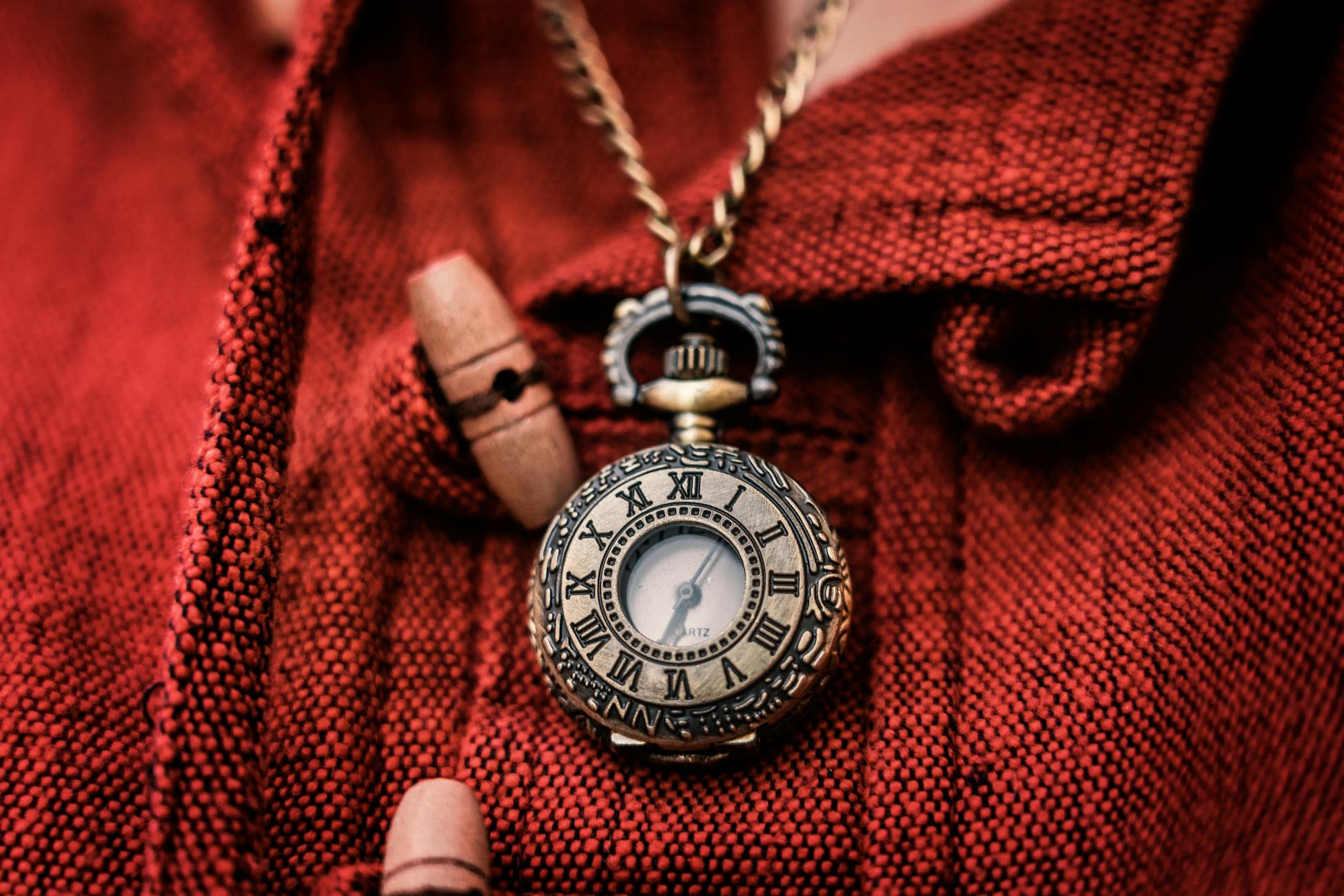
My father died with a garage full of tools. I’ve written about that garage before. But today I’m thinking about three specific things he left me: a 1972 Seiko wristwatch, a steel Craftsman toolbox with every socket organized by size, and the bone-deep conviction that a man expresses love through labor, never through language.
The watch sits on my dresser. The toolbox lives in my workshop. Both are visible. Both are things people comment on when they visit. “Oh, that’s beautiful,” they say about the watch. “Your dad really took care of his tools,” they say about the box. I nod. I tell the stories. I feel a warm, manageable sadness. These are the inheritances I understand.
The third one has no shelf. No display case. It lives in the gap between what I feel and what I manage to say, and for most of my adult life I didn’t even know it was there.
The Blueprint Nobody Hands You
My father worked double shifts at a factory in Ohio. He came home smelling like machine oil and exhaustion, and he sat in a recliner that had a permanent dip molded to his body. He wasn’t cold. I understand that now. He was depleted. He’d spent eight, ten, twelve hours being whatever the job needed him to be, and by the time he walked through our door he had nothing left to give except presence.
Presence, by the way, is underrated. He was there. Every evening. Five kids in a small house, sharing bedrooms, and he never left. But presence without expression creates a particular kind of confusion in a child. You know you’re loved because the man shows up. You also know you’ve never heard him say it in a way that didn’t sound like it was being dragged out of him with pliers.
I grew up thinking that was normal. More than normal — I thought it was strength. Emotional restraint as a form of masculinity. Keep your head down, do your work, let your actions speak. The men I knew didn’t talk about feelings. They built decks and fixed engines and coached little league and assumed that was sufficient vocabulary.
Research suggests that family relationship patterns repeat themselves not because we consciously choose them but because they’re woven into our earliest understanding of how love operates. You don’t inherit emotional avoidance the way you inherit a watch — through a will, through a deliberate handoff. You inherit it by breathing the same air for eighteen years.
Forty-Two Years of Fluency in the Wrong Language
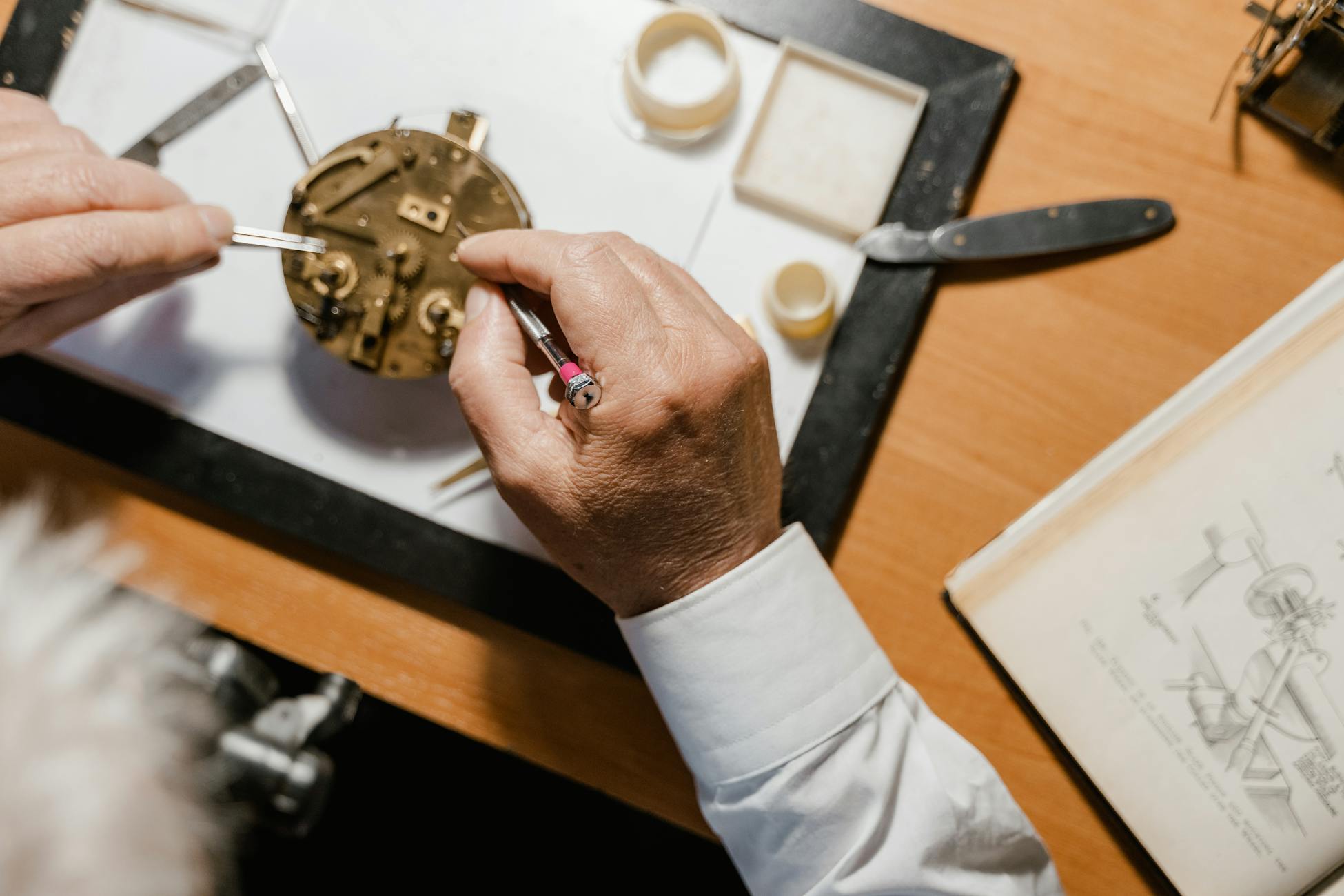
I spent forty-two years in the insurance industry. Started as a claims adjuster, worked my way into middle management, survived three corporate restructures. And in all that time, I became extraordinarily skilled at a particular kind of communication: professional distance. I could deliver bad news without flinching. I could manage a room of upset clients with calm authority. I could fire a friend — and I did, once — with composure that looked like professionalism but was actually just the family inheritance doing its work.
The office rewarded this. Steady. Reliable. Unflappable. Those were compliments in my world.
At home, the same qualities had a different name. My wife would have called it closed off, if she’d been less generous. What she actually said, during a marriage counseling session in our forties, was: “He shows up every day, but I don’t always know who’s showing up.” The counselor nodded. I sat there feeling like I’d been caught doing something wrong, except I couldn’t figure out what.
That’s the trick of inherited emotional silence. You don’t experience it as a deficit. You experience it as the floor you’re standing on. Everyone else seems to be doing something extra — all that talking, all that processing, all that vulnerability — and you’re just being normal. Being a man. Being your father’s son.
The Moment the Floor Shifted
My mother kept notebooks. I found them after she passed, tucked in a drawer she never let anyone open. Pages and pages of things she’d never said out loud: worries about money, fears about my father’s health, grief over arguments with her own sisters. An entire emotional life, documented in private, expressed to no one.
I sat on her bed reading those notebooks for three hours. And somewhere in the second hour I realized I’d been doing the same thing my entire life — just without the notebooks. Keeping the interior sealed. Performing competence. Performing happiness when something quieter and more complicated was happening underneath.
I’d inherited my mother’s silence too, it turned out. Both parents, different flavors of the same thing. My father expressed love through work and presence. My mother expressed it through managing everyone else’s emotions while ignoring her own. And I’d absorbed both patterns so thoroughly that by my fifties, I couldn’t tell you what I was actually feeling on any given day. I could tell you what needed to be done. That’s different.
My friend Bob — thirty years we’ve been playing chess on his back porch — told me something a little over two years ago that hit like a slow-moving truck. He said, “Farley, your kids don’t need another fixer. They need a father who can sit in a room and not make everything into a project.” Bob’s not a therapist. He’s a retired electrician. But sometimes the people who see you clearest are the ones who’ve been watching quietly for decades.

What My Children Actually Got
Sarah, my eldest, is thirty-eight now. A few years back she told me she’d always known I loved her but had spent most of her twenties wondering if I liked her. That sentence wrecked me for a week.
Michael, my middle child, went through a divorce and struggled with anxiety and depression. When he finally told me about it — not asked for help, just told me — I responded by researching therapists in his area and texting him a list. Useful? Probably. What he needed? Absolutely not. He needed me to say, “I’ve felt that way too.” Four words. I couldn’t do it.
Emma, my youngest, has always been the most direct of the three. She told me once that calling home sometimes felt like calling a customer service line. “You’re helpful, Dad, but you’re reading from a script.” She laughed when she said it. I laughed too. Later that night I sat in my workshop with the toolbox open, running my thumb along the socket wrench my father used to rebuild a lawnmower engine in 1978, and I thought: he would have laughed too. Deflection is another word for survival.
Studies suggest that our parents’ relational patterns predict our own in ways that go beyond simple imitation. The emotional architecture of your childhood home becomes the blueprint for how you build every relationship afterward. Not because you’re broken. Because you learned the language that was spoken, and nobody taught you that other languages existed.
Learning to Speak at Sixty-Five
I started journaling five years ago. Every evening, before bed, after my mystery novel, I sit with a notebook and write whatever comes. The first six months were grocery lists and weather observations. I am not exaggerating. I wrote about the temperature and what I’d had for lunch because I genuinely did not know how to access anything deeper on command.
Gradually, the entries shifted. I started writing about my father. About my marriage. About the specific feeling of standing in a hospital room while my wife was in surgery and realizing I was more afraid of crying in front of the nurse than I was of losing her. That realization took me three years of journaling to articulate. Three years to find words for something I’d felt in an instant.
I’ve written before about men who seem emotionally unavailable after sixty, and how many of them aren’t withholding on purpose. They’ve spent so long being the steady one that they lost access to the vocabulary for their own inner life. I wrote that piece because I was describing myself, not observing someone else.
The marriage counseling in our forties cracked the door open. Retirement at sixty-two blew it off the hinges. Suddenly there was no office to retreat to, no claims to adjust, no meetings to attend. Just me and my wife and a house full of hours. She’d known for years what I was only beginning to figure out: I’d been using work the way my father used double shifts. As a place to be competent instead of known.
Two on the Shelf, One in the Open
The watch still works. I had it serviced a few years back, and the jeweler said the movement was in remarkable condition for its age. “Somebody took care of this,” he said. My father had. Every Sunday he’d wind it, check the time against the kitchen clock, and set it back in its case. Ritual without explanation. Love without narration.
The toolbox still smells faintly of WD-40 and sawdust. I use it in my workshop now, building small furniture pieces, mostly for the grandchildren. My oldest grandson and I built a birdhouse with those tools last month. I caught myself doing the same thing my father did — handing him the right wrench without explaining why, letting the work carry the weight of connection. Then I stopped. I said, “I’m glad you’re here doing this with me.” Seven words. My father never said them. I almost didn’t.
And the third inheritance — the one I hid for decades behind competence and composure and a forty-two-year career of managing other people’s crises while ignoring my own? I’m putting that one on display now too. Not proudly, exactly. Clumsily. The way you display something you’re still learning to look at without flinching.
I told Michael last month that I understood his anxiety. That I’d had a version of it my whole career, but I’d called it “focus” and “drive” because those words were acceptable in the world I grew up in. There was a silence on the phone that lasted maybe four seconds. Then he said, “Dad, that’s the first time you’ve ever said something like that to me.” He’s thirty-six. That’s thirty-six years of silence he shouldn’t have had to wait through.
The unconscious echo of parenting patterns doesn’t stop just because you recognize it. Recognition is the beginning, not the resolution. I still default to problem-solving when my children need empathy. I still catch myself answering “How are you?” with a project update. Last Wednesday, sitting at our usual café, my wife asked me what I was thinking about and I said, “The gutters need cleaning.” She raised an eyebrow. I tried again. “I’m thinking about how much I like sitting here with you and how bad I am at saying that without being prompted.”
She reached across the table and took my hand. “That was pretty good,” she said.
Pretty good. At sixty-five, I’ll take it. My father never got there. Not because he didn’t feel it, but because nobody — not his parents, not his era, not his factory, not his five kids — ever showed him that the words were available. I have the watch. I have the tools. And I have the long, unfinished work of saying out loud what every man in my family buried under labor and silence and love that was real but permanently unspoken.
Two of those things look good on a shelf. The third one is harder to carry and impossible to put down. But I’m done hiding it in the garage.