

8 emergency skills every boomer learned by age 15 that most adults under 40 couldn’t perform today if their life depended on it

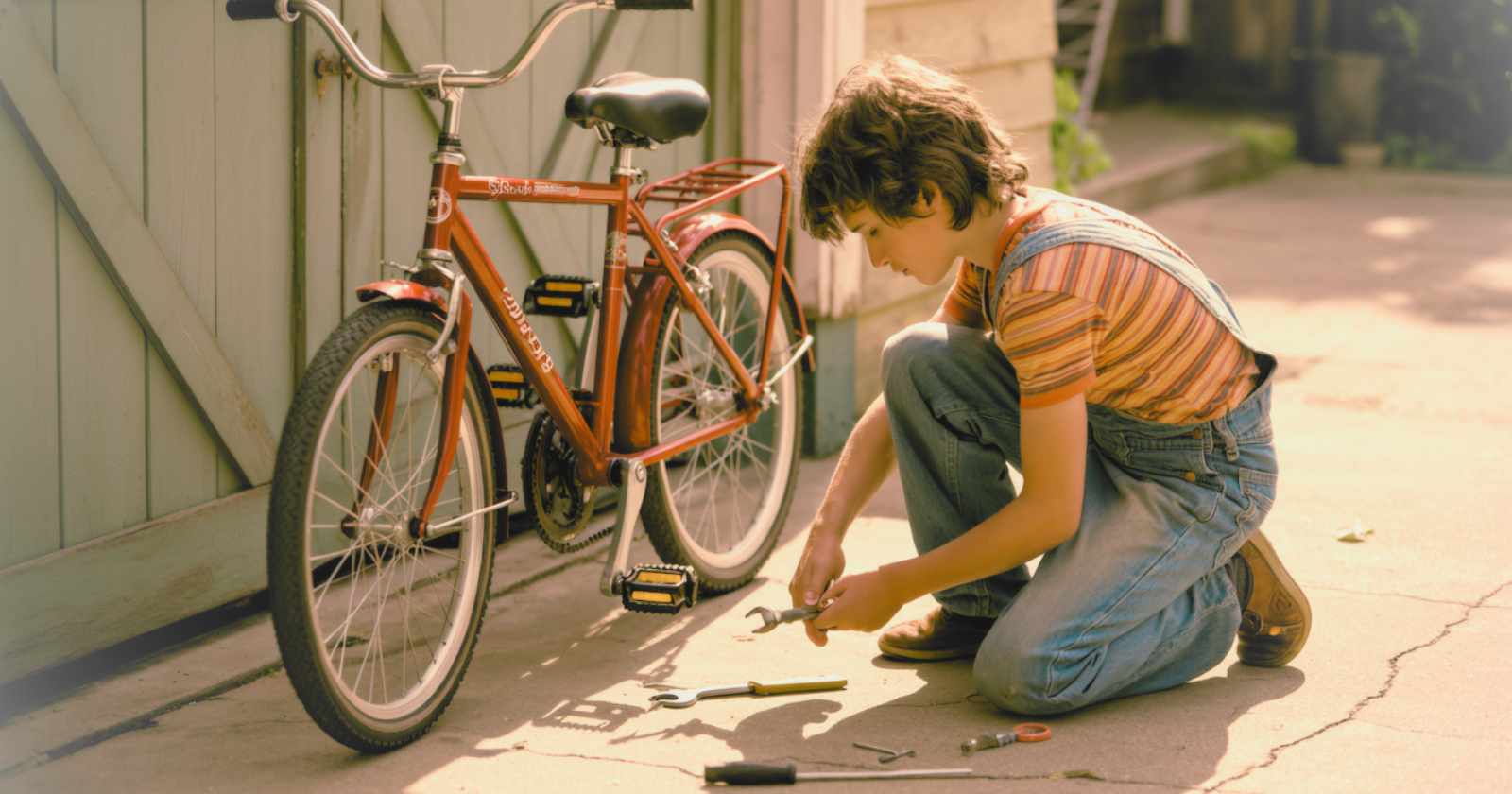
Picture this: Your car breaks down on a deserted country road. No cell service. Storm clouds gathering. The nearest town is 10 miles away. What do you do?
If you’re over 50, you probably already have three different solutions running through your head. If you’re under 40, you might be reaching for your dead phone, hoping for just one bar of signal to appear.
This isn’t about being smarter or better. It’s about a fundamental shift in how different generations were raised to handle emergencies. Growing up in the 60s and 70s meant learning survival skills not as a hobby, but as a basic requirement for getting through life.
My siblings and I learned these things because we had to. There were no YouTube tutorials, no Google searches, no calling mom from your cell when something went wrong. You either figured it out or you suffered the consequences.
1. Jump starting a dead car battery
Remember when every teenager knew the difference between positive and negative terminals? We learned this around age 14, usually in a parking lot with our dad yelling “Red to red, black to ground!” while we nervously held jumper cables for the first time.
These days, I’ve watched grown adults stare at a car battery like it’s nuclear physics. Last month, I helped a neighbor in his thirties who didn’t even know cars had batteries under the hood. He thought it was “all computerized now.” The look on his face when I pulled out my jumper cables was priceless.
The skill itself takes five minutes to learn. But without the pressure of having no other option, most people never bother. Back then, if your battery died, you either jumped it yourself or you walked home.
2. Reading a paper map and using a compass
Can you navigate without GPS? I mean really navigate, with just a folded map and maybe a compass if you’re lucky?
We used to plan entire road trips with nothing but a road atlas and a highlighter. You’d trace your route, memorize the major turns, and keep that map folded to the right section on your lap.
Getting lost meant pulling over, spreading that giant map across the steering wheel, and figuring out where you went wrong.
My kids still laugh about the time we drove to Florida in the 90s with nothing but a Rand McNally atlas. No phones, no GPS, just me squinting at tiny road names while their mother called out mile markers.
We made it just fine, and everyone learned to read a map that summer whether they wanted to or not.
3. Making a fire without matches
This wasn’t some Boy Scout merit badge for us. This was Tuesday afternoon after school when the matches were wet and you still needed to burn the trash.
We learned to use magnifying glasses, flint and steel, even the battery and gum wrapper trick. Not because we were preparing for the apocalypse, but because sometimes you just needed fire and matches weren’t available.
The patience required is what really gets lost today. Making fire from scratch means sitting there for 20 minutes, nurturing a tiny ember into a flame. No instant gratification, no quick fixes. Just you, some dry leaves, and determination.
4. Basic first aid without calling 911
When someone got hurt in 1975, you didn’t immediately call for help. You assessed, you acted, you solved. Every kid knew how to clean and dress a wound, stop bleeding with direct pressure, and recognize the signs of shock.
We carried this knowledge everywhere. Broken bones? Make a splint. Deep cut? Apply pressure and elevate. Someone choking? Heimlich maneuver, which everyone learned after it became widely known in the mid-70s.
I’ve noticed younger folks often freeze during minor medical emergencies, immediately reaching for their phones instead of taking action. The ability to stay calm and handle basic injuries has become surprisingly rare.
5. Fixing basic plumbing issues
“The toilet won’t stop running.” In my house growing up, this meant you fixed it yourself. Dad would hand you a wrench and say, “Figure it out.”
By 15, most of us could replace a toilet flapper, unclog a drain without Drano, and stop a leak with pipe tape. These weren’t specialized skills – they were Tuesday night after dinner when something broke and the hardware store was closed.
Now I watch my neighbors pay $150 for a plumber to tighten a pipe fitting. The knowledge gap isn’t complicated – it’s just that nobody had to learn when calling a professional became so easy.
6. Growing and preserving food
Every family had a garden. Not for Instagram or organic bragging rights, but because food was expensive and gardens were free after the initial setup.
We learned to can tomatoes, pickle cucumbers, and store potatoes in the cellar. You knew which vegetables grew in what season, how to save seeds for next year, and exactly when those green tomatoes would finally turn red.
This knowledge came from necessity and repetition. Every summer meant helping with the harvest, whether you liked it or not. Your hands learned the feel of ripe fruit, the smell of soil that needed water, the timing of the first frost.
7. Basic morse code or emergency signals
Three short, three long, three short. SOS. Every kid knew this, along with basic flag signals and emergency whistle patterns.
We didn’t have personal emergency beacons or satellite phones. If you were in trouble, you needed ways to signal for help that didn’t rely on technology. Mirror flashes, smoke signals, even arranging rocks in patterns – these were real skills we practiced.
The idea that you might need to communicate without words or technology seems foreign now. But these simple signals saved lives when getting lost meant really being lost.
8. Sewing and mending clothes
When your jeans ripped, you didn’t buy new ones. You patched them. When a button fell off, you sewed it back on. This wasn’t gender-specific either – everyone learned to thread a needle and make basic repairs.
By junior high, we could hem pants, patch holes, and even darn socks. Clothes were expensive and throwing something away because of a small tear was unthinkable. You fixed it, you wore it, and nobody thought twice about visible mending.
The waste I see today would have horrified our parents. Perfectly good clothes discarded for minor damage that five minutes with a needle could fix.
Final thoughts
These skills aren’t obsolete because they’re useless. They’re obsolete because we’ve built a world where they seem unnecessary. Until they’re not.
The difference between generations isn’t intelligence or capability. It’s that we grew up in a world where self-reliance wasn’t optional. When your car broke down, your pipe burst, or your power went out, you handled it yourself because that was the only choice.
Maybe we don’t all need these exact skills anymore. But the mindset behind them – the ability to stay calm, think clearly, and solve problems without immediately calling for help – that’s something worth preserving.
Because technology is wonderful until it isn’t, and knowing you can handle whatever comes your way never goes out of style.