

If animals or children are drawn to you, it’s because you carry these 7 rare qualities

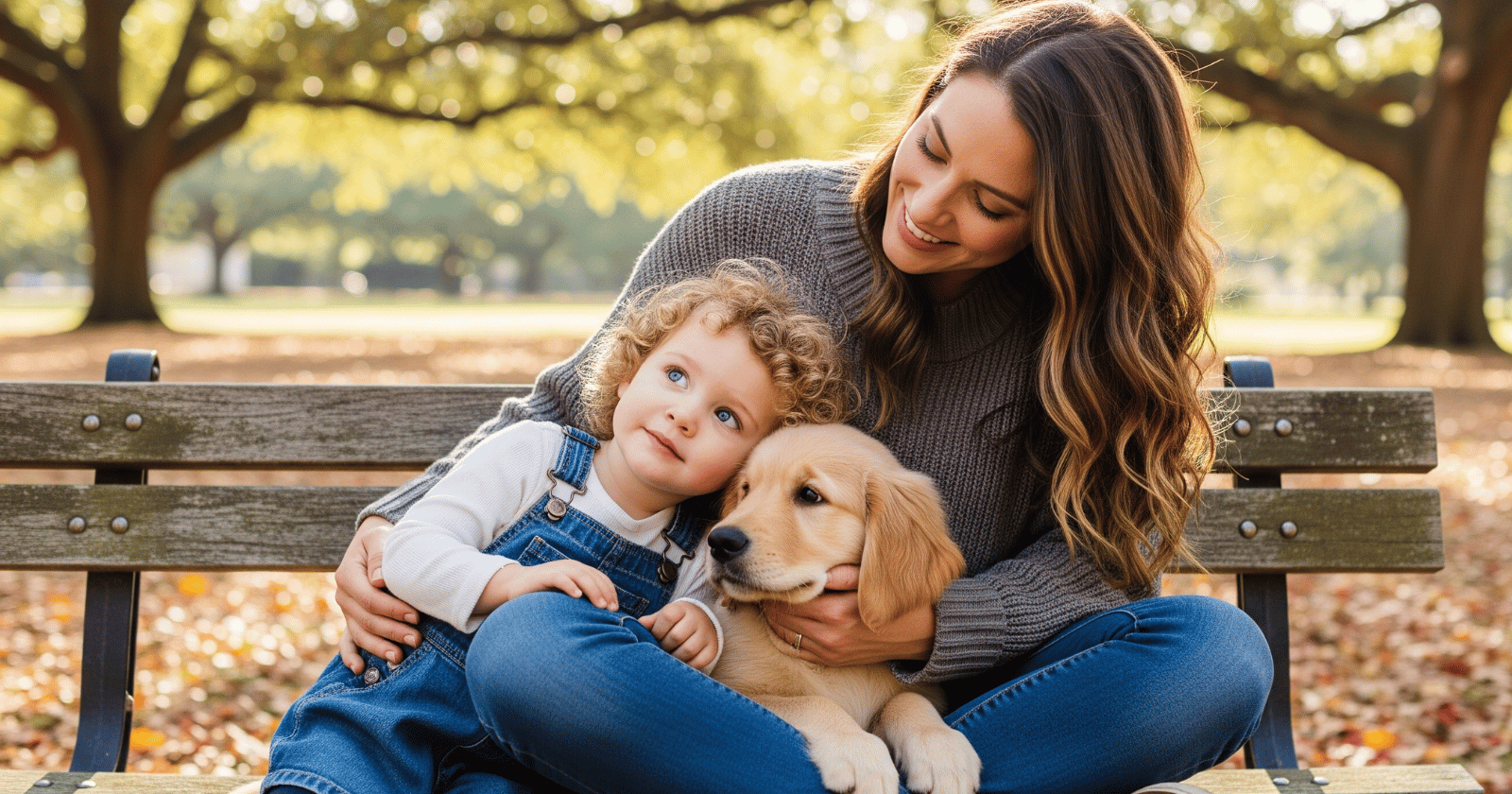
Have you ever noticed how some people can walk into a room and, almost instantly, animals or children gravitate toward them?
It’s not about the loudest laugh, the most colorful outfit, or even being particularly “kid-friendly” or “animal-loving” on the surface. There’s something deeper at play. A quiet magnetism that speaks louder than words.
As someone who has spent years working in counseling, I’ve come to believe that these subtle attractions reveal qualities that are rare—and often overlooked.
If little ones or furry companions seem to trust you right away, chances are you carry some of these seven traits.
Let’s dig in.
1. You radiate calm energy
Children and animals are incredibly sensitive to energy. They may not understand complex language, but they know how to read tone, facial expression, and body language better than most adults do.
If you’re the type who brings a sense of calm wherever you go, others pick up on it. Your breathing is steady, your movements aren’t jerky, and you don’t carry tension that makes those around you feel on edge.
I’ve noticed this often in my counseling practice. Clients who enter with nervous, rushed energy unintentionally transfer that stress into the room—kids squirm more, and even pets become restless.
But when someone walks in calm and centered, the whole atmosphere softens.
Research backs this up: a 2014 UCSF-led study found that infants whose mothers had just experienced stress showed matching increases in heart rate once reunited—indicating babies are extremely attuned to subtle emotional cues in caregivers.
Animals show similar attunement—dogs, for example, often match their owners’ stress hormones.
Calmness isn’t just a nice trait—it’s a form of leadership. And little ones or pets will always feel safer in the presence of someone who can regulate their emotions.
2. You have a nurturing presence
This isn’t about being overly affectionate or always taking on a caretaker role. Nurturing presence is subtler—it’s about the way you listen, the warmth in your eyes, and the patience in your voice.
I once had a client who told me that her nephew would always crawl into her lap, even if his own parents were nearby. Why? Because she wasn’t distracted when she interacted with him. She gave him her full attention.
Nurturing doesn’t mean doing everything for someone. It means creating space for them to feel safe while still being themselves.
Whether it’s a child struggling with frustration or a shy cat hiding under the couch, your willingness to be gentle and patient communicates volumes.
As Brene Brown has said, “Connection is why we’re here; it is what gives purpose and meaning to our lives.”
Kids and animals gravitate toward people who embody this truth naturally—those who make them feel seen and valued in the moment.
And here’s the bonus: nurturing presence doesn’t just attract children and animals. It strengthens every relationship in your life, because adults, too, long for the kind of attention that says, I care about you, right here and now.
3. You exude authenticity
Children especially have a sixth sense for spotting phoniness. They know when you’re forcing a smile, faking enthusiasm, or talking down to them.
Animals are no different—they pick up on inconsistency between your tone and your actions.
When you’re simply yourself—genuine, unpretentious, and unafraid to let your quirks show—others can relax around you. They don’t have to second-guess your intentions.
I’ve seen this with friends who work in classrooms. The teachers who try too hard to “perform” often struggle to keep students’ trust. But those who show up authentically—sharing their real interests, laughing at their own mistakes, speaking with honesty—earn kids’ respect and connection almost instantly.
Susan Cain, author of Quiet, put it beautifully: “The secret to life is to put yourself in the right lighting. For some it’s a Broadway spotlight; for others, a lamplit desk.”
Authenticity is about finding your light and letting it shine. That’s what animals and children feel drawn to—they sense there’s nothing to hide.
When you’re real, you invite others to be real too. And that authenticity is magnetic.
4. You’re empathetic without judgment
Here’s the thing: children and animals don’t always behave “perfectly.” Kids throw tantrums, dogs bark, cats scratch. Yet when someone responds with empathy instead of irritation, it changes everything.
Do you try to understand what’s behind the behavior before reacting? Do you bend down to a child’s eye level instead of towering over them? Do you offer a gentle hand to a nervous dog instead of forcing contact?
These small acts of empathy create trust. They signal, I see you, I respect you, and I’m not here to judge you. That’s magnetic.
Daniel Goleman, the psychologist who popularized emotional intelligence, once wrote, “Empathy represents the foundation skill for all the social competencies important for work.”
I’d argue it’s also the foundation skill for connection—whether with a toddler, a cat, or a colleague.
And let’s be real: empathy doesn’t mean letting people (or pets) walk all over you. It means pausing long enough to see the world through their lens before deciding how to respond. That balance of compassion and boundaries is exactly what draws others in.
5. You communicate safety through your body language
Think about the last time you met someone who immediately put you at ease. Chances are, their body language had a lot to do with it—open posture, relaxed shoulders, steady eye contact.
Animals and kids don’t analyze words the way adults do, but they are highly attuned to signals of safety or threat.
If you unconsciously communicate that you’re non-threatening, approachable, and safe to be around, they’ll naturally want to stay close.
I remember volunteering at a shelter once. Some of the dogs were shy and fearful, especially around strangers. The staff told me, “Don’t approach them head-on. Sit sideways, let them come to you.”
Sure enough, the most hesitant pup slowly made his way over when I softened my body language.
Michelle Obama once said, “People aren’t born with empathy. It’s something you learn through exposure to different cultures and experiences.”
I’d add that body language is one of the first places that empathy shows up—it speaks louder than anything else.
When your gestures say you’re safe here, others will trust that invitation.
6. You live in the present moment
One of the rarest qualities in today’s distracted world is presence. Animals and children live almost entirely in the present.
They’re not worried about tomorrow’s meeting or next week’s grocery list. And when they sense that you’re fully with them in the moment, they feel aligned with you.
I remember once babysitting my niece. The second I put my phone down and joined her in stacking blocks, her entire demeanor shifted—she laughed louder, leaned in closer, and seemed more at ease. She knew she had my full attention.
Mindfulness practices show us the same truth. A 2010 Harvard study found that people’s minds wander nearly 47% of their waking hours, and that this mind-wandering is directly tied to lower levels of happiness.
When you’re present, you not only connect more deeply, but you also feel happier yourself.
As Eckhart Tolle has said, “Realize deeply that the present moment is all you ever have. Make the Now the primary focus of your life.” Animals and kids intuitively know this truth. When they sense you do too, they’re drawn to you.
7. You carry a quiet confidence
Looking back, this one probably deserved a higher spot on the list. Anyway… quiet confidence is like a beacon for both children and animals.
It’s not arrogance or dominance—it’s the steady assurance that you’re comfortable in your own skin.
Confidence creates predictability, and predictability feels safe. When you’re not second-guessing every move, others relax around you.
Kids can climb into your lap without fear of rejection. A dog can rest at your feet without worrying you’ll shoo it away.
I often see this with parents I work with. The ones who are anxious and unsure often struggle more with discipline and connection, because their children sense the instability.
But parents who approach situations calmly and with quiet confidence—“I’ve got this, and you’re safe with me”—create stronger bonds.
As Tony Robbins puts it, “The quality of your life is in direct proportion to the amount of uncertainty you can comfortably deal with.”
Quiet confidence tells others that you can handle whatever comes up—whether it’s spilled juice or a barking pup.
And that assurance? It’s magnetic.
Final thoughts
At the end of the day, if animals or children are naturally drawn to you, it’s a compliment of the highest order.
It means you’re giving off signals of safety, authenticity, presence, and empathy—qualities that are becoming increasingly rare in a noisy, distracted world.
And here’s the beautiful part: even if you don’t feel like you carry all these traits, they can be cultivated. Practices like mindfulness, active listening, and boundary-setting can help you strengthen them.
Because ultimately, the qualities that make kids and animals trust you are the same ones that deepen your relationships with adults, strengthen your career, and enrich your daily life.
So if you find a child reaching for your hand or a cat curling up next to you without hesitation, take it as a sign. You’re carrying something special—and the world needs more of it.