

8 unspoken rules kids in the 1970s followed that would baffle today’s generation

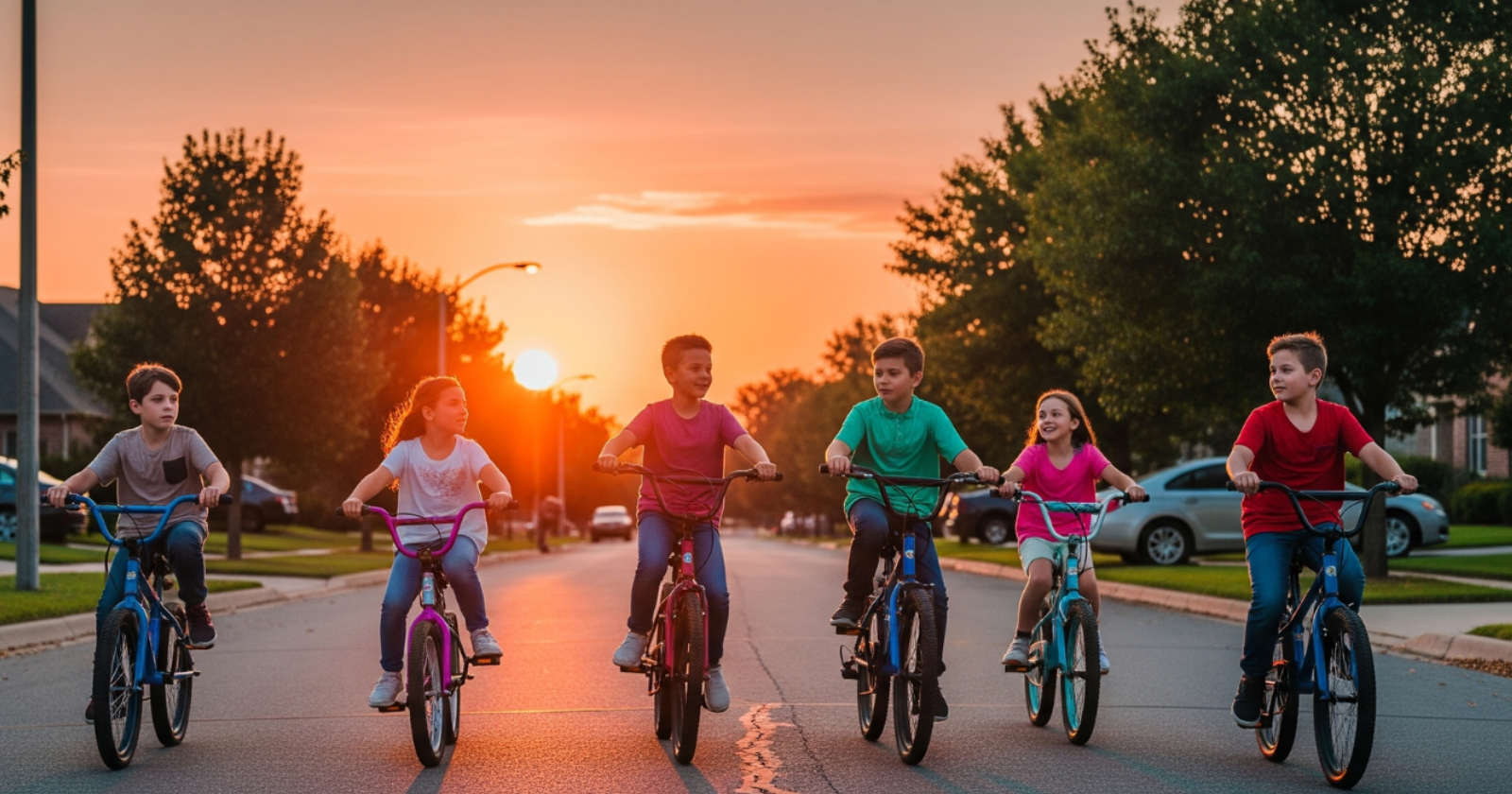
Children who grew up in the 1970s experienced a childhood that would feel almost unbelievable to today’s kids. Not better. Not worse. Just radically different.
It was a world before hyper-connectedness, before safety culture reached its peak, and long before parents tracked their children’s movements through apps and real-time location sharing. Life felt freer, rougher around the edges, and shaped by a set of unspoken rules every kid seemed to understand instinctively.
These rules weren’t written down anywhere. They weren’t discussed at school. No parent sat a child down to explain them. They emerged organically from the culture, the environment, and the kind of independence children had back then.
Here are eight unspoken rules kids in the 1970s lived by — rules that would completely baffle today’s generation.
1. You went outside after breakfast and weren’t expected home until dinner
In the 1970s, “going outside” wasn’t a specific activity. It was your entire day.
The unspoken rule was simple: if the sun was up, you belonged outdoors. Kids roamed neighborhoods, fields, forests, creeks, and parks with no supervision, no phones, and no structured itinerary.
Today’s kids have scheduled activities, GPS tracking, supervision, and constant communication. But in the ’70s, childhood meant disappearing for hours and reappearing at mealtime — dirty, hungry, and full of stories.
It wasn’t neglect. It was normal. And research suggests that kind of unstructured outdoor play created a kind of resilience and imagination many people feel nostalgic for today.
2. Whoever touched the ball last chased it — no exceptions
Every playground had this rule, even though no adult ever enforced it. The logic was sacred: if the ball went rolling down the street, the last person who touched it had to sprint after it.
It didn’t matter if you were the slowest runner, the smallest kid, or the one who always complained. A rule was a rule.
Today’s kids argue over whose turn it is. In the 1970s, there was no debate. You touched it? You chased it.
It was accountability in its purest childhood form.
3. You settled your own arguments — and most of the time, you stayed friends
Kids in the 1970s were expected to handle their own conflicts. If a fight broke out during a game, you worked it out yourselves. No parents. No teachers. No mediation.
There was an unspoken understanding that disagreements were part of childhood — not emergencies.
You could:
- call each other names
- storm off for ten minutes
- throw a ball too hard in frustration
- argue about rules
And somehow, by the end of the day, everyone was friends again.
Today, conflict is often monitored, diffused, or escalated to adults. But the ’70s taught kids that you could disagree, fight, reconcile, and move on — without turning it into a crisis.
4. If a parent yelled “You kids keep it down!” you actually listened
Neighborhood authority was universal. You didn’t need to be someone’s parent to command respect. Any adult on your street — or within 500 meters — had the right to tell you off, redirect you, or send you home.
And here’s the remarkable part: kids listened.
Not because they feared punishment, but because the social hierarchy was understood. Adults were adults. Kids were kids. That was enough.
Today’s kids often question authority, negotiate rules, or rely on their parents to intervene. But in the 1970s, being scolded by a neighbor was as normal as scraping your knees.
5. You only went inside someone’s house if their mum said it was okay
In the 1970s, no kid walked into another kid’s house uninvited. There was a protocol:
- Knock.
- Wait.
- Hope the mum said yes.
It wasn’t fear-based — it was respect-based.
Households had boundaries. Some mums didn’t want kids running through their living rooms. Others didn’t want muddy shoes. Some were fine with it, some weren’t — and everyone accepted that.
Today, kids wander in and out of each other’s homes during playdates. In the ’70s, a mum’s approval was the highest form of permission.
6. You rode in cars however you wanted — seatbelts optional
It’s almost unthinkable now, but in the 1970s, car safety looked wildly different. Kids:
- sat in the front seat
- stood up between the two front seats
- laid across the backseat during long drives
- rode in the back of station wagons with zero restraints
Seatbelts existed, but using them wasn’t an unspoken rule — not using them was.
Today’s kids wear helmets for bicycles, scooters, skateboards, and sometimes even while using rollerblades. But in the 1970s, childhood was one prolonged safety hazard — and somehow, most kids survived.
7. Being called home by your full name meant trouble, but you accepted it
Kids in the 1970s understood a universal law: if your mum yelled your full name across the street, you didn’t hide, negotiate, or complain.
You went home.
No questions. No bargaining. No arguing about fairness. You simply accepted that the day was over. There was an unspoken cultural understanding that parents didn’t micromanage your fun — but when they called, your time was up.
Contrast that with today’s kids, who often have bedtime debates, negotiations, timers, and endless explanations. In the 1970s, parental authority was unquestioned — and strangely comforting.
8. You didn’t tell your parents everything — and that was normal
Not because kids were hiding something sinister, but because children had their own separate ecosystem. The world outside was theirs, and the world inside belonged to adults.
Kids didn’t run home to report every argument, fall, or moment of boredom. Parents weren’t therapists, negotiators, or personal mediators. They were parents — and the rest children figured out themselves.
Today’s children live in a more supervised, emotionally monitored environment. But in the 1970s, independence wasn’t just encouraged — it was expected.
Psychology research supports the idea that this kind of autonomy built resilience, creativity, and social problem-solving skills that defined the generation.
Final thoughts: The ’70s weren’t perfect — but they were profoundly different
The unspoken rules of the 1970s weren’t about recklessness or neglect. They were about freedom, autonomy, and trust — things that shaped an entire generation’s personality and worldview.
Kids were allowed to:
- roam freely
- solve their own conflicts
- make mistakes
- learn from trial and error
- experience boredom
- manage their time without adult supervision
Today’s world is safer, more structured, and more informed — but also more anxious, more monitored, and more protective.
Neither era is better. They simply produced different kinds of childhoods.
But for anyone who grew up in the 1970s, these unspoken rules aren’t just memories. They’re markers of a world that feels impossibly far away — yet lives on vividly in the minds of those who experienced it.
