

The loneliest women over 60 may not be the ones who remained unmarried or moved far from family — they’re often the ones who kept people connected, remembered birthdays, hosted gatherings, and woke up realizing they had built a community where they had no role except organizer

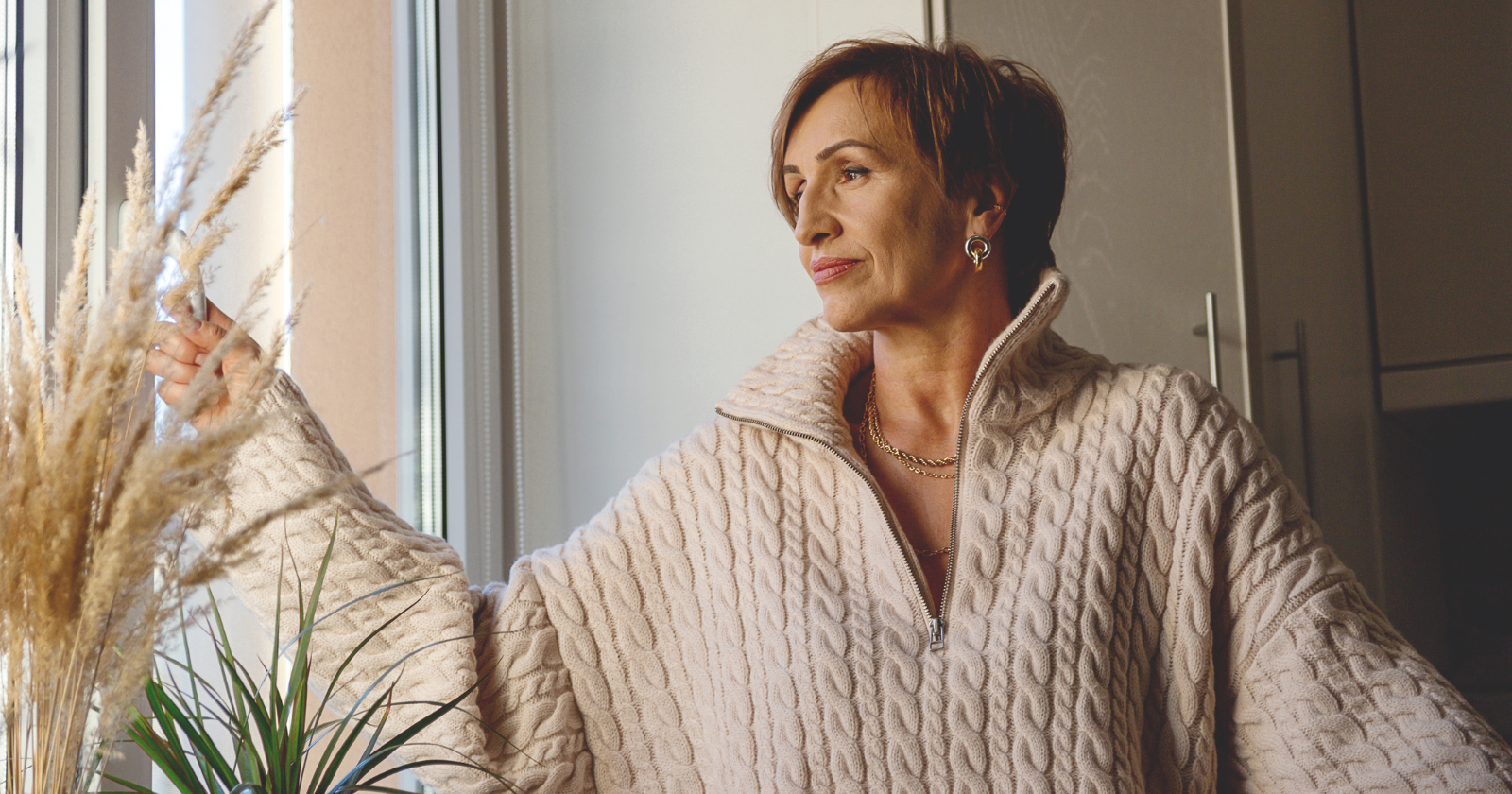
The morning the realization arrives is usually unspectacular. The woman in question, somewhere in her early sixties, is making coffee. The house is quiet because the gathering ended last night and she has finished the cleaning up. Her phone shows a long list of messages from people who came, all of them warm, several of them effusive about how perfectly she organized everything. She reads through them. She makes the coffee. She sits down. And she notices, with a precision that surprises her, that there is no one in the long list of warm messages who has ever asked her how she is, in the way people ask each other how they are when they actually want to know.
The community is real. She built it over forty years. The dozens of people she connected with, hosted, fed, remembered, and cheered through life events would, if asked, describe her as the heart of the family or the friend group or the neighborhood. They would mean it sincerely. What none of them, including her, has noticed until this morning is that the role she occupies in their lives is structurally different from the role they occupy in each other’s. They are connected to her through a single function. The function is organizer. They have never quite needed her to be anything else, and so they have never asked.
Two kinds of loneliness, only one of which is talked about
The popular conception of loneliness imagines it as the condition of the woman who never married, lives in a small apartment, and rarely sees anyone. This kind of loneliness exists. The research literature, however, has known for half a century that it is only one of two distinct types, and not the most common.
The sociologist Robert Weiss made the distinction in his foundational 1973 book on the subject. Social loneliness, in Weiss’s typology, is the absence of a wider social network. It is what people experience when they lack a circle of friends, family, and acquaintances who provide a sense of belonging and community. Emotional loneliness is something else entirely. It is the absence of one or more deep attachments, the kind of close intimate bond in which a person is fully known and fully attended to. Weiss’s central insight, which has been confirmed by decades of subsequent research, is that the two cannot substitute for each other. A wide circle of acquaintances does not relieve emotional loneliness. A single deep bond does not fully relieve social loneliness. They are different needs, served by different relationships, and they have to be addressed independently.
The kinkeeper has solved one problem comprehensively. She is, by any objective measure, surrounded by people. Her social network is enormous. She has the addresses, phone numbers, and birthday dates of dozens, sometimes hundreds, of family members and friends. By the metric most people use to assess loneliness, which is roughly how many people are in your life, she is among the least lonely women in her cohort. By Weiss’s distinction, she may still be emotionally lonely. The wide network is doing nothing to relieve the more painful kind of loneliness, because the wide network was never built to serve that function. It was built to serve everyone else’s.
The role that consumes the relationship
The reason for this asymmetry is structural rather than personal. Sociologists have a name for the work the kinkeeper has been doing. The Canadian researcher Carolyn Rosenthal coined it in 1985: kinkeeping, the labor of maintaining family connection through the management of communication, gatherings, traditions, birthdays, holidays, and the emotional caregiving that holds a kinship network together. Rosenthal’s research, and the substantial body of work that has followed it, has documented two consistent findings. The work is real, time-consuming, and essential to family cohesion. It is also, overwhelmingly, performed by women.
What the literature has been slower to articulate is what happens to a relationship when one person occupies the kinkeeper role inside it. The relationship organizes itself around the kinkeeper’s function. She becomes, to the people she connects with, the person who hosts. The person who remembers. The person who plans. Over years, the people in her network develop a relationship with her function rather than with her. They love her, often deeply, but the love takes the shape of the role. When the role is removed (when she is sick, or away, or simply tired), the relationships often turn out to have less independent life than anyone realized.
A study of three-generation families in the Journal of Intergenerational Relationships confirmed what is sometimes called the matrifocal tilt of family communication: the kinship network is organized around the woman doing the kinkeeping, and the connections between other family members often run through her rather than directly between them. She is the hub. The spokes connect to her, not to each other. When she steps back, several of the spokes do not connect at all.
Why this is so hard to see, and so hard to name
The kinkeeper rarely complains because complaining requires saying something difficult: that the people she has spent her life caring for do not, in the relevant sense, know her. They know her function. They know her efficiency. They know her warmth in its outwardly directed form. They have rarely, in forty years, asked her what she is afraid of, what she has set aside, what she would do with her time if she stopped doing what they were used to her doing.
To say this aloud is to risk sounding ungrateful. The people in her life are kind people. They love her in the way they were taught to love her, which is to receive what she gives and to express their affection back through appreciation of what she does. None of this is wrong. It is just incomplete in a particular way that becomes visible only when the kinkeeper stops moving long enough to notice.
The morning of realization, when it comes, is therefore a peculiar kind of grief. Nothing has happened. Nobody has been unkind. The community she built is intact. What has shifted is her capacity to keep ignoring the asymmetry the role created.
What is actually available
The repair, when it begins, is uncomfortable in proportion to how long the role has been performed. It involves the slow, often awkward practice of being something other than the organizer in at least a few of her relationships. Letting one person plan the dinner. Letting another person ask the first real question and waiting through the silence to answer it honestly. Stopping, once a month, the small management of someone else’s emotional life and seeing whether they notice, and what they offer back if they do.
Some of the relationships will not survive the change. They were built around the role, and without the role, there is less there than anyone wanted to admit. Some will deepen, slowly and not always reliably, into something the kinkeeper has rarely had: a relationship in which she is on the receiving end of attention rather than producing it.
The loneliness she has been carrying is not a flaw in her. It is the predictable cost of decades of performing a role that the people around her never quite stopped asking her to play. The community is real. So is the woman inside it. The remaining work of her life is, with some patience, to introduce them to each other.
