

Adults who have no close friends aren’t always antisocial — some simply find shallow connection more exhausting than time spent alone

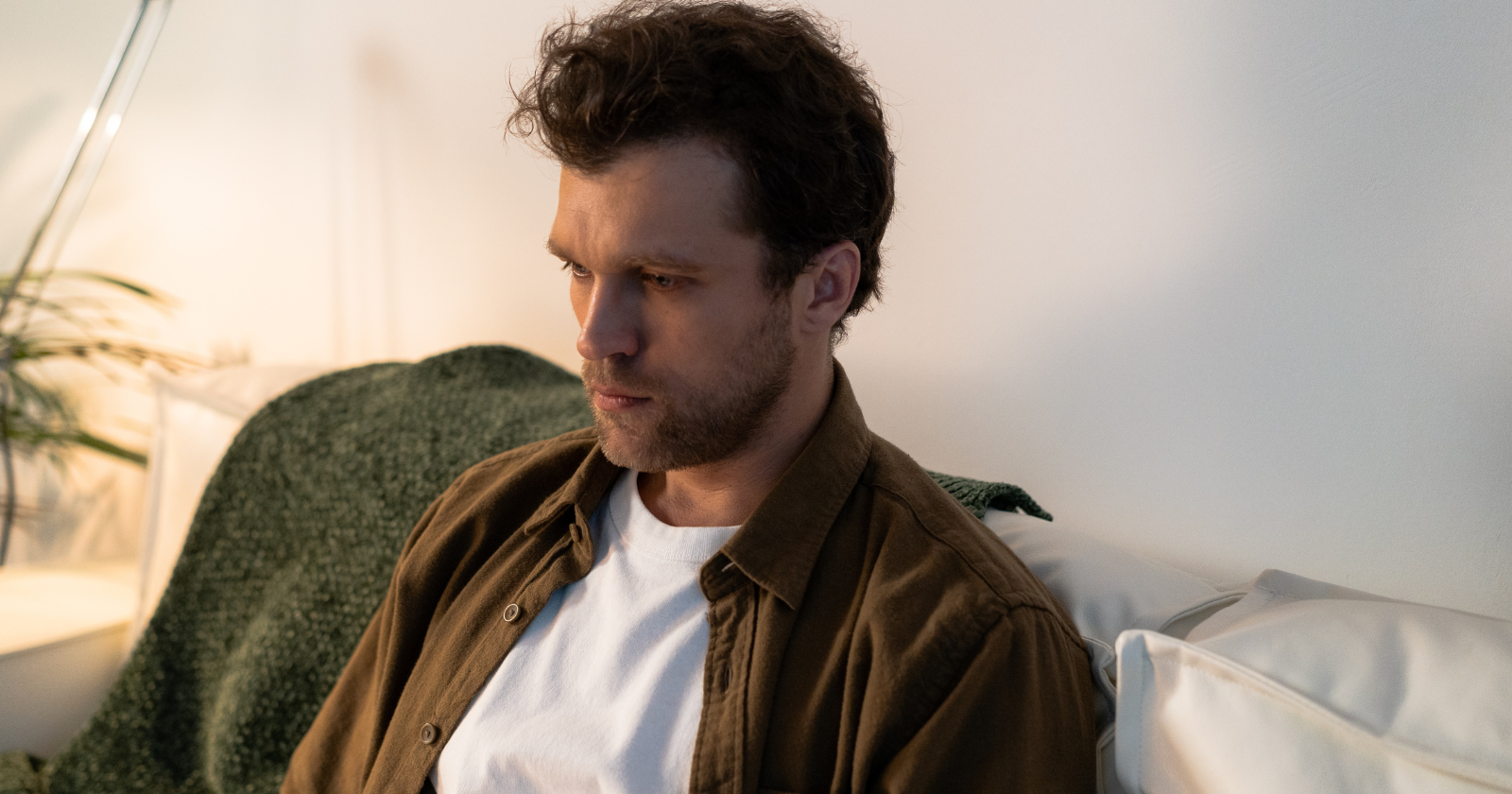
There is a particular kind of adult who reaches midlife with no close friends. By the standard cultural reading, this configuration is interpreted as a social deficit. The adult is, in the available cultural vocabulary, lonely. They are isolated. They have, in some implied way, failed to maintain the relationships that adult life is supposed to provide. The reading carries a small note of concern, and, in many cases, a quiet suggestion that the person should be making more effort to build the kind of social network the culture has decided constitutes a flourishing adult life.
The reading misses, in many cases, what is actually happening. A subset of the adults with no close friends have arrived at the configuration not through any failure of social capacity. They have arrived at it through a particular kind of calculation, repeated across years, that has produced, in their case, the conclusion that shallow connection costs more than solitude does. The calculation is not, in most cases, made explicitly. It is made through the body, across many small experiences, and it eventually settles into a practice that looks, from outside, like antisocial behavior, but that is, on close examination, something more nuanced.
What the calculation actually weighs
It is worth being precise about the calculation, because the cultural framing tends to assume that social contact is, by default, restorative for everyone. The framing imagines that the person who declines social contact is, in some sense, refusing the nourishment that contact would provide. The framing assumes, in other words, that all contact produces some net positive return on the energy expended on it.
This assumption is not, on close examination, accurate for everyone. For a subset of adults, the calculation is structurally different. Contact does not, for them, automatically produce a positive return. The return depends, very specifically, on the kind of contact. Substantive contact, with people they actually feel known by, does produce a positive return, often a substantial one. Shallow contact, with people they do not feel known by, produces, for them, a negative return. The shallow contact costs more energy than it returns.
The cost is not, in any single instance, dramatic. The shallow conversation at the office. The polite exchange at the neighborhood event. The small-talk-heavy dinner with acquaintances. None of these, on its own, is exhausting. The cost is, more accurately, the small fatigue that accumulates across an evening of shallow exchanges, plus the recovery time that the cumulative exchanges require afterward.
For most adults, the cost is offset by the benefits. The shallow contact, even when it does not produce deep nourishment, produces social maintenance, ambient connection, the small ongoing confirmation that one is a member of a community. The maintenance and the ambient connection are, for most adults, valuable enough to make the calculation come out positive.
For the subset of adults this article is describing, the calculation comes out differently. The maintenance and ambient connection are, for them, not particularly valuable. They are not particularly interested in being members of communities defined by shallow contact. The benefits, accordingly, are smaller. The costs, accordingly, are not offset. The net result, evening after evening, is that shallow contact produces depletion. Solitude, by contrast, produces, if not nourishment, at least the absence of depletion. Solitude is, for this person, the less expensive option.
Repeated across years, the calculation produces the configuration this article is describing: an adult who has, somewhere along the way, stopped pursuing the shallow contact that most adults pursue by default, because the contact has been costing them more than it has been providing.
Why this is not antisocial in any clinical sense
The cultural classification of this person as antisocial is, on examination, a mismatch with what is actually going on. Antisocial behavior, in the clinical sense, involves a particular disregard for social norms and other people’s wellbeing. The person described here is not, in most cases, exhibiting any such disregard. They are warm to the people they interact with. They are kind. They are, in any individual encounter, indistinguishable from any other socially competent adult.
What they are not doing is voluntarily seeking out additional encounters of the shallow type beyond what their professional and practical lives require. The not-seeking-out is, in their internal experience, a perfectly sensible response to the calculation they have been running. The calculation, for them, has produced a clear answer. The cultural register, not having access to the calculation, classifies the not-seeking-out as a problem to be solved.
The misclassification has consequences. The person, classified as antisocial, is often subjected to various forms of well-meaning intervention by family members and friends who have read the situation through the cultural lens. The interventions usually involve being invited to more social events, being introduced to potential new friends, being encouraged to put themselves out there. The interventions, from the cultural vantage point, are gestures of care.
From the person’s vantage point, the interventions often feel like requests that they accept additional units of the very thing they have determined is costing them more than it is providing. The interventions, accordingly, are usually declined. The declining is interpreted, by the intervening party, as further confirmation that the person needs help with their social life. The cycle continues, with both parties operating in good faith and with neither understanding what the other is actually responding to.
What the person is, on close examination, doing
What the person described in this article is doing, on close examination, is a particular kind of energy management that the cultural environment does not particularly recognize as legitimate. They are reserving their social energy for the contexts in which the energy will be returned at a profit. They are declining the contexts in which the energy will be lost at a deficit. The reservation is, in some real way, a form of self-care that the contemporary register has not given a name to.
The reservation produces, in their actual life, a particular configuration. They have, in most cases, a small number of relationships in which substantive contact does occur. The relationships might be with a sibling, a long-time friend who lives at some distance, a partner, a former colleague who has, over time, become a close confidant. The number of these relationships is, in most cases, small. The depth of them, however, is often considerably greater than the depth available in the more extensive but shallower networks that other adults maintain.
What they have, alongside these substantive relationships, is a great deal of solitude. The solitude is not, in their experience, the absence of contact that the cultural framing imagines it to be. It is, more accurately, the protected condition in which they can do the various things that they actually find restorative. The reading. The walking. The thinking. The various activities that the shallow social life would have prevented them from doing as much of, had they continued to pursue it.
The combination of these two—a small number of substantive relationships plus substantial protected solitude—is, for the person operating with this calibration, the optimal configuration. It is the configuration that produces, in their actual lived experience, the highest net return on the energy they have available to spend. The configuration is, in some real way, a successful adaptation to the calculation their nervous system has been running for years.
Why the cultural framing keeps missing this
The cultural framing keeps misreading this configuration for a structural reason. The framing is calibrated to the modal adult, whose calculation produces a different answer. The modal adult finds shallow contact net positive, and the absence of it accordingly depletes them. The cultural framing has built its model of what flourishing adult social life looks like around this modal experience.
The model does not, on close examination, fit everyone. The minority for whom the calculation produces a different answer is, in the cultural model, treated as a deviation from the norm rather than as a population whose calibration is simply different. The treatment is not, in most cases, malicious. It is, more accurately, the natural consequence of a cultural model that assumes the modal experience is universal.
The person operating with the minority calibration is, accordingly, often subjected to a particular kind of social pressure that is, structurally, calibrated to a problem they do not have. The pressure is to be more social, to make more friends, to participate more actively in the kind of shallow contact that the cultural model treats as essential. The pressure is, for them, exhausting in a way that is hard to articulate, because articulating it requires explaining the calculation that the cultural model has agreed not to recognize as legitimate.
The result is that many of these adults learn, over time, to perform the cultural model in selected contexts while privately maintaining their actual configuration. They show up at the family events. They attend the necessary professional functions. They produce the appropriate small talk. They return to their solitude afterward and recover. The performance is a cost they have learned to absorb. The actual life they are living, however, is calibrated to the configuration this article has described.
The acknowledgment this article wants to leave
The honest acknowledgment is that some adults find shallow contact more exhausting than solitude, and that this is not, in itself, a sign of any social pathology. It is, more accurately, a sign of a particular calibration that the cultural environment does not yet have good language for.
The adults operating with this calibration are not, in most cases, lonely in the way the cultural register imagines them to be. They are not refusing connection. They are, more accurately, declining the form of connection that, by their internal accounting, does not produce a net positive return, and reserving their available energy for the smaller number of relationships in which it does.
This configuration may, by external metrics, look like a thin social life. It is, on closer inspection, a particular allocation of social energy that the person has, over years, found to be optimal for their actual functioning. The allocation does not need to be corrected. The allocation needs, more modestly, to be recognized as one of several legitimate ways adults can organize their social lives.
For the adults operating with this calibration, the most useful thing the wider culture could offer is, in some real way, the absence of the well-meaning pressure to perform a different calibration. The absence would allow them to organize their lives around what actually works for them, rather than around what the cultural model has decided should work for everyone.
The configuration is not, in any clinical sense, antisocial. It is, more accurately, the visible result of a particular kind of energy economics that the contemporary register has not yet learned to read. The reading, when it eventually arrives, will, on examination, classify these adults not as social failures but as people whose calibration is simply different. The classification is, on the evidence, overdue.
