

I’m 38 and I love my dog the way I imagine some people love their children — completely, daily, without strategy — and the part nobody tells you is that this kind of love is allowed to exist without being lesser, even though everyone you grew up with will quietly assume it’s a placeholder for the love they think you’re missing

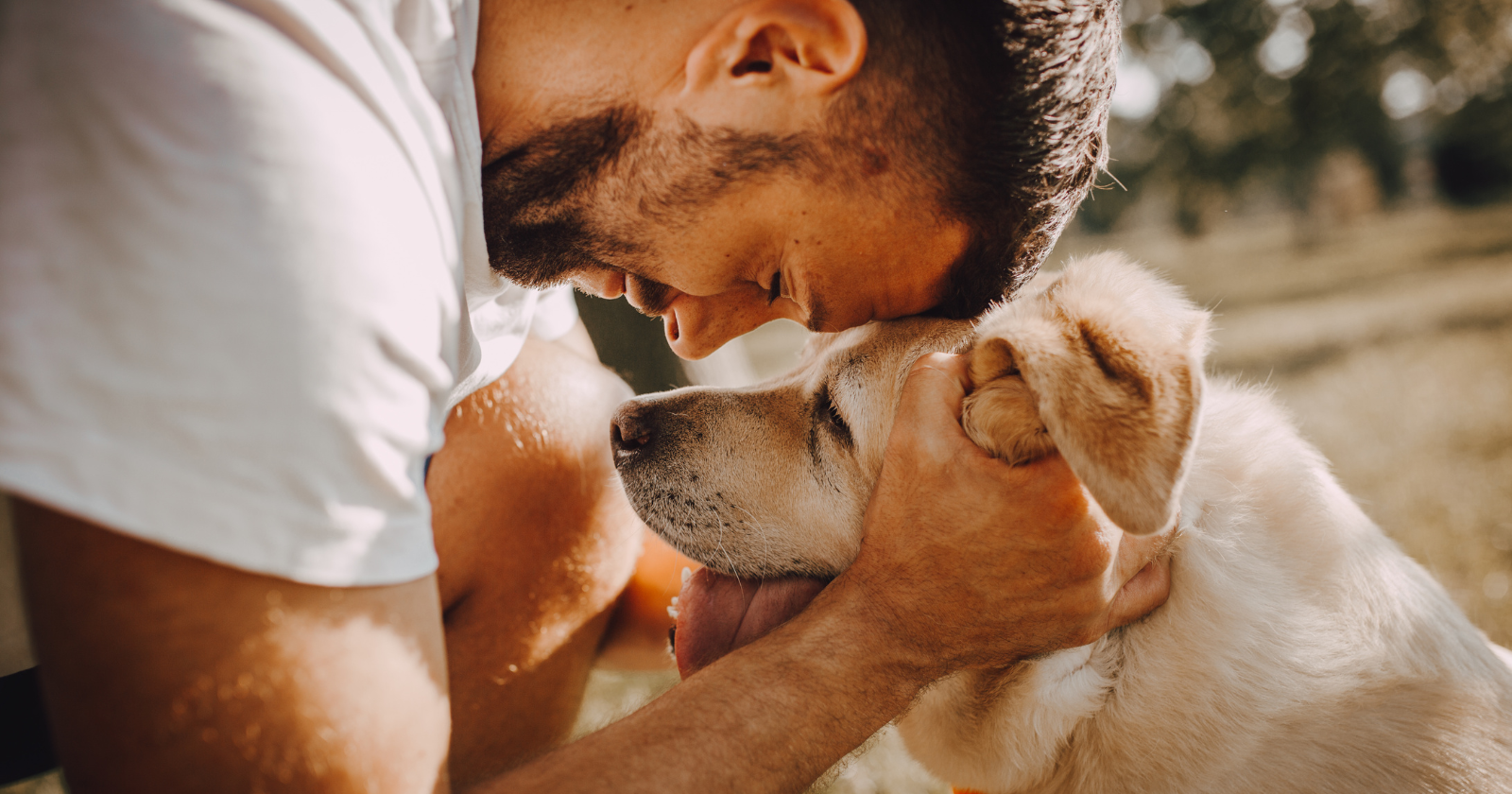
I want to write about my dog. Specifically, about a particular feeling I have for him that I’ve spent a long time trying to find the right language for, because every existing piece of language for it sounds either too small or too big.
His name is Tao. He’s a mid-sized brown mongrel I picked up from a shelter in Bangkok five years ago, when the shelter was about to close for the day and I was about to leave without taking anyone home. He was the dog who didn’t perform for me. The other dogs had jumped at the bars. He had stayed at the back of his run, watching me with what I now recognize as a kind of cautious assessment but at the time read as indifference. The shelter worker said, “He’s been here a long time. He doesn’t really like people much.” I said I’d take him. I’m not sure why. I just knew, in some way I didn’t bother to interrogate at the time, that I was going to take that dog home with me.
That was five years ago. Tao now follows me from room to room. He sleeps on my bed. When I cry, which I do occasionally, he comes over and pushes his face against my hand. When I’m working at the desk, he lies under it with his head on my foot. When I leave the apartment for any length of time, he, by my returning observation, sits at the window the entire time I’m gone, watching the street where my taxi disappeared.
I love this dog. I love him in a way that, when I try to describe it to people who don’t have dogs, sounds embarrassing. I love him in a way that I’ve come to understand is not lesser than other forms of love, even though almost everyone I grew up with quietly assumes that it is.
The placeholder assumption
I want to talk about the assumption, because I think it’s the thing that doesn’t get named clearly enough.
When you tell people in your late thirties that you have a dog and don’t have children, they will, almost without exception, do something with their face. The face is hard to describe but easy to recognize. It’s a small softening. A slight tilt of the head. The kind of look you give someone who is, in your assessment, making the best of a difficult situation.
The look comes with an assumption, which is rarely articulated but which I have, over five years of receiving this look, learned to read accurately. The assumption is that the dog is a placeholder. The dog is the thing you have because you don’t have the thing they have. The dog is a kind of training device, or a substitute, or a temporary fix, for the absence of the love you would, presumably, prefer to be giving to a child.
The look is kind. The people delivering it mean well. They are not trying to insult my dog or my life. They are working from a deeply embedded cultural assumption, which is that there is a hierarchy of love, with romantic and parental love at the top, and other forms of love—friendship, animal love, the love of work—arranged in descending order beneath them. In their hierarchy, what I have with Tao is, structurally, on a lower rung than what they have with their children. Not because they’ve thought about it. Because the hierarchy was installed in all of us long before we had reason to question it.
I want to question it. Not because I think they’re wrong about their own love. I’m sure their love for their children is real and large and important. I want to question it because I think they’re wrong about mine.
What loving Tao is actually like
I’m going to try to describe, as plainly as I can, what loving this dog actually involves, because I think the description will do more than any argument could.
Loving Tao involves thinking about him every time I leave the house. Whether he’s been fed. Whether he’s been walked enough. Whether he’s going to be okay alone for the next two hours, or four, or six. The thinking is not a chore. It’s just present. It runs in the background of my day in a way I imagine parental thinking runs in the background of a parent’s day. I don’t know where the dog is at any given second, but I know roughly what state he’s in, and I am tracking that state, gently, all the time.
It involves, when I come home, a particular ritual that has not, in five years, lost any of its sweetness. He hears my key in the door. He produces a small noise that is somewhere between a yelp and a song. He is at the door before I’ve opened it. When I come in, he does not jump up on me, because he has, over time, learned that I prefer he doesn’t, but he does perform a kind of full-body wag that suggests his entire skeleton has gone briefly liquid. We have, every time I come home, a thirty-second reunion, and the reunion is, after five years, still one of the most reliable sources of joy in my life.
It involves caring for him when he’s sick. Two years ago, he had something wrong with his back legs, and for about three weeks I had to lift him up and down off furniture and carry him outside for his walks. The carrying was, in the strict physical sense, hard. He’s not a light dog. What surprised me, in those three weeks, was how little I resented the work. I would have carried him every day for the rest of his life if it had come to it. I think most parents would say something similar about caring for a sick child. The mechanism, in my body, did not feel different from what I imagine that mechanism feels like.
It involves grief I’m already, slowly, carrying. He’s seven now. Maybe eight—the shelter wasn’t sure when I got him. Most dogs of his size live to about twelve or thirteen. I have, in the most unsentimental possible terms, somewhere between five and six more years with him, if we’re lucky. I am aware of this every day. I am aware of it when I look at him. I am aware of it when he climbs onto the bed at night. The awareness is its own form of love, and it is its own form of preemptive grief, and the two are completely entangled in a way that I think anyone who has ever loved any mortal thing will recognize.
This is, I’d argue, what love looks like. Not a special form of it. Not a lesser form of it. Just love. The fact that the recipient is a four-legged animal does not, as far as I can tell, change any of the essential features of the experience.
Why people assume otherwise
I want to be honest about why people assume what I have with Tao is lesser, because the assumption isn’t, exactly, malicious. It comes from somewhere.
The first place it comes from is a real difference. Children grow up. Dogs don’t. A child is a person you raise, who eventually becomes a fully formed human, who continues your work in the world, who carries you forward in some way after you’re gone. A dog doesn’t do any of that. A dog is, in the most unsentimental possible terms, a sweet animal who lives with you for a decade or so and then dies. The relationship doesn’t compound the way a parent-child relationship can. There is no version of Tao who, at twenty-five, calls me to ask my advice about his career.
This is a real difference. I don’t want to deny it. The two relationships are, structurally, not the same.
The second place it comes from is, I think, a kind of moral hierarchy that doesn’t quite hold up under examination. We have, as a culture, decided that the love that produces more humans is more important than other kinds of love, because the production of more humans is, in some Darwinian sense, the point of being alive. Love that doesn’t produce humans is, in this view, a kind of evolutionary side quest. Pleasant, but not the main game.
I find this view, when I examine it, less convincing than I used to. The evolutionary point of being alive is not, I’m increasingly sure, the same as the experiential point of being alive. From the inside, what matters about love is what love feels like, and what it does to the person doing the loving, and what it does to the one being loved. The evolutionary frame is, on this account, a description of one specific function of love, but love does many things, and producing more humans is only one of them. The love I have for Tao is doing other things. It’s making me a kinder person. It’s giving me a daily reason to be home at a reasonable hour. It’s giving an old shelter dog the best possible last stretch of his life. These are not lesser things. They’re just different things.
The third place the assumption comes from, and this is the one I find hardest to argue with, is that loving a dog can sometimes be a form of avoidance. Some people who love their dogs the way I love mine are, in some sense, hiding from the harder forms of love that involve other adult humans. They’ve found a relationship that gives them love without the messiness of a partner or the demands of a child. I want to be honest that this is a real phenomenon. There are people whose dog love is, at least partially, a refuge from the harder loves they’re afraid to undertake.
I don’t think this is what’s happening with me, but I’m aware that the people delivering the kind look in social settings can’t tell the difference, and they can’t be expected to. The assumption that a man my age with a dog and no kids is hiding from something is, statistically, often correct. I just don’t think it’s correct in my case, and I have spent enough time examining the question to be reasonably confident in that answer.
What I’d say if I had the chance
If I could speak to the people who give me the kind look, I’d say something like this.
What I have with Tao is not a placeholder. It’s not a stepping stone. It’s not a smaller version of love that I’m settling for because the larger version isn’t available. It’s a complete, sufficient relationship, on its own terms, that I have chosen and that I value at full price.
I am not waiting for it to be replaced by something better. I am not, when I look at him, secretly thinking about the child I would prefer to be looking at. I am, when I look at him, looking at him. Fully. With the full measure of what my heart is capable of in the direction of another being.
The fact that he is a dog rather than a child does not make the love I have for him a lesser thing. It just makes it a different thing. Love, in my experience, doesn’t really obey the hierarchy we’ve assigned it. It is, most of the time, just love, pointed at whichever creature is in front of you, doing what love does.
And there’s something else. I’m aware that the assumption that dog love is lesser than child love is partly enforced by the fact that we, the people doing the dog loving, often don’t say out loud what we actually feel. We make small jokes about it. We use the diminutive language. We say “fur baby” with a kind of self-mocking eye-roll, because saying it without irony would be embarrassing. The cultural script for dog ownership is to slightly diminish the love you have for the dog, presumably so as not to claim too much, presumably so as not to compare yourself to the people doing the harder work of raising children.
I’m not going to do that anymore. I love my dog. I love him completely. I love him daily. I love him without strategy. The fact that he can’t, at twenty-five, call me for advice about his career doesn’t change any of this. He is, for the time he’s here, the recipient of one of the larger loves of my adult life, and I don’t intend to apologize for that, or to dress it up in self-deprecating language, or to allow the cultural hierarchy of love to demote it.
What I’d say to anyone reading who recognizes this
If you have a dog and you love your dog the way I love mine, and you have, in social settings, found yourself slightly diminishing the love because it didn’t seem appropriate to claim too much—you’re allowed to stop. The love is real. It doesn’t need to be qualified. It doesn’t need to be presented as a placeholder. It doesn’t need to be apologized for in the presence of people whose love is socially recognized as more legitimate than yours.
The hierarchy is not, I’m increasingly convinced, real. It’s a cultural inheritance. You’re allowed to opt out of it.
What you have with your dog, if you have what I have with mine, is one of the genuine loves of your life. Treat it like that. Allow yourself to feel it at full volume. Don’t let other people’s assumptions about it diminish, in your own internal reckoning, what it actually is.
Tao is, as I write this, asleep on my left foot. He has been there for about an hour. The foot is going slightly numb. I am not going to move it. He will wake up eventually, and stretch, and look at me with the particular expression he reserves for the moment of waking up, and I will, as I always do, feel the small uncomplicated joy of being, for one more day, a person with a dog who loves him.
That’s not lesser than anything. That’s just, in its full measure, what it is.