

I moved to a slower city after thirty years in a fast one and people kept asking when I was moving back — I stopped answering because I realized their discomfort was never about me

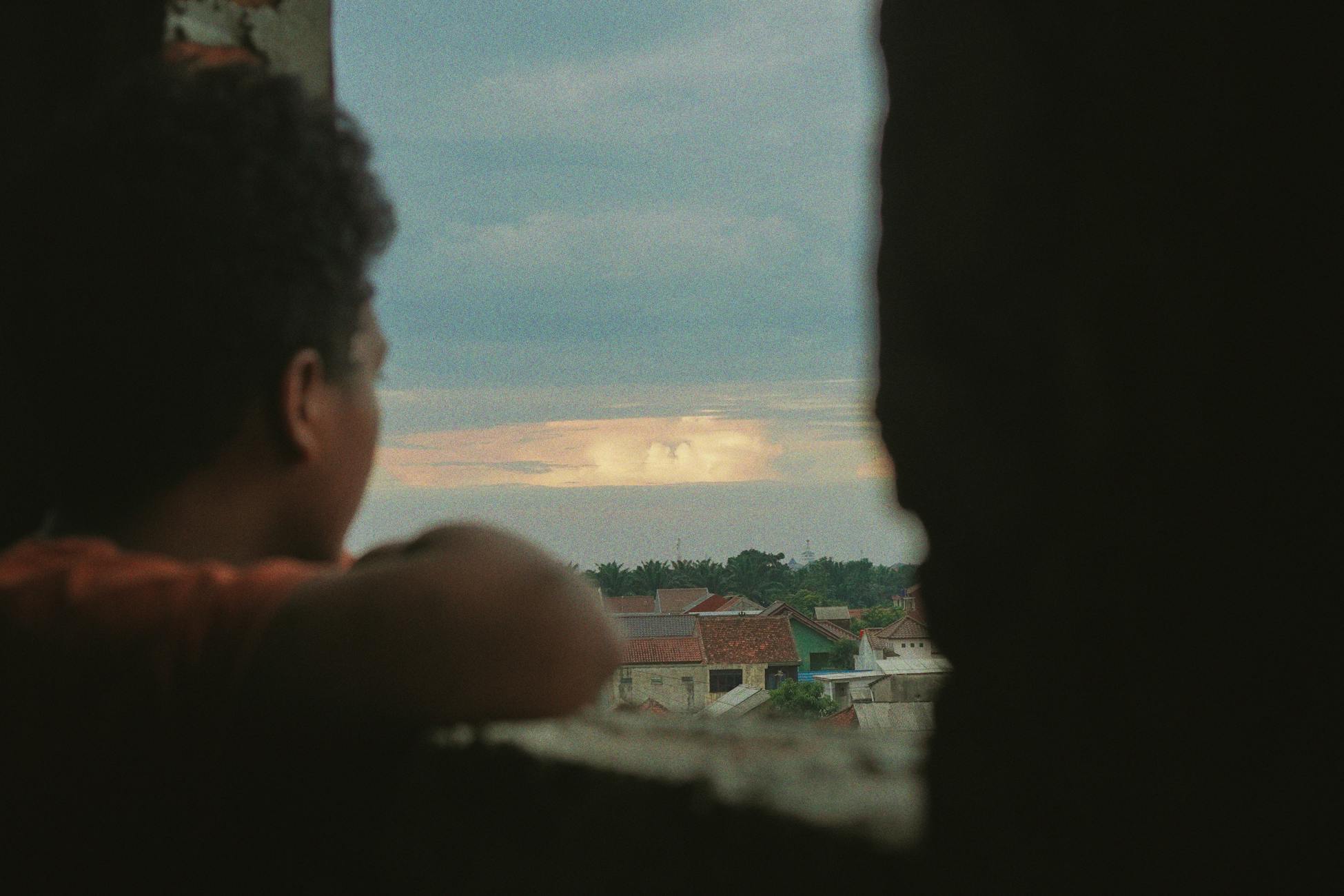
Former colleagues from the TAFE institute, old friends from my Sydney years, even a cousin I hadn’t spoken to in a decade — every one of them who asked when I was moving back was telling me something about themselves, not asking something about me. It took me nearly two years of fielding the question to understand this. By then I’d stopped answering, and the silence I offered in return was more honest than any explanation I’d ever attempted.
The conventional wisdom around major life transitions says that people who question your choices are expressing concern. They love you. They worry. They want what’s best for you. And some of them do. But what I’ve found, after leaving a fast city where I spent three decades building a career, a reputation, and a daily rhythm that felt load-bearing, is that most of the questioning had nothing to do with concern for my wellbeing. It had to do with what my departure forced other people to confront about their own.
I’ll be specific. I spent over twenty years as an Associate Director at a TAFE institute. That role was my scaffolding. Disciplined, organised, showed up early, stayed late, solved problems. When I retired, I went through a six-month identity crisis that I’ve written about extensively. What I haven’t written about is the geographic piece. The part where I started splitting my time between Australia and Singapore, where the pace of my daily life changed so fundamentally that old friends didn’t recognise the rhythms I was describing.
Old friends would regularly call during the first year, asking friendly questions about how things were going in the new city, then pivoting to ask when I’d return.
They would ask when I planned to come back ‘properly,’ with the word doing heavy lifting—implying that slower meant temporary.
The assumption embedded in the question was that slower meant temporary. That a deliberate choice to step away from velocity was a phase, something to be indulged the way you might indulge a strange holiday before returning to real life. Psychologists who study life transitions describe the rupture between who we were and who we’re becoming. What gets less attention is the discontinuity experienced by the people watching. When someone in your circle makes a choice that you wouldn’t make, or couldn’t, or haven’t yet allowed yourself to consider, your brain has to do something with that information.
What it often does is reject it.
I noticed a pattern. The people who asked most persistently about my return were not the people who missed me most. They were the people most entrenched in the pace I’d left behind — the ones running on cortisol and calendar notifications who described their own lives with a specific kind of exhausted pride. They needed me to come back because my staying away was an argument they didn’t want to have with themselves. A woman I’ve coached, I’ll call her Sarah, described an almost identical dynamic when she left a demanding consulting role and moved to a regional town. Her former colleagues seemed to be waiting for her to fail, she said, because they needed to maintain the narrative that their high-pressure lifestyle was the only way to live a serious life.
Research on peer pressure and social conformity shows this pattern clearly. When someone deviates from the expected trajectory of their group, the group often responds not with curiosity but with correction. The pressure often arrived as gentle incredulity, with people expressing doubt that I could really be happy in a slower city. The emphasis on “really” does the work of a thousand arguments. It communicates: I find this implausible, and your job is to reassure me.

For the first year, I did reassure them. I explained the slower mornings, the dog walks that stretched into something meditative, the way my thinking had changed when it wasn’t compressed into the gaps between meetings. I described the garden. I talked about the quality of silence. None of it landed the way I intended, because the people I was talking to weren’t processing information. They were managing threat. My choice was being experienced not as a personal affront, but as a challenge to the story they were telling themselves about why they lived the way they did. If a person who worked at the same intensity, carried the same professional identity, navigated the same kind of daily pressure could simply walk away from it and be fine, then what did that say about the necessity of the whole arrangement? The answer was uncomfortable, so the question had to keep being asked until I gave a different one.
I’ve written before about how some people fill their post-career lives with busyness not because they’ve found purpose but because they can’t tolerate the quiet. This dynamic was a mirror image. The people asking when I was coming back were filling the conversation with concern that wasn’t really concern. It was the sound of dissonance looking for resolution.
I stopped answering the question about eighteen months in. Not with drama. I just let it hang. Someone would ask, and I’d change the subject, or offer a silence that was longer than social convention comfortably allows. The responses were telling. Some people stopped asking entirely. A few got briefly annoyed, as if I’d broken a contract. One old colleague expressed frustration that I wouldn’t share my long-term plan.
My plan was to not have the kind of plan she meant.

The psychology here isn’t complicated, but it runs deep. When we build a life around a particular set of conditions (speed, achievement, professional visibility, the adrenaline of being needed), that life becomes identity. And identity doesn’t like being optional. The emotional cost of masking anxiety is well documented. What’s less discussed is how that masking extends outward, into the way we respond to other people’s choices. If I’m masking my own exhaustion with the performance of purposeful busyness, your visible contentment in a slower life isn’t inspiring. It’s threatening. I need you to be secretly miserable so my performance remains justified.
I don’t say this with judgment. I was that person. For thirty years, I was that person. I wore my pace as proof of my seriousness. The quiet invisibility that arrives when you leave those rooms is real, and it’s disorienting. But what I didn’t expect was how aggressively visible I became to the people I’d left behind. Not because they saw me clearly, but because my absence created a shape they couldn’t stop staring at.
The slower city itself isn’t the point. I could have moved to a farm, a beach town, another country entirely. The mechanism would have been the same. What matters is the velocity differential. When you downshift and someone else doesn’t, you become a living question mark in their peripheral vision. And most people would rather ask you to explain yourself than sit with the question you’ve raised about them.
Studies on nature connection and wellbeing suggest that environments with greater access to green space and lower density genuinely do affect psychological states, particularly for people transitioning from high-stress settings. I noticed this in my own body before I understood it cognitively. My shoulders dropped. My sleep changed. I started having thoughts that weren’t task-related, which sounds unremarkable until you realise how many years I’d gone without them.
But I couldn’t communicate any of this to the people who kept asking because they weren’t listening for information. They were listening for doubt. Any admission that I missed certain things would be interpreted as evidence that I’d eventually return, as if missing elements of a previous life meant regretting having left it.
I grew up in a house where if something broke, you learned to fix it before dinner or you went without. That ethos left me with a deep instinct to repair things, including other people’s discomfort with my choices. It took genuine effort to stop doing that. To recognise that their discomfort was theirs. That I wasn’t obligated to metabolise it on their behalf.
The people who navigated my transition best were, without exception, people who had already done some version of their own. Not necessarily geographic. Some had changed careers late. Some had walked away from relationships that looked perfect from the outside. One had simply started saying no to social obligations and discovered that most of her friendships couldn’t survive the absence of automatic compliance. These people didn’t ask when I was coming back—they asked what I was noticing.
The distinction mattered enormously: questions about when I’d return placed me in the past, while questions about what I was noticing placed me in the present. The first question assumes your current life is a detour. The second assumes it’s a destination.
I’ve written before about the hardest conversation in retirement being the private one where you try to answer who you are now that nobody is paying you to be someone. This is the social version of that conversation. Who am I to the people who only knew me at full speed? And what happens when I stop performing the velocity they recognised as me?
What happens is some of them leave. Quietly. Without announcement. The calls taper off once you stop providing the reassurance they came for. This sounds sad, and for a while it was. Then it clarified something I couldn’t have seen while I was still explaining myself: some relationships exist only inside a shared context. Remove the context, and there’s nothing underneath. That’s not a failure of the relationship. It’s just what it was.
The relationships that remained got more honest. Slower, like the city. More deliberate. When someone called now, they called because they wanted to talk. Not because they wanted to check whether I’d come to my senses.
I don’t have advice for people going through a version of this, because advice implies a formula and there isn’t one. What I have is an observation. When someone keeps asking you to justify a choice you’ve already made, and your explanations never seem to satisfy them, consider the possibility that they aren’t asking for your sake. Consider that the question is a mirror they’re holding up, and the face they see in it isn’t yours.
The most useful thing I did was stop answering. Not to punish anyone. Not to make a point. But because the conversation had become a performance, and I’d already spent decades performing. The silence that replaced the explanation wasn’t empty. It was the sound of a boundary being drawn, quietly, without apology, between someone else’s anxiety and my own life.
That boundary turned out to be the most important thing I’d built since leaving. More important than the garden, the new routines, the slower mornings. Because every other change I’d made was about reshaping my environment. This one was about reshaping the space between me and other people — learning, finally, that you can love someone and still refuse to carry the weight of their unlived questions. That their discomfort with your life is not a problem you need to solve. It is information about them, offered freely, and you are allowed to let it pass through you without stopping to build it a room.