

7 things that introverts find enjoyable that extroverts don’t

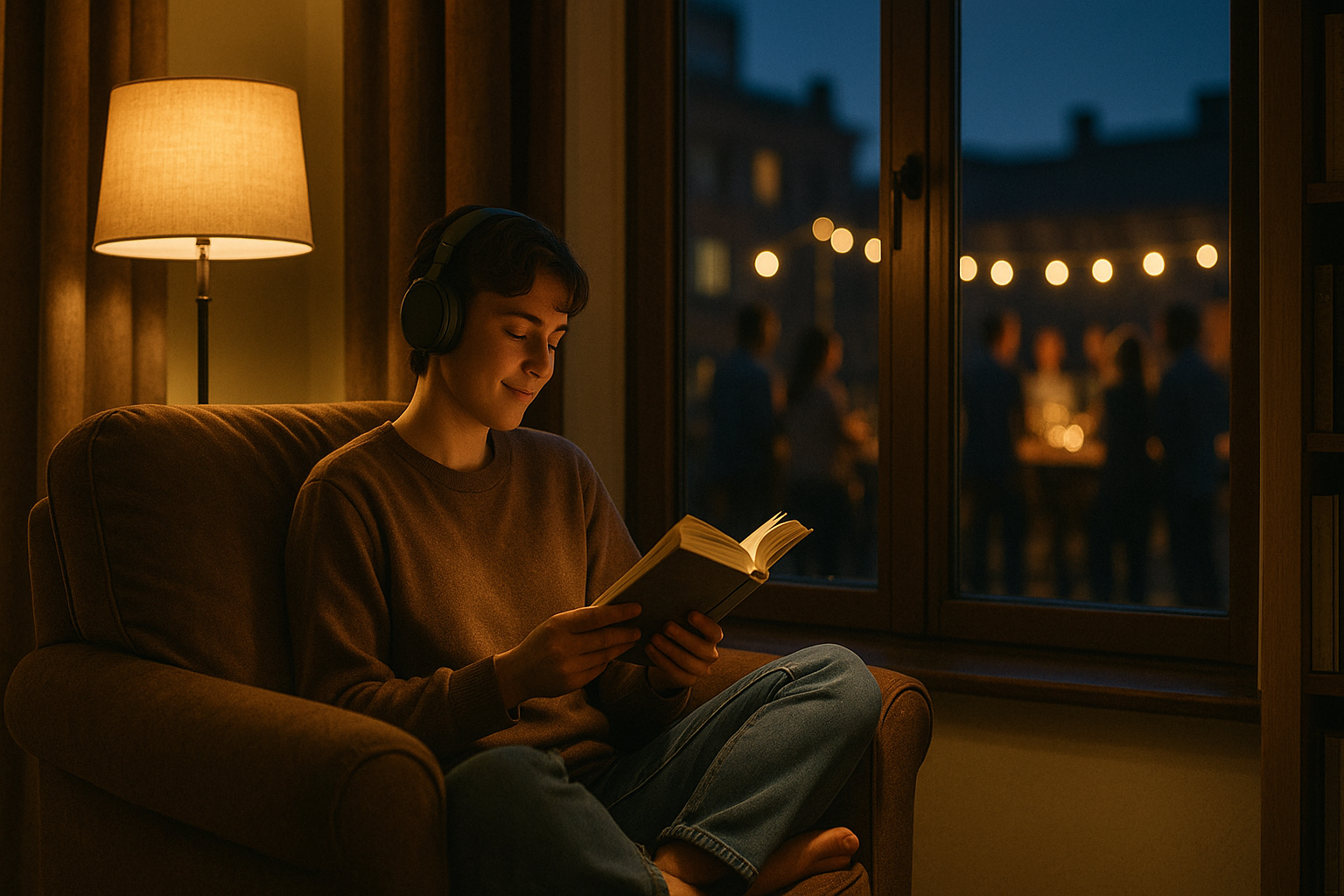
Walk into any busy café and you’ll see two broad types of people: those chatting animatedly in groups, and those sitting quietly with a book, headphones, or a laptop, perfectly content in their own company.
The first camp tends to be populated by extroverts—people who gain energy from external stimulation and social interaction. The second camp is often where you’ll find introverts—individuals who recharge by turning inward.
Contrary to an old stereotype, introverts aren’t “antisocial” or shy by default; they simply have a different neurological response to stimulation. Research tracing back to Hans Eysenck’s arousal theory shows that introverts’ baseline cortical arousal is already higher, meaning additional noise, chatter, and activity can quickly feel overwhelming.
Because of this wiring, introverts gravitate toward activities that many extroverts consider dull or even draining. Below are seven such pursuits, each backed by psychological findings that illuminate why the quiet path can be so rewarding for those who prefer it.
1. Prolonged, chosen solitude
Ask most introverts what they look forward to after a hectic workweek and the answer is often “a day to myself.”
Reed Larson’s seminal research on adolescents demonstrated that freely chosen alone-time boosts mood, self-reflection, and autonomy—benefits that introverts continue to seek well into adulthood.
Extroverts, by contrast, typically report boredom or restlessness when deprived of social contact for long stretches. For introverts, however, the silence isn’t empty; it’s restorative. In solitude they can sort through thoughts, process emotions, and re-center without the cognitive load of reading social cues.
2. Deep one-on-one (or small-group) conversation
Many extroverts thrive on fast-paced banter and casual small talk. Introverts usually don’t.
A naturalistic observation study by psychologist Matthias Mehl found that happier people, introverts included, spent significantly less time in trivial chatter and far more time in substantive conversation.
The reason lies in cognitive preference: introverts tend to enjoy meaning-making and abstract thinking, so dialogues that jump beneath the surface feel nourishing rather than exhausting.
Sharing nuanced ideas with one trusted friend lets them focus on content rather than crowd management.
3. Independent, interruption-free work
Open-plan offices were designed for spontaneous collaboration, but they’re kryptonite for many introverts. Continuous noise spikes arousal levels, making focus nearly impossible.
Guidance articles for introverts—such as Verywell Mind’s workplace guide—recommend carving out quiet zones, negotiating remote days, or wearing noise-canceling headphones to recreate the low-stimulation environment where they excel at “deep work.”
Extroverts often gain creative energy from brainstorming in groups; introverts find their flow when they can control sensory input and think without interruption.
4. Expressive writing and journaling
When extroverts need to process emotions, they’re likelier to “talk it out.” Introverts frequently “write it out.”
Psychologist James Pennebaker’s decades of work on expressive writing shows that structured journaling lowers stress hormones, strengthens immune function, and improves grades in students.
Because introverts are already oriented toward internal dialogue, translating feelings into words on paper feels natural—almost like having a silent, judgment-free conversation with themselves.
Extroverts can certainly journal, but research suggests they’re less drawn to it as a first-line coping strategy.
5. Low-stimulation environments—quiet cafés, libraries, solo hikes
Eysenck’s arousal model predicts that introverts prefer settings with fewer external stimuli, and multiple studies on background music and performance confirm it: introverts’ cognitive performance deteriorates faster than extroverts’ when music, chatter, or bright lights ramp up.
That’s why they’ll pick a tucked-away corner of a library or a deserted forest trail over a bustling bar.
The absence of sensory “overload” lets them maintain the optimal arousal zone for clear thinking and genuine enjoyment.
6. Active listening and quiet observation
Where extroverts often process ideas aloud (“think-talk-think”), introverts typically absorb information first, then respond.
Qualitative work summarized in Time magazine highlights that introverts score higher on measures of reflective listening and are more likely to notice subtle emotional cues.
Observing before acting allows them to craft thoughtful replies and pick up on nuances others miss.
Many extroverts cherish listening too, of course, but they don’t always derive the same intrinsic pleasure from extended silence.
For introverts, listening isn’t merely polite; it’s intellectually stimulating.
7. Text-based or asynchronous online communication
Early internet researchers (notably Yair Amichai-Hamburger) found that introverts rated online social interaction as more satisfying than comparable face-to-face encounters.
Messaging apps and email offer time to think, reduce sensory load, and sidestep the immediate reciprocity expected in live conversation. Extroverts can feel constrained by the delayed feedback loop, but introverts appreciate being able to craft precise responses and control when the interaction begins and ends.
The digital realm effectively levels the playing field, letting them engage socially without depleting energy reserves.
Conclusion: reclaiming the quiet edge
The seven activities above share a common denominator: they favor depth over breadth, reflection over rapid stimulation, and autonomy over group momentum.
None of these pursuits are off-limits to extroverts, and plenty of introverts enjoy parties or spontaneous adventures now and then. Personality exists on a continuum, not a rigid box.
Still, psychology makes clear that what feels “fun” is filtered through our individual wiring.
Recognizing and honoring these differences is more than trivia. In workplaces, allowing employees to choose quiet zones or asynchronous brainstorming taps into introverts’ strengths.
In relationships, respecting a partner’s need for alone time can prevent misunderstandings (“It’s not that I don’t want to see you—I just need to recharge”).
And on a personal level, introverts who ditch the extrovert ideal and lean into their true preferences often report higher life satisfaction. Solitude, deep dialogue, and low-key environments are not second-best alternatives; for many people, they’re the main event.
So the next time someone opts for a solo walk instead of happy-hour drinks, remember: they might just be doing exactly what their brain needs to thrive—and psychology says that’s something to celebrate.
