

People who downplay their birthday usually display these behaviors

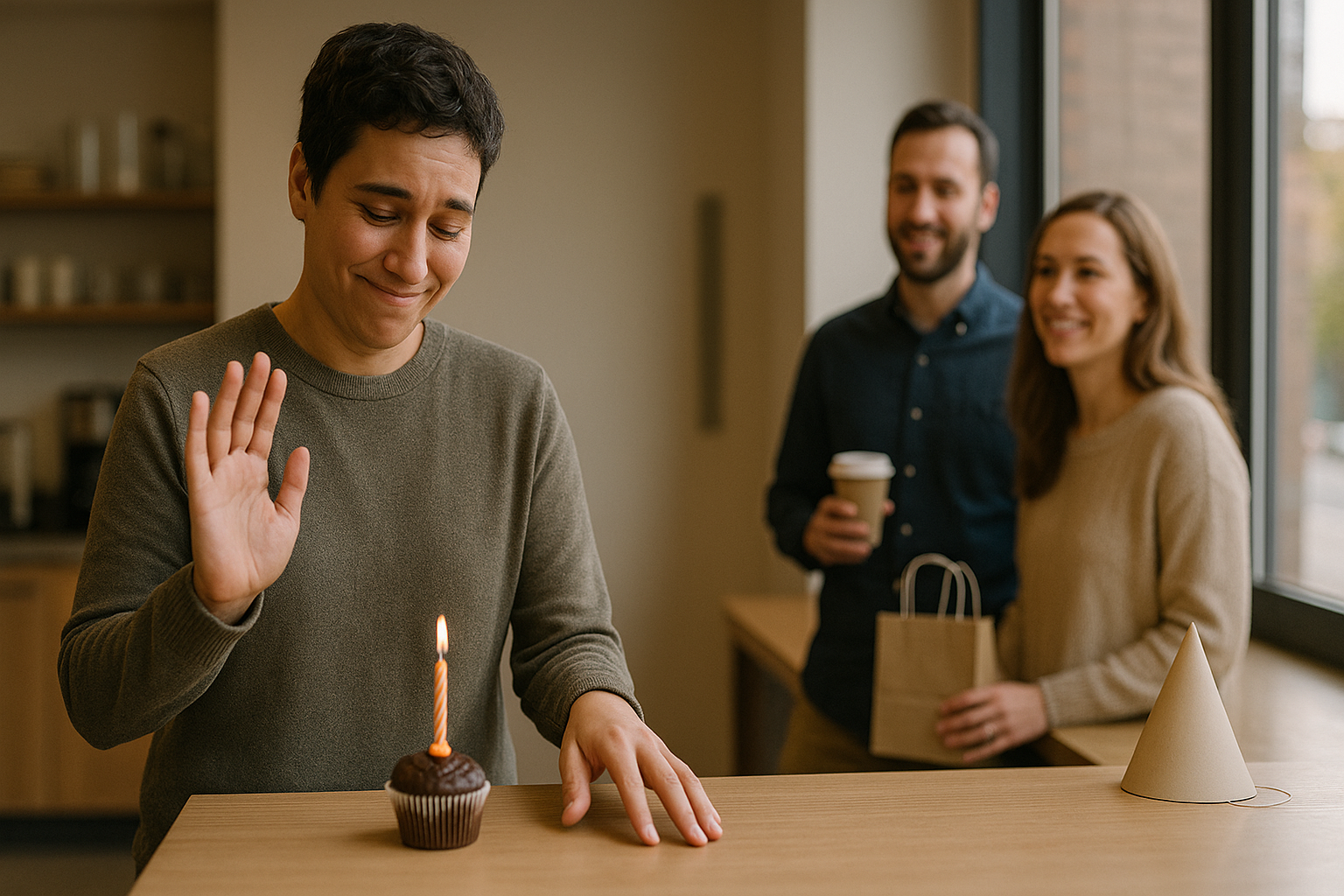
For most people, birthdays are a time for balloons, cake, and the awkward moment when everyone sings to you while you stand there wondering where to look.
But not everyone treats their birthday like a personal holiday. Some people actively downplay it—avoiding parties, skipping social media announcements, or even forgetting to mention it to close friends.
Psychology suggests that this tendency isn’t just about personality quirks. Often, it reflects deeper traits, preferences, and ways of relating to the world. Here are the behaviors people who downplay their birthday tend to display—and what they reveal about how these people think, feel, and interact.
1. They avoid the spotlight in most situations
If you’re the type to quietly let your birthday pass without a fuss, chances are you dislike being the center of attention in general.
Birthdays are inherently spotlight-heavy—you’re the reason for the gathering, the name on the cake, and the subject of everyone’s gaze. People who shy away from this kind of focus often prefer group settings where attention is shared or where they can blend in.
This doesn’t necessarily mean they’re shy. Some are perfectly confident but simply don’t get energy from having all eyes on them. In psychology, this links to introversion and low need for social dominance—valuing connection without craving the stage.
2. They place more importance on everyday connection than milestone events
For someone who downplays birthdays, relationships aren’t about annual grand gestures—they’re about consistent, small acts of care throughout the year.
Rather than saving affection for “special occasions,” these individuals tend to measure closeness in day-to-day interactions: a quick check-in message, remembering a detail from last week’s conversation, or helping out when needed.
From a psychological standpoint, this reflects low temporal landmark dependence—a fancy way of saying they don’t need big calendar dates to feel a sense of meaning or renewal in relationships.
3. They have a practical approach to celebrations
Some people downplay birthdays because, in their minds, the hype doesn’t match the reality.
They may see it as just another day—why overspend, overplan, or overeat for a date that arrives every 12 months?
This often ties into a pragmatic worldview: valuing function over form and experiences over ceremony. These people can enjoy celebrations, but they don’t feel incomplete without them. They’re less likely to be swept up by social norms dictating that birthdays must be a big deal.
4. They often feel uncomfortable with overt praise
A birthday party inevitably brings a flood of compliments—“You look great!”, “You’re amazing!”, “Here’s why we love you…”
For some, that’s uplifting. For others, it’s quietly uncomfortable. People who downplay their birthday often prefer appreciation in subtle forms—genuine gratitude expressed in a personal note, or acknowledgment tied to shared effort rather than a spotlight moment.
Psychology connects this to modesty bias—the tendency to deflect praise to avoid feelings of embarrassment, vulnerability, or perceived arrogance.
5. They value privacy and selective sharing
If you’ve ever met someone whose birthday you only learned months later, you’ve probably met someone who guards their personal information carefully.
For these individuals, a birthday is more than a date—it’s a piece of their identity. They choose who gets access to that detail, just as they might with other personal facts.
This aligns with a high privacy orientation, where people consciously control what others know about them. It’s not about being secretive; it’s about setting boundaries.
6. They may carry complex emotions about aging
Not everyone who downplays their birthday does so because they dislike attention. For some, birthdays stir up uncomfortable thoughts about time passing, missed opportunities, or looming expectations.
Even people in their twenties can feel pressure from societal timelines: “By 30, I should have done X…”
In these cases, the avoidance of birthday celebrations is partly an avoidance of self-evaluation. It’s a way to dodge the annual reminder that another year has gone by, which psychology calls temporal self-comparison—measuring yourself against your past and future selves.
7. They prefer authentic connection over ceremonial obligation
A birthday party can sometimes feel scripted—cake cutting, gift opening, polite laughter at jokes you’ve heard a dozen times.
People who downplay birthdays often crave interactions that feel spontaneous and real. They’d rather have coffee with a close friend than host a room full of acquaintances making small talk.
This reflects a low tolerance for social formalities and a higher need for authenticity in relationships.
8. They show gratitude in understated ways
Interestingly, people who downplay their own birthday often still acknowledge others’ milestones—they just do it differently.
Instead of throwing a big surprise party, they might write a heartfelt message, choose a thoughtful gift, or simply check in on the day.
Psychology would frame this as low public but high private expression—they value emotional sincerity over outward showiness.
9. They resist social pressure to conform
Let’s be honest—most birthday traditions are driven by social norms, not personal necessity. Singing “Happy Birthday” in a group? Almost everyone does it because that’s what’s done, not because they find it deeply moving.
People who downplay their birthday are often comfortable stepping outside these norms. They aren’t necessarily rebellious; they just have a strong internal compass about what feels right for them.
In psychology, this connects to internal locus of control—the belief that your life should be guided more by personal choice than by external expectations.
10. They tend to downplay other personal milestones, too
If someone minimizes their birthday, they might do the same with other big personal moments: job promotions, anniversaries, even major achievements.
This isn’t about lacking pride—it’s about not needing public validation to feel accomplished. They may quietly celebrate in their own way, but they don’t see the need for a public display.
This mindset reflects self-determined motivation—finding meaning and reward from the activity itself, not the recognition it brings.
11. They might be more emotionally self-sufficient than average
Not needing a crowd to cheer you on every year suggests a certain degree of internal emotional stability.
These people often don’t rely heavily on external events to boost their mood. They can create meaning and satisfaction from their own daily life without waiting for a big day to make them feel special.
This overlaps with low extrinsic emotional dependency—the ability to feel okay without regular doses of external affirmation.
12. They’re selective about traditions
Birthday-downplayers often approach traditions like a buffet: keep what’s meaningful, skip what’s not.
Maybe they still enjoy a slice of cake but skip the party. Maybe they’ll mark the day with a quiet dinner but ignore the social media flood.
This reflects autonomous decision-making—choosing rituals based on personal resonance rather than obligation.
13. They’re not necessarily against fun—they just define it differently
It’s important to remember: avoiding a birthday fuss doesn’t mean someone is anti-fun or overly serious.
Many of these people still enjoy meaningful, joyful moments—they just prefer them to emerge naturally rather than being scheduled around a date.
This is a hallmark of intrinsic enjoyment—seeking pleasure in the flow of life rather than constructing it around fixed events.
14. They often value giving more than receiving
For some, downplaying their own birthday is partly about discomfort with being on the receiving end. They’d rather be the one hosting, giving gifts, or creating experiences for others.
From a psychological perspective, this aligns with other-oriented empathy—deriving satisfaction from the happiness of others rather than from personal celebration.
15. They’re skilled at shifting focus onto others
If you’ve ever tried to throw a surprise party for someone who hates attention, you may have noticed how quickly they steer the conversation toward someone else.
This isn’t necessarily deflection—it’s often a genuine preference to keep the spotlight moving, ensuring no one feels left out.
This links to social attunement—a heightened awareness of group dynamics and others’ comfort levels.
A balanced perspective
It’s worth noting that there’s no “right” way to treat your birthday. Some people love big parties, others prefer quiet reflection, and both approaches are perfectly valid.
However, understanding the psychological patterns behind why someone might downplay their birthday can improve relationships. If you know your friend or partner is a birthday minimalist, you can show care in a way that feels comfortable for them—whether that’s a private dinner, a thoughtful message, or simply spending quality time.
Final thoughts
Downplaying a birthday isn’t about rejecting joy—it’s about redefining it.
For some, the idea of turning another year older is best marked with laughter in a small circle, not a balloon-filled banquet hall. For others, it’s simply another Tuesday, no different from the day before.
The psychology behind this choice reveals traits like authenticity, independence, privacy, and modesty—qualities that can bring richness to life far beyond one day on the calendar.
So the next time someone tells you they “don’t really do birthdays,” don’t assume they’re joyless or antisocial. Chances are, they’ve just found other ways to celebrate what matters most—every other day of the year.
