

People who need a quiet hour after work before they can talk to anyone may not be antisocial, they’re decompressing from a day spent being a slightly louder version of themselves


The hour of silence after work is not a character defect. It is the bill arriving for a day spent being someone marginally more animated, more responsive, and more agreeable than the person you actually are.
Most people have been taught to read this hour wrong. The partner who walks in, kisses you on the head, and disappears into a quiet room for forty-five minutes is interpreted as cold, distant, or — the modern favorite — antisocial. The friend who refuses calls until 7 p.m. is accused of avoiding people. The colleague who eats lunch alone is folded into the office mythology of the loner.
The conventional reading misses the mechanism. What looks like withdrawal from people is actually withdrawal from a performance. And the performance has been running, quietly, since 9 a.m.
The slightly louder self
Almost everyone who works around other humans wears a version of themselves to work. Not a fake self — a calibrated one. Slightly louder. Slightly warmer. Slightly more inclined to laugh at the joke, ask about the weekend, soften the email, nod through the meeting that should have been a paragraph.
The gap between your private baseline and your professional volume is small enough that nobody notices it, including you. But the body keeps a running tab. Researchers studying emotional labor at work have found that the cost of managing your displayed emotions — what they call surface acting — accumulates as fatigue, cynicism, and a quiet erosion of self even when the day looked uneventful from the outside.
You didn’t do anything hard. You just did eight hours of being slightly more than yourself. That is the hard thing.
I spent my warehouse years thinking I was tired because of the boxes. The boxes were nothing. What flattened me was the four hours of low-grade jocularity required to fit into a break room where being too quiet read as judgment. By the time I got home I had nothing left for anyone, and I assumed that meant something was wrong with me.
Why the quiet hour is actually a recovery system
The brain is not a faucet. It cannot switch instantly from managing inputs from multiple colleagues, competing deadlines, and constant communication channels to being present and curious about your partner’s day. There is a transition cost, and the transition cost is what the quiet hour is paying.
Work on sensory processing and stimulation tolerance suggests that nervous systems vary widely in how quickly they downshift after sustained input. Some people return to baseline within minutes. Others need an hour, sometimes more, of low-stimulation environment before language and presence come back online. Neither group is broken. They are running different recovery hardware.
Susan Cain made this argument popular a decade ago, but it predates her. Psychologist Susan Krauss Whitbourne has written about how introverts process social stimulation differently — not less, not worse, just differently. The same room that energizes one nervous system depletes another. By 5 p.m., the depleted nervous system isn’t avoiding people. It is trying to come back to the version of itself that can actually be with them.
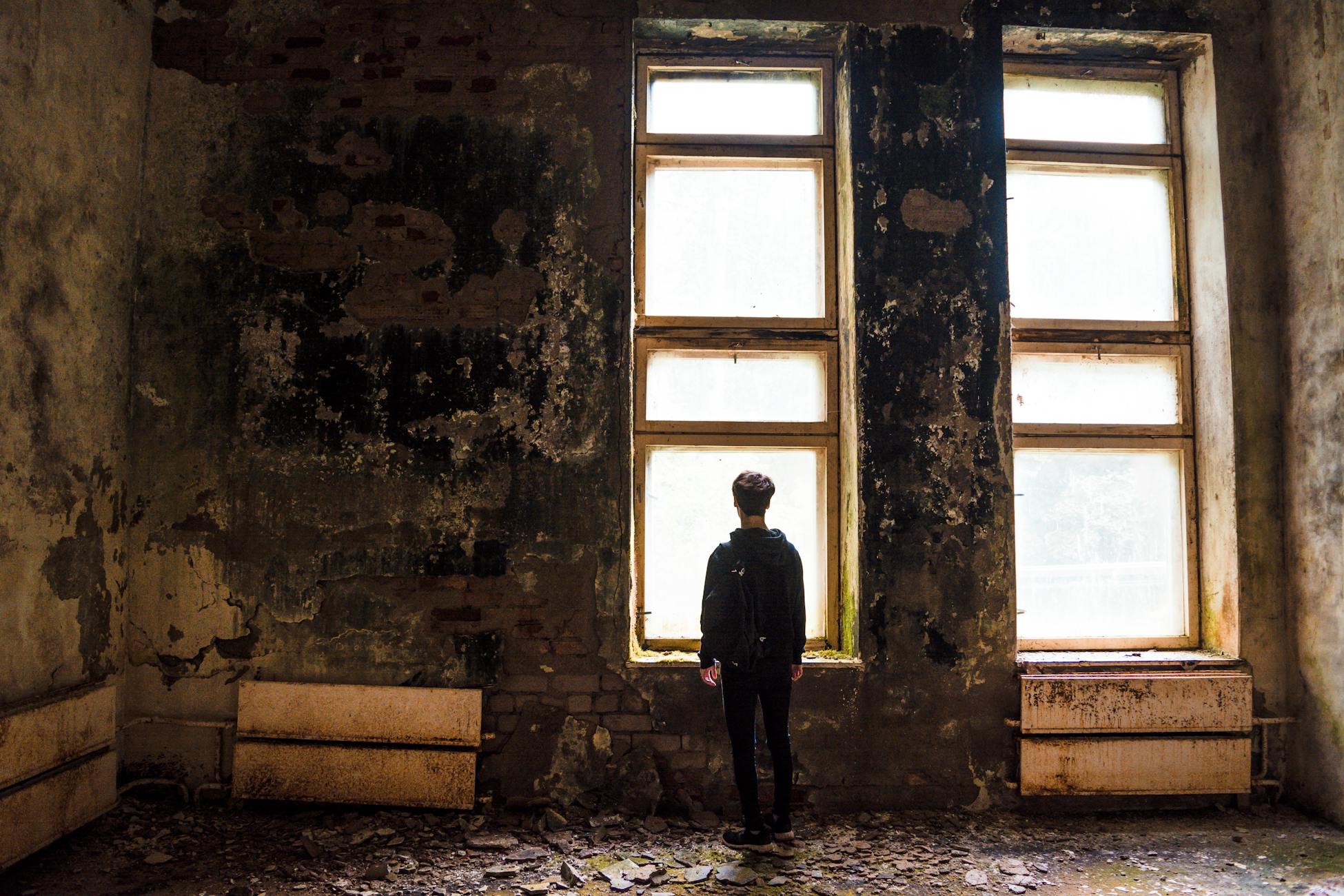
What the family hears versus what is happening
The misreading is the painful part. To the partner waiting in the kitchen, your closed door looks like a verdict. To the kids, it looks like Dad is in a mood. To the housemate, it looks like you are mad about the dishes again.
None of these readings are crazy. They’re just incomplete. What is actually happening behind the door is a person trying to put down the slightly louder self they had to wear, so they can pick up the actual self that the people in the kitchen claim to want.
The cruel irony: when this hour is denied — when you walk in and immediately get the recap of the school pickup, the question about dinner, the request to look at something on a phone — the version of you that emerges is not the real one. It is a third, worse version. The work self with the batteries dying. Short, flat, and unable to access whatever made you good company in the first place.
Most arguments that begin within fifteen minutes of someone walking through the door are not really about what they appear to be about. They are about a recovery period that didn’t happen.
Why “antisocial” is the wrong word
The word gets thrown around carelessly. Antisocial, in clinical usage, refers to a pattern of disregard for other people — manipulation, deceit, indifference to harm. This is distinct from simple introversion or social fatigue, which share none of those features.
People who need a quiet hour after work are usually the opposite of antisocial. They are highly attuned to other people. Often too attuned. Their depletion comes from spending the day reading rooms, adjusting tone for different audiences, picking up on a colleague’s bad mood and absorbing it, drafting the email three times so nobody feels condescended to. The quiet hour exists precisely because they care too much about how they affect others, not too little.
Calling that antisocial is like calling a marathon runner lazy because they sit down at the finish line.
The compassion fatigue cousin
For people in caretaking, teaching, healthcare, or any role that involves managing other humans’ feelings as part of the job, the quiet hour isn’t optional. It is medically necessary. Researchers studying compassion fatigue have documented what happens when this recovery doesn’t get built in: emotional numbing, irritability, intrusive thoughts, and eventually a kind of professional burnout that bleeds into every relationship the person has.
The hour is not a luxury for these people. It is the difference between staying able to do the work and quietly hating everyone in their life.
Even for those of us in less emotionally exposed jobs, the principle holds in miniature. Anyone who spent the day being responsive to other humans — answering, accommodating, performing pleasantness — has a smaller version of the same recovery debt to pay.
The architecture of decompression
Watch what people actually do in their quiet hour and you’ll notice it isn’t sleep, it isn’t entertainment, and it usually isn’t anything productive. It is something closer to a low-stimulation reset. Walking the dog. Cooking without music. Sitting on the porch. Reading something they’ve already read.
The repetition is the point. Familiar books, familiar paths, familiar food — these don’t tax the brain’s interpretation systems. They let the parts of you that spent all day decoding other humans go offline. There is a reason people who do this hour well almost never spend it on social media. Social media is just more of the thing they are recovering from.
What they are doing, structurally, is letting the system come back to a baseline that the day pulled them away from. Anyone who has ever needed twenty minutes of staring at a wall after a long day already knows it.

What the brain is actually doing
Neuroscience is starting to fill in the picture of what stimulation costs and how recovery works at the cellular level. Recent research on brain rhythms and sensory input shows that the brain does measurable cleanup work during low-stimulation periods — clearing metabolic byproducts, consolidating memory, resetting attention systems. Constant input prevents this. The quiet hour is not metaphorically restorative. It is literally the time the brain takes to flush out what the day deposited.
Deny that hour, and the system goes to bed without cleaning up. The next day starts already a few percentage points behind. Multiply that across weeks, months, careers, and you get the modern complaint of being permanently tired without being able to point to a reason.
How to give and take this hour without breaking anything
The hour works best when it is named. The version of this that destroys relationships is the unspoken version — the partner who disappears without explanation, the friend who goes quiet without warning. The version that strengthens relationships is the explicit one. Something like, I need forty-five minutes when I get home and then I’m yours, said clearly once, can prevent a thousand misreadings.
For the person on the other side of the door, the work is also small but real. Resist the impulse to interpret the closed door. The hour is not about you. It is about the eight hours that came before it, which you weren’t part of, and which took more out of the person than the day looked like it would.
The people who handle this gracefully tend to be the ones who recognize their own version of it. Everyone has a recovery debt of some kind. Some people pay it in the morning before anyone wakes up. Some pay it on the commute. Some pay it after dinner. The hour after work is just the most visible payment schedule, and the one most likely to be misread by people who pay theirs differently.
The quiet self underneath
What sits underneath all of this is something simpler than psychology can quite reach. Most people are quieter at their core than they get to be at work. The day asks them to inflate slightly, and by 5 p.m. the inflation is exhausting, and they want to go back to whatever shape they actually are.
The hour is the deflation. The return to the resting size of the self.
People who have lived inside this rhythm for years stop apologizing for it. They build their evenings around it. They marry people who understand it, or they teach the people they’re already married to what it is. They stop calling themselves antisocial because they noticed, eventually, that the hour wasn’t the problem. The hour was the solution. The problem was never having been told that the slightly louder self had a cost, and that paying it in silence was not a personality flaw but a form of basic maintenance — the kind that lets the actual self show up, intact, for the people who were waiting for it.
