

The lower-middle-class households of the 1960s and 70s produced a specific kind of adult — frugal without meaning to be, grateful without being asked, and carrying a quiet shame nobody ever named for them

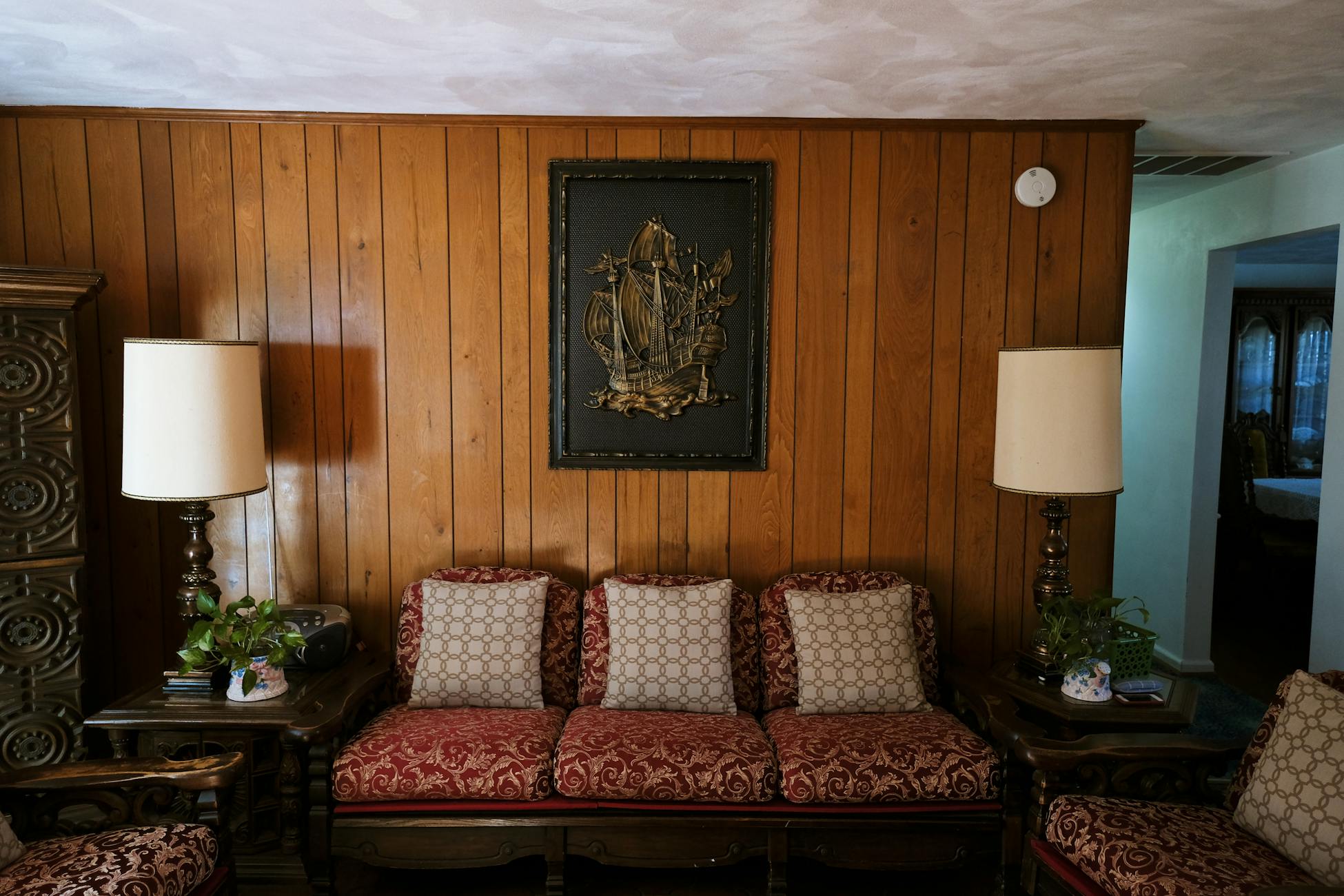
The children of the lower-middle class in the 1960s and 70s didn’t grow up poor, and that distinction is where all the confusion begins. Poverty has a vocabulary. Struggle has a sociology. But the households that sat one uncertain rung above real hardship — the ones where the bills were paid but never comfortably, where the car ran but nobody mentioned what would happen if it didn’t — produced a particular kind of adult that the cultural narrative has never quite been able to name.
Conventional wisdom says these children grew up to be resilient, hardworking, grateful for what they have. The self-help industry has been selling this lineage back to them for forty years: the scrappy origin story, the bootstrap virtues, the gratitude practice they supposedly learned at their mother’s kitchen table. It’s a flattering narrative and almost entirely wrong.
What actually formed in those homes was something quieter and more complicated: a nervous system calibrated to scarcity that never quite recalibrated, a reflexive frugality the person often can’t explain to their own spouse, a gratitude that functions less like joy and more like a permanent apology for taking up space. And underneath all of it, a shame that was never spoken aloud because nobody in the house had the language for it either.
The economics you can measure and the ones you can’t
To understand the psychological inheritance, you have to understand the specific economic position. These were households where one parent’s wage covered the mortgage with nothing left for anything unplanned. Where a new school uniform meant a conversation behind closed doors. Where the word luxury was used to describe things like brand-name cereal and a second pair of good shoes. Nobody was hungry. Everyone was watching.
Research on generational financial trauma has only recently started to articulate what these children internalised: that money stress transmits itself through observation long before a child can name what they’re observing. You don’t need to be told the gas bill is late. You can feel the pitch of the house change when it arrives.
And this is where the adult pattern begins to form. A study on vicarious financial trauma suggests that watching a parent manage chronic low-grade money stress rewires a child’s threat detection system in ways that persist for decades. The bills get paid, the child grows up, the economy of the household improves — and the nervous system keeps scanning for the next shortfall anyway.
Frugal without meaning to be
Ask a woman in her sixties who grew up in one of these homes why she washes out plastic bags. She probably can’t tell you. She might laugh and say her mother did it. She might say it’s environmental. What she won’t say, because she doesn’t have conscious access to it, is that throwing away something reusable produces a small flinch of anxiety she has never examined.
This is the signature of the lower-middle-class upbringing: frugality that operates below the level of deliberation. It isn’t the showy thrift of the genuinely poor, who often have to be strategic about every dollar. And it isn’t the philosophical minimalism of the comfortable, who make frugality a lifestyle choice. It’s something stranger — a reflexive bracing against waste that continues long after waste has stopped being a meaningful threat.
A client I’ll call Margaret retired with more money than she had ever expected to have and spent her first year of retirement stressed about the electricity bill. Her accountant told her she could run every appliance in the house continuously for a decade and not feel it. She knew this intellectually. She still turned off lights when she left rooms the way her mother had, and she still felt a small tightening in her chest when she forgot.
This is what the scarcity mindset does. It installs itself during the developmental window and keeps running on old software. The bank balance updates. The internal weather doesn’t.

Gratitude that functions like an apology
The second inheritance is harder to see because it looks like a virtue. These adults are grateful. Disproportionately grateful. Grateful for things that most people consider baseline — a working car, a functional relationship, a job that pays consistently. Grateful in a way that can feel almost uncomfortable to the recipient.
But this gratitude is not the spontaneous overflow of joy that psychological research describes. It’s something more functional, more protective. It’s the internalised sense that everything good is slightly beyond what you were supposed to get, and that acknowledging this aloud is a kind of premium you pay to keep it.
If you grew up in a household where the adults treated every small luxury as something that might be taken away tomorrow, you learned to perform gratitude as a form of insurance. It’s the psychological equivalent of knocking on wood. And it becomes so automatic that by the time you’re fifty, you can’t separate the genuine appreciation from the superstitious ritual.
I’ve written before about the children who were praised only for being helpful, and there’s significant overlap here. The lower-middle-class household often produced both patterns simultaneously: usefulness as identity, gratitude as self-protection, both operating below conscious awareness.
The shame nobody named
The third inheritance is the hardest one. These adults carry a specific shame about their origins that they can’t quite locate or articulate. It isn’t the shame of poverty, which has its own dignity and its own political vocabulary. It isn’t the defensiveness of the working class, which has been studied and written about for generations.
It’s the shame of the in-between — of having been raised in homes that weren’t quite anything. Not poor enough to be a story. Not comfortable enough to be confident. The kind of households where the furniture was bought to last and the curtains matched and the appearance of stability was maintained with a precision that masked how thin the margin actually was.
Psychological research suggests that class-based experiences become unconscious identity markers — absorbed without being examined, carried without being named. The child of the lower-middle-class household learned to perform a slightly more affluent version of themselves before they even started school. They learned which neighbours to be friendly with and which to keep at a distance. They learned that the family’s financial position was private and that privacy meant keeping the door closed even to yourself.
This is why so many adults from these backgrounds struggle with what therapists call origin articulation — the ability to describe where you came from without defensiveness or minimisation. They’ll say they had a normal childhood. They’ll say their parents worked hard. They’ll say they didn’t want for anything. And every one of these statements will be simultaneously true and a small evasion.

What the dreaming mind knows
There’s a reason I’ve been thinking about this pattern recently, and it comes from an unexpected direction. A video from The Vessel has been sitting with me — a meditation on what the unconscious does when the editor goes offline, and what that tells us about the self we don’t choose to show. The argument is that dreams surface what the waking mind has quietly filed away: the fears without names, the grief that never found its moment, the inherited patterns that run so deep they feel like nature rather than history.

That last phrase is what stopped me — inherited patterns that run so deep they feel like nature rather than history. Because that is precisely what the lower-middle-class inheritance does. It disguises itself as personality. The frugality feels like who you are. The gratitude feels like temperament. The shame feels like an old personal flaw rather than a class-specific injury nobody ever taught you to see.
The video’s argument — that the waking self is a filtered, curated version of something that only speaks freely in dreams — maps onto this almost perfectly. During the day, the adult child of the lower-middle-class household performs the functional, grateful, competent version of themselves. At night, something older and less edited shows up. The dream where you can’t afford the groceries. The dream where your childhood house is about to be repossessed. The dream where you’re wearing the wrong clothes in a room of people who all come from somewhere more secure than you did.
These aren’t random. They’re the unedited dispatch from the source that’s been running underneath your waking life the whole time.
What this generation does with the inheritance
The adults I’m describing are now in their fifties, sixties, and seventies. Many of them have more than enough. Some of them are genuinely wealthy, by any measure their parents would have recognised. And they are still, on some level, the child in the kitchen watching their mother calculate the grocery bill in her head.
A lot of them are the boomers who refuse to ask for help — not because they’re arrogant but because asking for help was coded in their childhood as the first sign that the household was losing its grip. Some of them are the ones quietly drawn to luxury brands that their genuinely wealthy friends find slightly embarrassing — the ones that announce arrival to people who grew up watching the door.
And a lot of them are now facing retirement and wondering why the financial security they spent forty years building hasn’t produced the psychological security it was supposed to. The answer, often, is that they were never really working toward security. They were working to outrun a specific childhood feeling, and you can’t outrun a feeling by accumulating assets. The feeling was installed before the accumulation started.
The work that’s still available
The useful part of naming this pattern is that it becomes available for examination. The frugality can stay if you want it — there’s nothing wrong with washing out a plastic bag — but you can notice the small flinch that accompanies throwing one away, and you can ask whether that flinch still belongs to you or whether it belongs to your mother in 1972.
The gratitude can stay too. But you can separate the genuine appreciation from the superstitious insurance policy, and you can let yourself receive good things without the small internal payment of acknowledgement that you were trained to offer.
And the shame — the unnamed one, the one about origins — can be spoken. Not in the confessional mode, not as trauma, but as description. This is where I came from. This is what it cost me. This is what it gave me. This is what I’m still carrying that was never mine to begin with.
There are concrete ways to loosen the grip of a scarcity mindset, and most of them start with noticing. Not fixing. Just noticing. The pattern that ran you unexamined for fifty years begins to lose some of its authority the moment you can see it operating.
The households of the 1960s and 70s produced adults who were good at surviving a world that was actually, by the time they reached it, considerably more abundant than the one they’d been prepared for. That mismatch — the calibration error between the nervous system and the present tense — is the quiet legacy nobody ever named. And naming it, even late, is how you finally get to put some of it down.