

Doing nothing productive on a Tuesday afternoon and feeling at peace with it is one of the most radical psychological achievements available to anyone who spent decades defining themselves through work


Productivity guilt is the last addiction anyone talks about. Alcohol, workaholism, even screen time — those get acknowledged. But the visceral discomfort of sitting on a couch at 2pm on a weekday with nothing scheduled, nothing due, nothing expected? That quiet panic barely registers as a problem. We’ve been trained to call it laziness. And the people most susceptible to it are the ones who were best at their jobs.
The conventional wisdom says retirement requires filling your days. Get hobbies. Volunteer. Travel. Stay busy. Every retirement guide from the last fifty years has pushed some version of this advice, and most of it comes from a place of genuine concern — because research suggests that purposelessness correlates with cognitive decline and depression in older adults. But there’s a critical difference between finding meaning and performing busyness, and most advice conflates the two. The person who fills every hour with errands and committees because empty time makes them anxious has not found purpose. They’ve found a more socially acceptable form of avoidance.
What I’ve observed — coaching C-suite executives, mid-career professionals, and people rebuilding after burnout — is that the ability to genuinely rest without guilt is a late-stage psychological achievement. People arrive at it only after confronting something uncomfortable: the possibility that their sense of self was never really theirs, but rather a function of what they produced.
The identity trap nobody warns you about
When I retired, I expected relief. What showed up instead was a six-month stretch of low-grade dread. My calendar was open. My body was rested. And I felt like I was slowly disappearing.
Psychologists describe self-concept inertia as the phenomenon where your identity stays locked to a previous version of yourself even after the circumstances that shaped it have vanished. Your job ends, but your nervous system keeps acting as though deadlines exist. You wake early. You check email reflexively. You feel a pull toward tasks that no longer matter. The self doesn’t update in real time. It lags.
This is what makes a Tuesday afternoon on the couch so psychologically loaded. The day and time matter. Monday carries the residue of weekend; Friday anticipates rest. But a weekday afternoon — the hours when “productive people” are supposed to be producing — is where the old identity makes its strongest case against you. You should be doing something. The voice is quiet but relentless.
And the people who hear it loudest are the ones who were most dedicated to their work. Writers on this site have explored how the qualities that made people excellent at working are the same ones that make purposelessness unbearable. Discipline. Conscientiousness. High standards. These are the traits that made your career meaningful. They’re also the traits that now punish you for resting.
What your brain actually does when you stop
Neuroscientists have identified the default mode network — the brain’s resting-state system — which activates when you’re not focused on external tasks. It’s the neural infrastructure for self-reflection, daydreaming, imagining the future, consolidating memory. It’s critical cognitive architecture. Yet for people who spent decades in task-positive mode — constantly problem-solving, strategising, producing output — the default mode network can feel like enemy territory. It surfaces doubts. It replays regrets. It asks existential questions you were too busy to hear.
This is one reason why productivity guilt triggers genuine anxiety when people try to relax. The brain, accustomed to external structure and reward, interprets the absence of demands as a threat signal. The prefrontal cortex — your planning centre — searches for problems to solve and finds none. The amygdala, primed for decades to respond to work-related urgency, fires low-level alarm. You feel restless. Edgy. Wrong.

None of this is weakness. It’s conditioning. The brain adapted beautifully to the environment you gave it for thirty or forty years. Now you’re asking it to adapt to a fundamentally different one, and that adaptation takes real neurological effort.
The mythology of the productive life
We live inside a cultural story that equates output with worth. The Protestant work ethic, the “hustle culture” of the early 21st century, the language of “human capital” and “value-add” — these are not neutral metaphors. They shape how the brain evaluates itself. When you spend decades inside a system that rewards doing and penalises stopping, you internalise that metric. Rest becomes something you earn through effort. An afternoon off without having first accomplished something feels stolen.
I’ve watched this pattern play out with striking consistency among the executives I’ve coached. A CFO who couldn’t sit through a film without checking her phone for work emails — two years after leaving her position. A school principal who started volunteering for three different organisations within a month of retiring, not because he loved the work, but because silence made him feel guilty. A marketing director who told me, with genuine anguish, that she’d spent a Sunday reading a novel and “wasted the whole day.”
A wasted day. Reading a book. On a Sunday.
That’s how deep the programming goes.
The growing movement toward low-demand living reflects a collective recognition that chronic productivity pressure contributes to burnout, anxiety, and a narrowing of what counts as a valuable life. But accepting this intellectually and feeling it in your body are different things entirely. Understanding that rest has value doesn’t automatically make rest feel comfortable.
The gap between knowing and feeling
This is where most advice fails. Articles tell you to “give yourself permission to rest.” Therapists suggest “self-compassion.” Friends say “you’ve earned it.” And all of that is true, but permission-based frameworks miss the point. You don’t need permission. You need a different identity structure — one that can hold stillness without interpreting it as failure.
Research on identity flexibility suggests that people who can revise their self-concept — who treat identity as evolving rather than fixed — show greater resilience during life transitions, including retirement, job loss, and health crises. The capacity to say “I used to be someone who needed to produce constantly, and I’m becoming someone who doesn’t” requires a kind of psychological freedom that consistency-obsessed achievers rarely cultivate during their working years.
The real transition of retirement has very little to do with schedules. I’ve written before about how the real shift is from knowing exactly who you are to standing in an open question. That open question feels destabilising. But it’s also where growth happens.
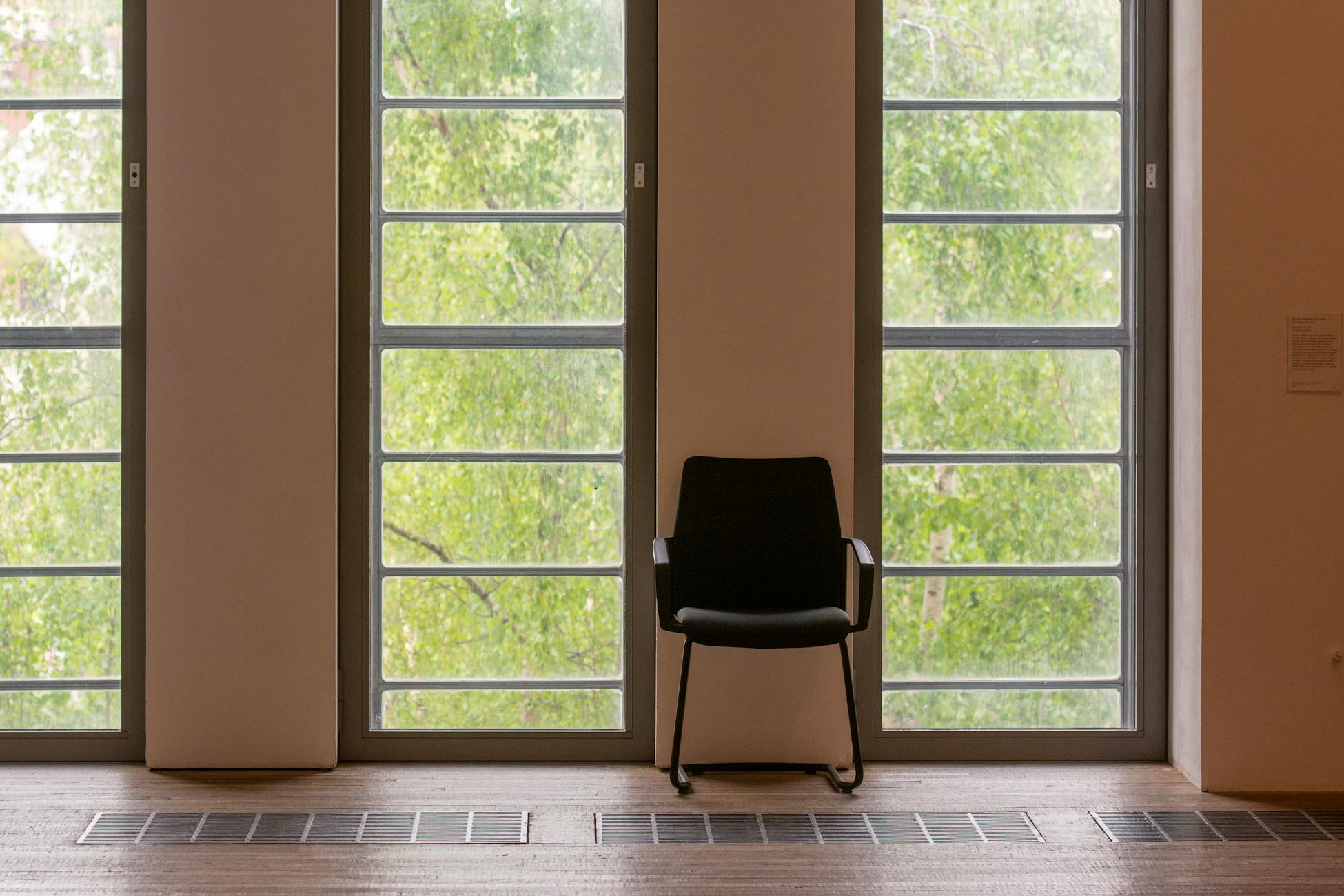
The Tuesday afternoon on the couch is not a symptom of decline. It’s a test. Can you sit in the open question without flinching?
What peace actually requires
Peace with unproductive time demands several things simultaneously.
First, a separation between worth and output. This sounds simple and is extraordinarily difficult. Every performance review, every promotion, every award, every client thank-you — those reinforced a specific neural pathway: I produce, therefore I matter. Disconnecting the two requires building new pathways, which happens through repetition and emotional engagement, not through intellectual insight alone. You have to practise being still and surviving it.
Second, a tolerance for the feelings that surface during stillness. Boredom. Grief. Uncertainty about purpose. The specific loneliness that belongs to early retirement — being surrounded by free time and having no idea who you are inside it — is real and worth acknowledging rather than managing away with a packed schedule.
Third, a willingness to redefine what a good day looks like. For decades, a good day meant accomplishment — tasks completed, goals hit, problems resolved. Rebuilding that metric around presence, curiosity, sensory pleasure, or simple rest is a radical act of self-revision. Nobody hands you the template. You build it slowly, and often clumsily.
A Tuesday afternoon, reconsidered
So here you are. Two o’clock. Weekday. Nothing on the calendar. The house is quiet. There’s a cup of tea going cold beside you. You’ve been looking out the window for twenty minutes and a part of your brain is already composing a list of things you could be doing instead.
I recorded a video recently about what I call the retirement trap—that peculiar shock when high-achievers suddenly find themselves with unstructured weekdays and no idea who they are without their work identity. The psychological pattern is strikingly similar whether you’re actually retired or simply trying to give yourself permission to rest on a random Tuesday.

The radical act is to notice that list and let it dissolve.
Not to argue with it. Not to justify your rest with a philosophical framework or a neuroscience citation or a wellness article. Just to notice the pull toward productivity and choose, deliberately, to remain where you are.
This is the psychological muscle that almost no career prepares you to develop. Our culture celebrates the person who gets up early, works late, pushes through, optimises. The idea that burnout signals a systemic problem rather than a personal failure is only beginning to gain traction. For most people over 55, the dominant narrative of their working life was: push harder.
Undoing that narrative takes more courage than following it ever did.
I created a course called Your Retirement Your Way largely because I watched too many brilliant people — executives, teachers, clinicians, tradespeople — crumble when their title disappeared and their calendar emptied. They didn’t need more activities. They needed a new relationship with stillness.
The person who can sit in an unproductive afternoon without spiralling into guilt has done something difficult. They’ve separated who they are from what they produce. They’ve confronted the default mode network’s inventory of doubts and chosen not to flee. They’ve accepted that a life can hold enormous value in a moment where nothing measurable is being accomplished.
That’s earned peace. It takes years to get there. And it looks, from the outside, like someone doing absolutely nothing.
I built Your Retirement Your Way because I kept meeting people who’d achieved career success but felt completely unmoored when the structure of work disappeared—this shift from productivity-as-identity to peace-with-presence is exactly the territory we explore together there.
Which is exactly the point.