

Most people think protecting your brain in later life requires puzzles and supplements and mental exercises — but the most powerful neuroprotective factor researchers have identified is simply having someone who is genuinely glad to see you


Your brain protects itself through other people. Not through crosswords, not through omega-3 capsules, not through apps that promise to sharpen your working memory in twelve minutes a day. The single most underestimated factor in cognitive longevity is relational — whether someone in your life is genuinely glad to see you, and whether you know it in your bones.
The conventional wisdom says otherwise. We’ve been sold a story about brain health that centres on individual effort: do the puzzles, take the supplements, learn a language, download the training program. The wellness industry has built a substantial infrastructure around the idea that your brain is a muscle you can exercise in isolation. And there’s a kernel of truth in it — recent research has shown that cognitive training can boost acetylcholine, a brain chemical that typically declines with age. That’s real. Nobody is arguing that mental stimulation is useless.
But here’s where the story gets interesting. When researchers compare the effect sizes — how much each factor actually moves the needle on cognitive decline — social connection dwarfs almost everything else on the list. And the particular dimension of social connection that matters most is startlingly specific. It’s reciprocal warmth. Someone who notices your absence. Someone whose face changes when you appear.
What the loneliness research actually reveals
We tend to talk about loneliness as an emotional problem. A feeling. Something soft and subjective, best addressed with platitudes about getting out more. Neuroscience tells a different story.
Research indicates that when the brain perceives social isolation — and perception is the key word, because you can be lonely in a crowd — it triggers a cascade of stress responses. Cortisol rises. The amygdala stays hyper-vigilant. Inflammation becomes chronic rather than episodic. A study published in Proceedings of the National Academy of Sciences identified a specific pattern — called the conserved transcriptional response to adversity — in which loneliness upregulates inflammatory gene expression while suppressing antiviral responses. Over time, this biological state accelerates the same processes we associate with neurodegeneration.
Research published in 2025 found that social isolation compounds with other risk factors — like hearing loss — to dramatically accelerate memory decline. The mechanism isn’t mysterious: when people withdraw from conversation and connection, the brain loses the constant, complex stimulation that relationships provide. Language processing, emotional regulation, perspective-taking, conflict resolution — these aren’t abstract skills. They’re neural workouts that no app can replicate.
And the damage is cumulative. A brain that goes years without deep reciprocal connection doesn’t just stall. It deteriorates.
The face that lights up
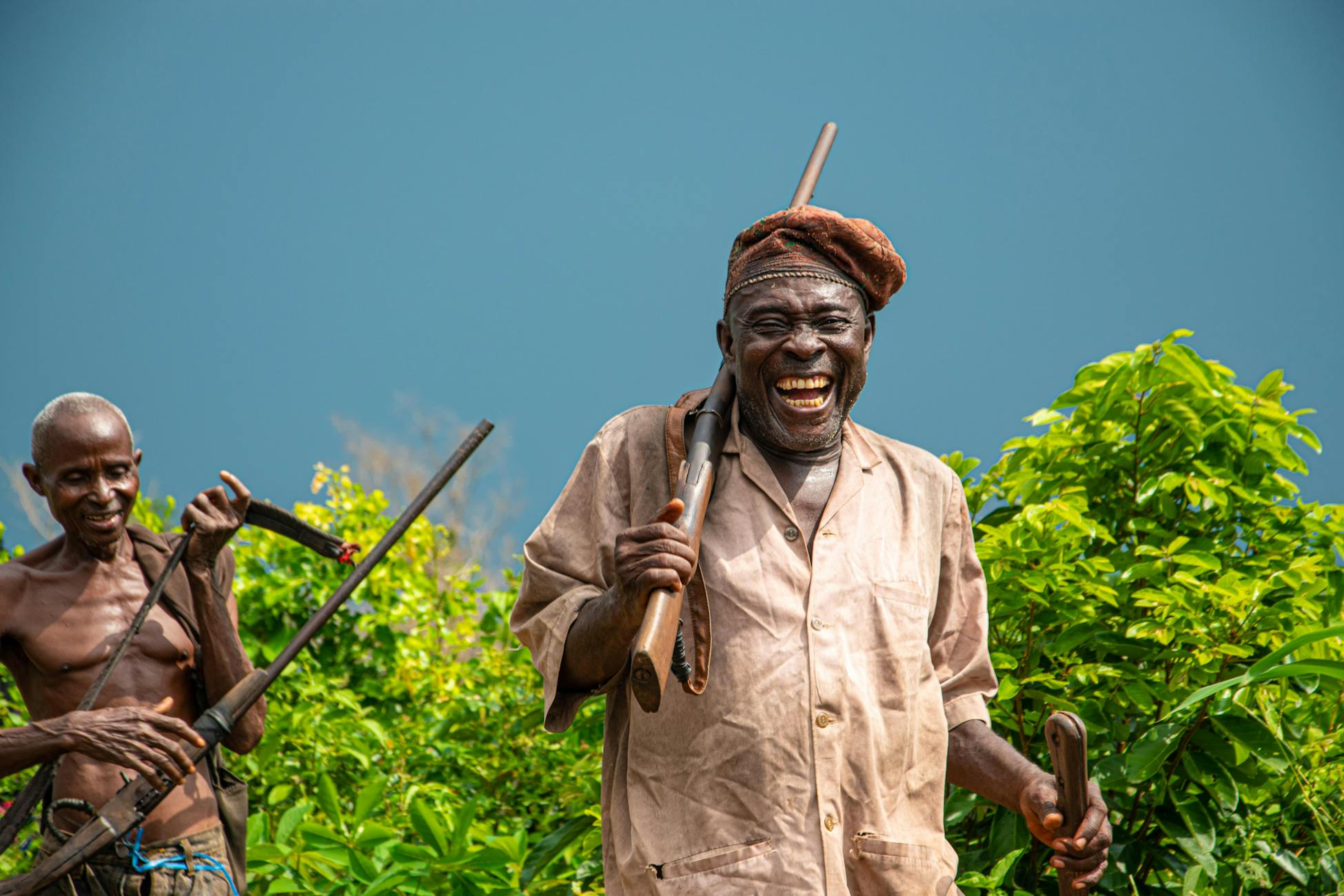
The brain registers the difference between dutiful contact and genuine delight with ruthless precision. Research on facial expression processing — including work by Niedenthal and colleagues — demonstrates that we simulate others’ emotional expressions in our own motor cortex to decode authenticity, a process that happens in milliseconds. Separately, neuroimaging research has shown that experiences of social warmth and acceptance activate ventromedial prefrontal regions associated with safety signalling, which in turn dampens the hypothalamic-pituitary-adrenal axis — the body’s primary stress response system. You can’t fake it past the nervous system.
A woman I worked with — I’ll call her Margaret — had a highly structured retirement. She volunteered at three organisations, attended a book club, went to Pilates twice a week. By any external measure, she was doing everything right. She was also profoundly lonely. When I asked her who was glad to see her, she went quiet for a very long time.
Eventually she said something I’ve heard versions of many times since: people appreciated what she did, but she wasn’t sure anyone would truly miss her if she stopped showing up.
That sentence contains the entire problem. Activity without attachment. Presence without being seen.
Why the brain needs to be known
A major study released in late 2025 found that building strong relationships throughout life — from loving parents in childhood to close friends and active communities in adulthood — may literally slow how the body ages at the cellular level. The researchers measured biological aging markers and found that people with rich relational histories showed measurably younger cellular profiles than their chronological age would predict.
Think about that. Relationships slowing aging at the cellular level. Not supplements. Not brain training. Relationships.
The brain, it turns out, evolved to be known by other brains. We are social organisms down to our molecular structure. The prefrontal cortex — the region responsible for planning, decision-making, and the kind of complex thought we associate with cognitive sharpness — is disproportionately developed in humans precisely because we navigate complex social worlds. This is the core insight of the social brain hypothesis, supported by comparative research showing that primate species with larger social groups have correspondingly larger neocortical volumes. When that social world shrinks or becomes transactional, the prefrontal cortex loses its primary workout.
This is why the US POINTER trial — one of the largest studies on lifestyle interventions for brain health — includes social engagement as one of its key pillars alongside exercise, nutrition, and cognitive challenges. The researchers understood that removing the social component would undermine the effectiveness of everything else.
Puzzles in isolation are just puzzles. Puzzles with a friend who teases you about your competitive streak are neuroprotection.
The retirement trap and the reciprocity gap
This matters most during life transitions — and retirement may be the biggest one most people face. The specific loneliness that follows leaving work often has nothing to do with missing the job. It has everything to do with losing the relational context that came with it.
At work, people greeted you in the morning. They asked your opinion. They noticed when you were absent. You existed in a web of daily micro-recognitions that told your nervous system: you belong here, you are seen, you matter to the functioning of this group. Then retirement comes, and those signals vanish overnight. The brain’s threat system — the same amygdala activation that protected our ancestors from exile — fires up. I’ve watched it happen in people who chose retirement joyfully, who planned for it meticulously. The financial plan was flawless. The emotional transition was anything but.
Some respond by filling every hour. Volunteering, consulting, joining boards — not out of genuine desire but because stillness feels threatening. Others withdraw entirely. Neither strategy addresses the core need: having someone who is genuinely glad you exist.
One pathway to that kind of connection is deceptively simple. Help someone — not in the abstract, large-scale, put-it-on-your-CV sense, but a specific person in a way that creates genuine reciprocity. Researchers at the University of Texas found that regular volunteering or helping others outside the home can reduce the rate of cognitive aging. But the mechanism isn’t altruism as an abstract virtue. It’s that helping creates connection. It embeds you in a relational web. Someone expects you. Someone’s day is better because you showed up. And your brain registers all of it.
The catch — and there’s always a catch — is that helping only protects the brain when it flows both ways. People who help compulsively, who define themselves entirely through usefulness, often end up more isolated rather than less. They’re performing connection without receiving it. Writers on this site have explored how early praise patterns can wire people to believe they only deserve space when they’re solving problems. That wiring doesn’t protect the brain. It exhausts it.
Real neuroprotection comes from the full loop: I see you, you see me, and neither of us is keeping score.

What this looks like in practice
I remember birthdays. I send follow-up messages after hard conversations. I ask the second question — not just how they are, but what happened with the specific thing they were worried about last week. These aren’t personality quirks. They’re investments in the kind of relational fabric that keeps brains alive.
I explore this idea more deeply in a video I made about the retirement fear no one talks about—that quiet dread of becoming invisible, of no longer mattering to anyone—because it turns out our brains need to be needed just as much as our hearts do.

And I notice when people do this for me. When a friend texts not because she needs something but because she was thinking about me. When my neighbour brings over extra lemons from her tree and stays for twenty minutes of meandering conversation about nothing in particular. The brain doesn’t distinguish between grand gestures and small consistent ones. Consistency is what the nervous system trusts.
The practical implications are clear, and they run counter to most brain-health advice. Instead of adding another cognitive exercise to your morning, consider: when was the last time someone’s face genuinely lit up when they saw you? When was the last time you let someone see you — not the competent, together version, but the uncertain, mid-question version?
If you can’t answer those questions easily, that’s worth paying attention to. More than any supplement. More than any puzzle.
The quiet revolution
The science on this will continue to accumulate. Yale recently established a new hub dedicated to understanding aging and cognitive health, moving beyond reductive models that treat the brain as an organ in a jar. The direction of the research is unmistakable: human cognition is socially embedded, socially maintained, and socially degraded when connection is lost.
But you don’t need a research centre to act on this knowledge. You need one person. Maybe two. People who know your name and use it warmly. People who would notice a shift in your mood before you announced it. People who would tell you the truth even when agreement would be easier.
If those people are already in your life, protect those relationships with the same seriousness you’d bring to a medical diagnosis. They are doing more for your brain than any intervention on the market. If those people are not yet in your life, finding them is not a soft goal or a nice-to-have. It is, according to the best science we have, the most important thing you can do for your long-term cognitive health.
If you’re navigating retirement or any significant life transition and the relational dimension feels thin, I created a free guide called Thrive In Your Retirement that addresses this directly — how to build a life structure that protects not just your schedule but your sense of being known.
Because the brain doesn’t care how many puzzles you solved today. It cares whether someone is waiting for you on the other side of the door. And whether the look on their face when you walk through it tells your ancient, vigilant nervous system the one thing it most needs to hear.
This insight about connection is exactly why I created Your Retirement Your Way — because so many people plan financially for retirement but forget to design for the relationships and sense of belonging that actually protect our brains and our wellbeing.
You belong here. You are seen. Stay.