

Most people don’t realise one long-haul flight can cancel out a year of “being sustainable”—and it raises a question we rarely ask

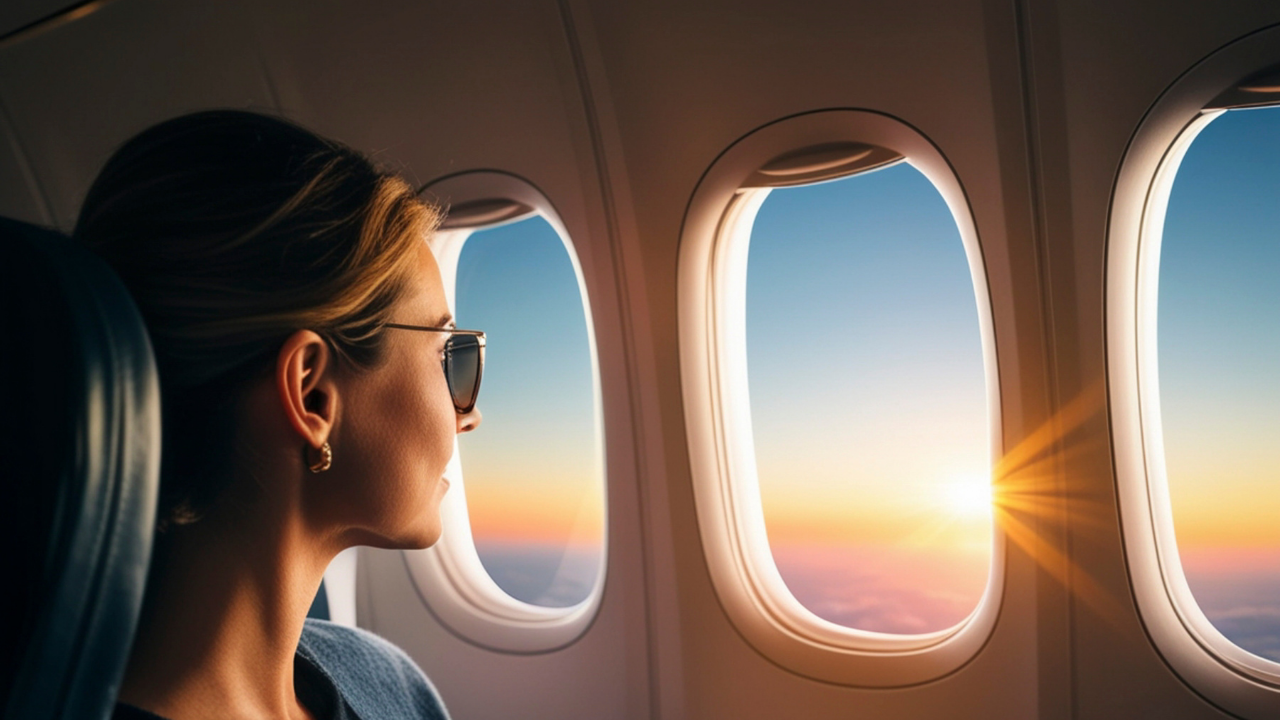
Most people assume living sustainably is about the small things—recycling, using less plastic, turning off lights, maybe even changing what they eat. And those things do matter.
But there’s one modern habit that quietly outweighs almost all of them combined—and we rarely talk about it.
A single long-haul return flight can produce as much carbon as an entire year of everyday lifestyle choices.
That doesn’t mean people are doing the wrong thing. It means we may be focusing on the visible changes rather than the impactful ones.
Because flying doesn’t feel like a habit. It feels like a reward. A freedom. A life well lived.
And once you see the numbers clearly, it doesn’t just change how you think about travel.
It changes how you think about choice.
The numbers that quietly change the conversation
Take a typical long-haul return flight from Australia to Europe. That one trip alone can generate somewhere between two and four tonnes of carbon dioxide per person. It’s not a small number—it’s a life-sized number that sits alongside the total emissions from a year of driving or running a household.
Even meaningful lifestyle changes, like shifting to a lower-meat diet, often take years to match the impact of that single decision. Which is why aviation is often described as a “high-impact, low-frequency” behaviour. You don’t do it every day, but when you do, the effect is substantial—and far greater than most people realise.
And yet, unlike driving or plastic use, it remains largely absent from everyday conversations about sustainability.
Why this isn’t talked about more
Part of the reason is practical. Aviation is difficult to replace. Unlike cars, which are steadily transitioning toward electric alternatives, planes still rely on fuel systems that don’t yet have scalable replacements. Sustainable aviation fuels exist, but they are limited and expensive, and newer technologies are still years away from widespread use.
But the deeper reason is not technological—it’s psychological.
Flying doesn’t feel like a habit. It feels like something we’ve earned. It represents freedom, exploration, and connection. It’s the trip to see family, the long-awaited holiday, the experience that marks a new chapter. And because of that, we place it in a different mental category—one that feels separate from everyday responsibility.
In more remote places, this becomes even more complex. Distance is a defining reality, and flying is often the only practical way to access the wider world. So the idea of “reducing flights” can feel less like a behavioural tweak and more like a loss of possibility.
And so, the conversation stays quiet.
The gap between what we do and what matters most
This creates a subtle but important disconnect. Many people are making genuine, thoughtful efforts to live more sustainably—but those efforts tend to focus on areas that are visible, manageable, and easy to integrate into daily life.
Meanwhile, some of the highest-impact decisions remain largely untouched, not because people don’t care, but because those decisions are tied to identity, lifestyle, and meaning.
This isn’t about guilt. It’s about clarity.
Because once you understand the scale of the impact, it raises a deeper question: are we focusing our energy on the changes that feel easiest, rather than the ones that matter most?
Where this connects to how we live in our second act
One of the ideas I often come back to is that a meaningful life—especially in our second act—isn’t just about financial wealth. It’s about how we balance time, connection, health, and experience alongside it.

And this is where the conversation about travel becomes more nuanced.
Because travel sits at the intersection of several types of wealth. It builds memories. It deepens relationships. It expands perspective. It contributes to what many people would describe as a rich and meaningful life.
But like all forms of wealth, it comes with trade-offs.
When we begin to see those trade-offs clearly—not through guilt, but through awareness—we start to make different kinds of decisions. Not necessarily fewer experiences, but more intentional ones.
A more grounded way forward
The answer isn’t to stop travelling or to strip away the experiences that bring life meaning. It’s to approach them with a different level of consciousness.
Some people are choosing to fly less often, but stay longer when they do. Others are combining trips instead of taking multiple shorter ones. Some are simply becoming more deliberate about why they travel, rather than defaulting to it without reflection.
These are not dramatic changes. They are quiet recalibrations—small shifts that bring our actions into closer alignment with what we value.
The deeper reflection
Ultimately, this isn’t just a conversation about aviation or emissions. It’s a conversation about awareness.
Because a meaningful life isn’t built on eliminating every contradiction or making perfectly optimised choices. It’s built on seeing clearly—on understanding the impact of what we do, and then choosing how we want to live within that reality.
Not perfectly. But consciously.
And perhaps that’s the real shift.
Not flying less out of obligation, but living in a way that feels more aligned—with our values, our priorities, and the kind of life we are intentionally creating in this next chapter.