

7 things middle-class travelers do at the airport without realizing how they’re perceived

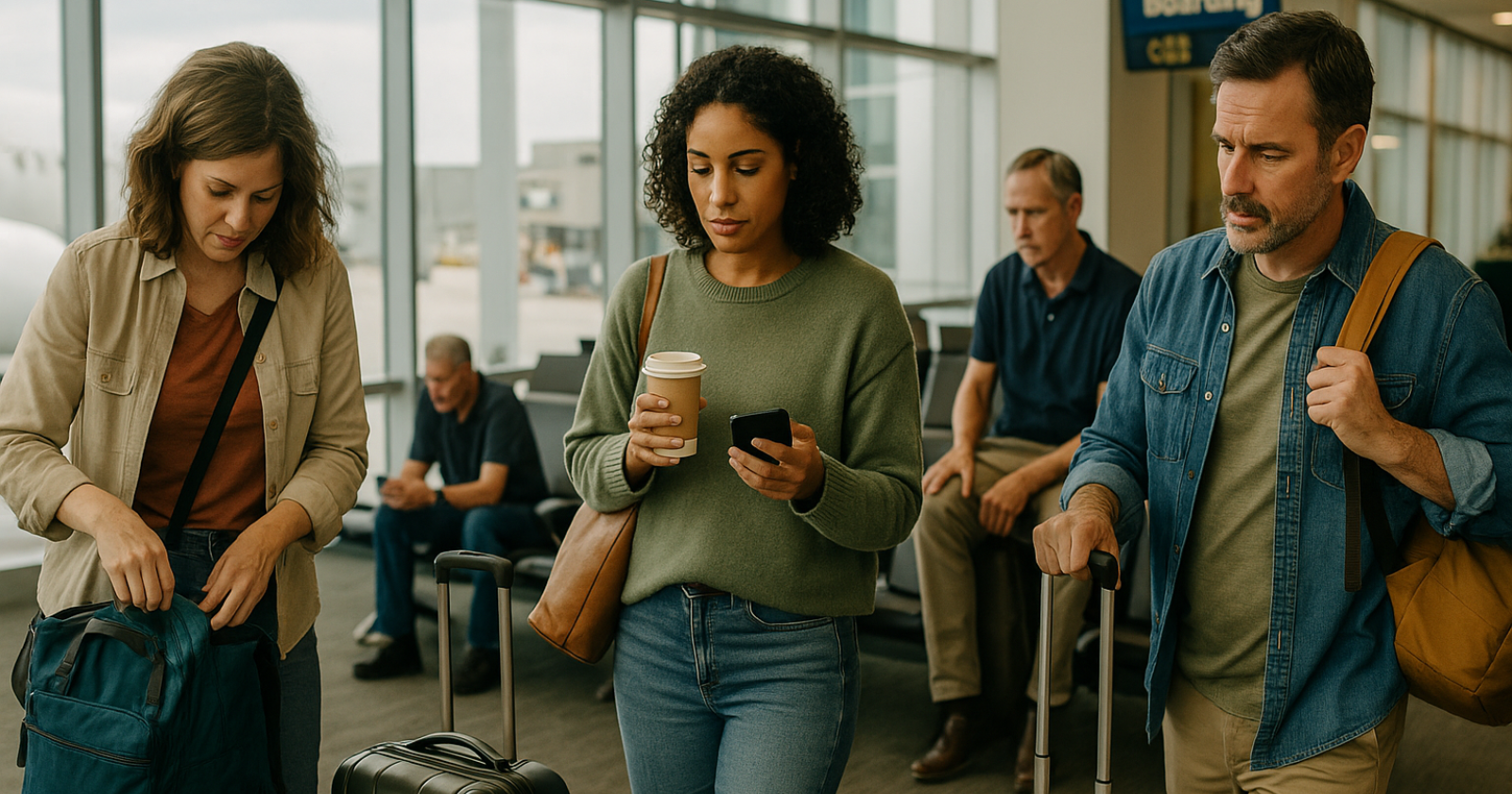
Airports are strange little theaters where our habits get amplified.
We’re sleep-deprived, slightly stressed, and convinced shaving three minutes off any step will transform the trip.
That’s when unconscious patterns kick in — habits we picked up from family, rushed business travel, or a YouTuber who swears by “pro” hacks. I’ve caught myself doing half the things on this list.
None of this is about shaming; it’s about awareness. Because how we move through shared spaces speaks for us, even when we don’t.
The trick is noticing when “efficiency” is just anxiety in a nicer blazer — and swapping it for calm, considerate moves that make everyone’s day easier.
Below are 7 common behaviors many middle-class travelers default to at the airport, plus how they’re read by others and what to do instead.
Small tweaks, big perception shift.
1) Lining up 30 minutes before boarding
We do it to feel in control: “If I’m first in line, I’ll get overhead space and peace of mind.”
To everyone else, an early queue reads as anxious theater that jump-starts a crowd effect.
One person stands, ten more join, and suddenly, half the gate is blocking aisles with backpacks for no real time savings.
Here’s what seasoned travelers notice: airlines board in groups, the plane isn’t leaving without you, and standing for half an hour rarely changes your seat or arrival time.
What does change is the energy at the gate — tense, cramped, impatient. A calmer move: wait until your group is called, then stroll up like you trust the process.
If overhead space worries you, organize your bag beforehand and keep essentials under-seat.
You’ll look confident, not clingy — and you’ll likely board within the same three-minute window anyway.
2) Treating the gate like a campsite
Spreading bags across chairs, building a fortress around an outlet, unwrapping a full picnic—it feels practical.
To others, it looks territorial, like you’re expanding your square footage at the expense of actual people.
The perception is subtle but real: “my convenience over our comfort.” A smarter read of the room is minimalist.
Keep your bag vertical and close to your legs, offer a seat when someone’s scanning for one, and pick foods that don’t perfume the zone for 30 minutes.
If you need to charge, sit on the floor by a wall outlet or bring a small power strip so sharing is obvious.
Two extra touches that scan as classy: keep your shoes on (airlines are not living rooms) and tidy before boarding.
A small footprint reads as considerate, and considerate is the most upgrade-worthy look in any terminal.
3) Playing “carry-on Tetris” in the first empty bin
We all want our bags above our seats.
But stuffing the first overhead you see — turning your suitcase sideways, spreading coats, swallowing space meant for three — broadcasts “my needs first,” and it slows boarding for everyone behind you.
The unspoken standard is simple: big bags wheels-first, small items under the seat in front of you, coats on top after bins fill.
If you want a reference point, airlines and airports broadly align around dimensions and sane use because cabin space is finite. It helps to skim the IATA passenger baggage rules before you fly so you’re not improvising at altitude.
When you load thoughtfully, flight attendants relax, lines move, and you look like the rare traveler who makes things easier instead of tighter.
People notice—and remember—who keeps the shared space usable.
4) Making the gate your office—on speakerphone
Laptop open, voice on blast, AirPods mysteriously missing. It feels productive; it reads as performance.
Speaker calls and video meetings in crowded gates telegraph, “My time matters more than your peace,” and they paint you as unaware of context.
If it must happen, switch to headphones, lower your voice, and keep it short. Better yet, move to a quiet corner, a phone room in the lounge, or handle it by text and email until you’re in a private space.
Protecting the soundscape is a generosity people feel immediately—especially staff who’ve listened to twelve back-to-back sales pep talks already.
Want a power move that actually helps?
Type your updates, send the deck, and end with a clear ask and deadline. Calm beats volume. Every time. And calm is the perception you want following you onto the plane.
5) Speed-walking through people, then bottlenecking
The classic airport hustle: power-stride the concourse like you’re late to your own wedding… then stop dead at the departures board or park at the moving walkway exit to check your phone.
What people read is chaos—urgent when it benefits you, immovable when it doesn’t.
The fix is basic choreography: if you need to stop, slide to the side before your feet do; check behind you before halting; on moving walkways, stand right and pass left; and don’t block escalator exits or jetway doors.
If you truly are tight on time, signal it with body language that’s alert but courteous — eye contact, a quick “excuse me,” a thank-you as you pass.
Airports compress thousands of private timelines into one shared space.
Looking spatially aware signals composure, not desperation—and composure is contagious. It also lowers your heart rate, which is the only upgrade you can’t buy.
6) Complaining loudly at the staff about the rules
Liquids tossed, shoes off (again), random secondary screening — airports can make rule-followers feel punished.
Venting at the nearest human can feel justified in the moment; to everyone else, it reads as entitlement and misplaced blame.
If you want to look like you’ve got range under pressure, prepare and stay gracious.
Know the basics (the TSA liquids rule is still a thing at most U.S. checkpoints), pack with screening in mind, and ask questions with curiosity instead of heat.
“Can you help me understand the fastest way to repack?” works better than a monologue about fairness.
Remember: the officer didn’t write the policy, but they can speed your day—or slow it—based on how the interaction goes.
Nothing reads more “together” than someone who owns what they can control and thanks the person doing a tough job.
7) Crowd-surfing the baggage carousel
We all want our bags first.
Elbows on the belt, toes on the line, laser eyes on every black suitcase — it reads aa s scarcity mindset and blocks the view for everyone behind you, which triggers a slow communal creep forward.
The generous—and smarter—move is to step back two feet. You’ll see more tags, move more fluidly, and give others permission to breathe.
When your bag appears, take one confident step forward, lift, pivot, and exit the zone so the next person can claim theirs.
If you’re traveling with companions, station one person at the “grab” line and one behind to keep the space unclogged.
Bonus: if you’re worried about look-alikes, slap a bright strap or tag on your bag before you fly.
Your goal isn’t to win the carousel — it’s to keep a small crowd from acting like a mosh pit. That’s how calm looks in public.
Final words
Airports reveal our relationship with control, time, and other people.
Most “annoying traveler” behavior isn’t malice — it’s unexamined anxiety in a public place.
The win isn’t perfection—it’s presence.
Notice the impulse to rush, hoard, or perform. Then do the kinder thing by default: wait your turn, shrink your footprint, keep your voice down, step aside, and thank the humans keeping the gears moving.
If you’re anxious about overhead space, pack like a pro and follow industry norms (a quick glance at IATA guidelines helps).
If security lines raise your blood pressure, prep for screening and assume positive intent at checkpoints.
You won’t just look better — you’ll feel better.
And that’s the upgrade that actually changes your trip: walking on with a steadier heart rate, a lighter footprint, and the kind of composure people clock—even if they never say a word.
