

People who love their parents and resent their childhood aren’t confused — they’re just the ones honest enough to hold both things without needing one to cancel the other out

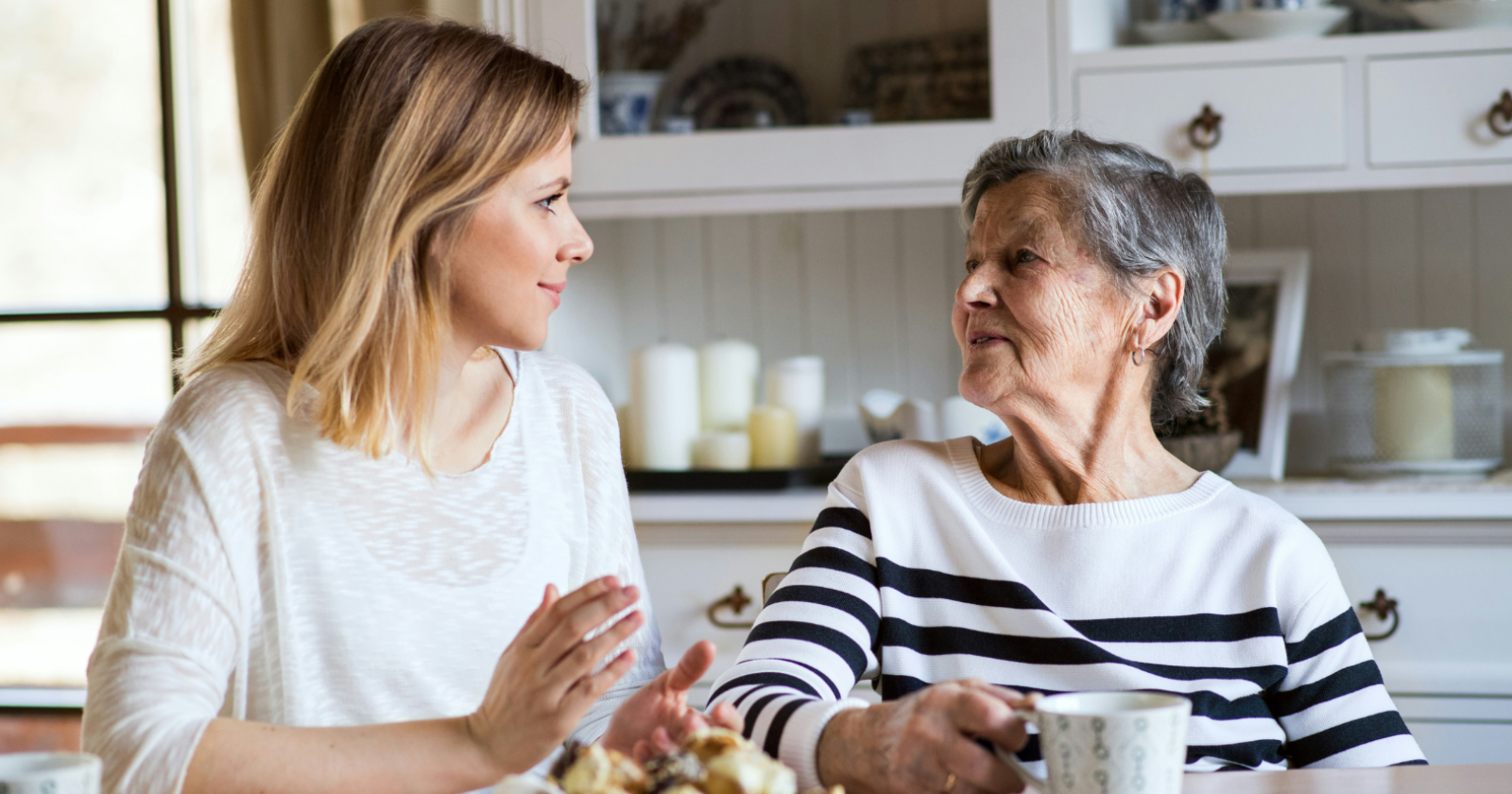
Every time I came back to my hometown, my mother left sliced apples on the table.
She never announced it. There was no ceremony around it. I would arrive, set my bag down, and they would just be there — a small white plate, the fruit already browning at the edges, arranged the way she always arranged things. Quietly, without fuss, in a way that assumed I would be hungry.
I wrote a poem about it once. I think she knows. Maybe she doesn’t.
What I couldn’t explain in the poem, and couldn’t explain to myself for a long time, was why that image carried so much weight in two directions at once. The apples were real love. I never doubted that. And something else was also real, something harder to name, a feeling of living slightly outside the version of me she saw when she left that plate. Both things present in the same room.
Both things true.
The confusion that isn’t confusion
Most people who grow up in loving but complicated families spend years believing they have a problem with contradiction.
They love their parents. They also carry something from childhood that didn’t serve them — a silence that was never broken, a need that was never quite met, a version of themselves they had to shrink or perform or hide in order to keep the peace. And because they love their parents, they feel that the second thing cancels the first, or that feeling both simultaneously means they haven’t forgiven enough, healed enough, understood enough.
The confusion is exhausting. And it’s based on a false premise.
Psychologists who study ambivalent attachment have long understood that it is entirely possible to feel deep love and deep pain toward the same person, rooted in the same relationship, without one negating the other. Ambivalence is not a failure of clarity. In many cases, it is the clearest possible response to a complicated reality.
The people who collapse the two — who decide they either love their parents fully or resent their childhood fully — are often the ones still working to make the story simpler than it actually was.
What resentment actually is
Resentment toward a childhood is rarely about hating the people in it.
It’s more often about grief. About the specific shape of what was missing, or what was present in the wrong form, or what you had to do to yourself in order to stay connected to someone you loved and needed.
Children don’t have the option of leaving. They adapt. They learn which parts of themselves are welcome in the room and which ones are safest kept quiet. Some of those adaptations are so old and so practiced that they don’t feel like adaptations anymore. They feel like personality.
Part of growing up, in the psychological sense, is slowly recognizing which of your patterns were chosen and which were inherited. That recognition often comes with sadness. Sometimes with anger. That anger is not ingratitude. It’s just an honest accounting of what growing up inside a particular family actually cost.
What love looks like when it coexists with grief
The sliced apples were love. I have never been uncertain about that.
What I held alongside it — that strange familiarity when I walked back into the house, the feeling of being known and slightly unknown at the same time — that was also real. Not more important than the love. Not evidence that the love wasn’t enough. Just its own true thing.
This is what honest love often looks like in families. Not simple warmth, not uncomplicated closeness, but something more layered. The person who made you feel safe and the person who couldn’t see you clearly were sometimes the same person on the same afternoon.
Research on emotional complexity suggests that the capacity to hold two contradictory feelings simultaneously, without flattening either one, is associated with better emotional regulation and greater psychological well-being. It’s called dialectical thinking in some frameworks. In ordinary life, it just feels like being honest.
The people who manage it aren’t cold toward their parents. They’re often the most tender. They’ve just stopped needing the story to be cleaner than it is.
Why we resist holding both
There is social pressure, often very quiet and very persistent, to choose.
If you talk about a difficult childhood, people sometimes wait for you to also reassure them that you love your parents. And if you speak about loving your parents, people assume the childhood must have been fine. The two things are treated as mutually exclusive evidence.
Part of this is discomfort with ambivalence in general. It’s easier to place people and their families into clear categories. Part of it is also the cultural weight around parental love, the idea that acknowledging pain is a form of betrayal, that loving someone means making their limitations invisible.
But there is another way to read it. Refusing to collapse the complexity is not a betrayal. It might be the opposite. It might be the only way to love someone honestly, which means loving the real version of the relationship rather than the version that requires you to keep something true about yourself permanently out of the room.
The honesty it actually takes
I think about that plate of apples more than I would expect to.
Not because it represents everything that was difficult. Because it represents how love actually lives inside complicated relationships: in small, reliable gestures that carry genuine care, alongside all the things that were never quite said, all the ways two people can be close and still miss each other in some fundamental way.
Holding that without needing to resolve it into a simpler story is not confusion. It is not unfinished healing. It is not having failed to arrive somewhere cleaner on the other side.
It’s just what it actually means to grow up inside a real family and to love real people, with real limitations, in a childhood that shaped you in ways both useful and costly.
What it means to stop choosing
The people who can hold both without collapsing them tend to have a particular quality in how they talk about their families.
They don’t perform warmth and they don’t perform damage. They speak with a kind of evenness that isn’t indifference. They can say: she left sliced apples on the table every time I came home, and I loved her for it, and something else was also true, and both of those things live in me now, and I’m not going to ask one of them to leave so the other can feel more comfortable.
That’s not confusion.
That’s what it looks like when someone is honest enough to carry the whole thing.