

Nobody tells people over 65 that they’re already doing mindfulness

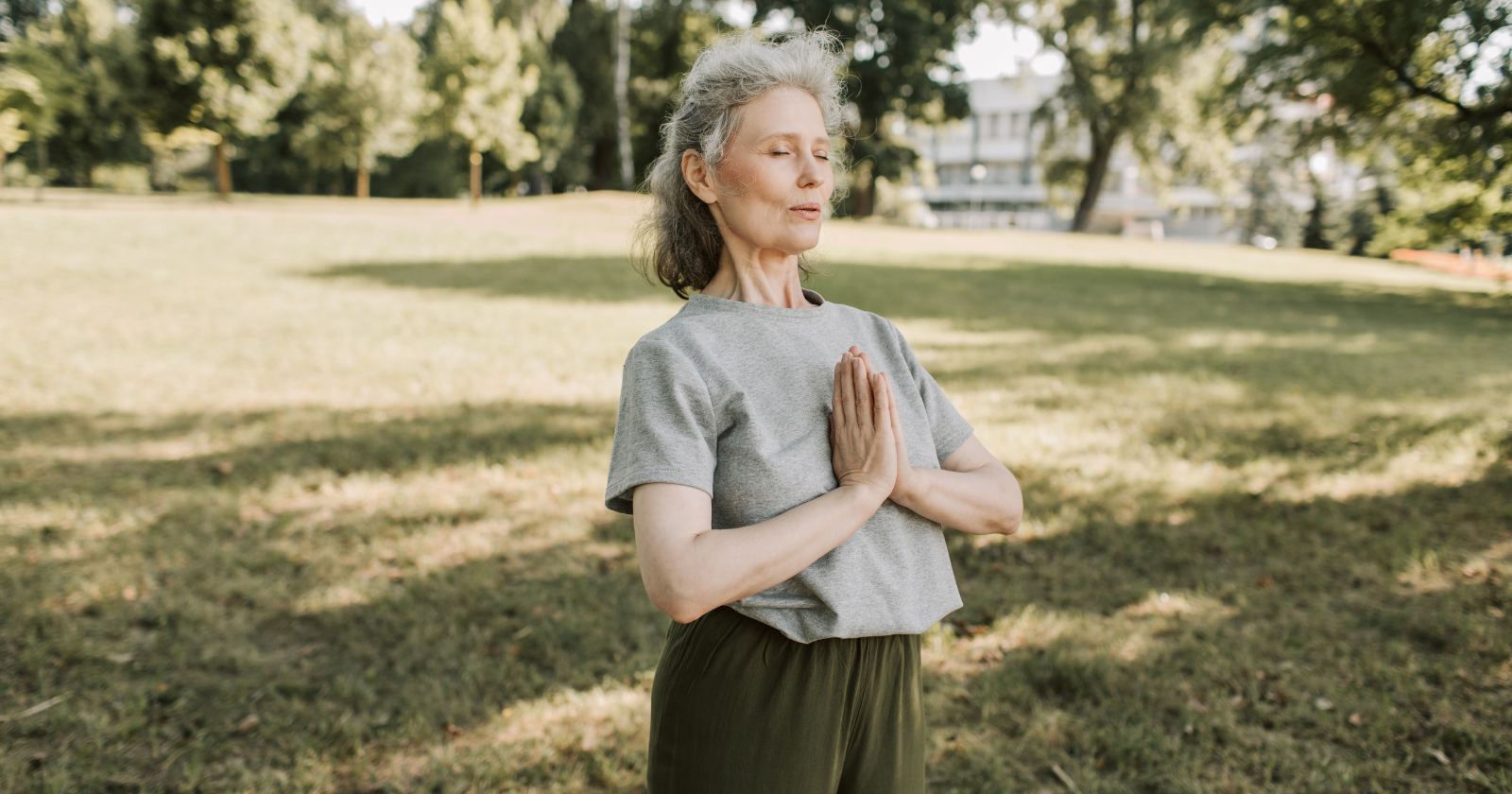
Picture an older person sitting on their porch most evenings, watching the street. That’s it. They just watch. The passing cars. The neighbours walking their dogs. The light changing on the houses across the road. They don’t narrate it. They don’t photograph it. They don’t reach for their phone because they’ve never had the impulse to reach for a phone during a moment that’s already complete.
Now imagine handing that person a book about meditation. They’d probably read a few pages, set it down, and say something like: “Why would I need a book to teach me how to sit?”
They wouldn’t be dismissive. They’d be genuinely confused. Because the thing the book describes — paying attention to the present moment without judgment — is something they’ve been doing every evening for as long as anyone can remember. They just never had a trendy Western word for it.
The research says this is more common than you’d think
A review of mindfulness-based interventions for older adults published in Mindfulness found something researchers didn’t expect: when they measured baseline mindfulness in older participants before any training, the scores were unexpectedly high. So high, in fact, that it created a ceiling effect, making it difficult to show improvement after the intervention. The researchers noted that these findings support the hypothesis that dispositional mindfulness may naturally increase with age, as older adults shift their attention toward present-moment wellbeing.
In other words, older adults walked into mindfulness studies already doing the thing the study was designed to teach them.
Research highlighted in Psychology Today confirms this pattern. Psychologist Ruchika Prakash found that older adults tend to endorse more present-moment awareness, more nonreactivity, and more nonjudgmental attitudes compared to younger adults. When mindfulness researcher Michele Tugade led retreats for middle-aged and older adults, she noticed they had greater ease with the open-focus, nonjudgmental aspects of practice. The younger participants had to work to get there. The older ones seemed to arrive already holding the thing everyone else was searching for.
Why aging naturally produces what meditation tries to train
There’s a well-supported psychological model called socioemotional selectivity theory, developed by psychologist Laura Carstensen and her colleagues. The core idea is that as people perceive their remaining time as limited, their priorities shift. They stop chasing information-gathering goals (networking, impressing, accumulating) and start prioritizing emotionally meaningful ones (savoring, connecting, being present).
This isn’t a decline. It’s a reorientation. And it produces, almost as a side effect, exactly the psychological profile that formal mindfulness training is designed to create: greater present-moment attention, reduced emotional reactivity, increased acceptance, and less compulsive future-oriented thinking.
Think about what that means practically. The 70-year-old who sits on the porch watching birds isn’t doing nothing. She’s doing the thing that a 35-year-old executive is paying $400 a month for in a meditation app. She’s attending to present-moment sensory experience without judgment, without narration, without the need to make it mean something or share it with someone. She’s watching birds because birds are worth watching. Full stop.
The difference is she doesn’t call it a practice. She calls it Tuesday.
What the mindfulness industry gets wrong about older people
And I also think the mindfulness industry has accidentally created a framework that excludes the people who are best at it.
By packaging mindfulness as an app, a class, a technique, a vocabulary, we’ve implied that it requires those things. That you can’t be mindful unless you’re doing it on purpose, in a structured way, with the right language. We’ve turned a natural human capacity into a consumer product and then marketed it to the demographic least likely to need it (stressed-out professionals in their thirties and forties) while overlooking the demographic that’s already living it (older adults who have quietly let go of the need to perform, optimize, and narrate their experience).
When an older person watches the street from their porch, they’re not practicing non-attachment. They’re just not attached. They’re not cultivating beginner’s mind. They’re just curious, the way people get curious when they’ve been alive long enough to notice that the world is interesting if you stop trying to use it for something.
That’s the thing the mindfulness books can’t teach you. Not the technique. The willingness to stop being useful for five minutes and just exist.
The connection to not needing to impress anyone
Why does this shift happen in older adults and not younger ones? The research on socioemotional selectivity tells part of the story. The other part is simpler and harder to quantify: at some point, most people stop caring what others think. Not in a reckless way. In a liberated way. The performance that consumed their twenties, thirties, forties, and fifties — the constant monitoring of how they’re perceived, what they should be doing, whether they’re keeping up — simply runs out of fuel.
And when the performance stops, the present moment rushes in. Because it turns out the present moment was always there. It was just impossible to access while you were busy constructing a self-image for public consumption.
Research on mindfulness and aging well from UC Berkeley’s Greater Good Science Center notes that as people age, they tend to experience less stress, pessimism, and regret compared to middle-aged adults. They let go of trivial concerns. They become more selective about where they invest their attention. These aren’t losses. They’re gains that happen to look like subtraction from the outside.
The 68-year-old who listens to rain without reaching for a phone isn’t doing mindfulness. She’s doing what happens when you subtract forty years of social anxiety, professional ambition, and the need to document your experience for an audience that was never really watching.
What’s left, after all that subtraction, is presence. Pure, unbranded, un-apped presence. The kind that doesn’t need a cushion or a timer or a soothing voice telling you to return to your breath. The kind that happens when you’ve finally stopped performing and discovered that the world was always here, waiting for you to notice it.
What I’m learning from the people who don’t call it meditation
I sit on my cushion every morning and deliberately practice what many older people seem to do naturally every evening. That’s not a criticism of my practice. It’s an acknowledgment that I still need the structure because I haven’t yet arrived at the place they’re standing. I’m still unlearning the performance. Many of them finished unlearning it years ago.
The people I’ve observed doing this best are the ones who would never use the word mindfulness. The older person watching the street from a balcony. The men playing chess in the park. The woman at the market who arranges her fruit display with the kind of slow, absorbed attention that any meditation teacher would recognise instantly as a state of flow. They don’t need the vocabulary. They don’t need the app. They don’t need anyone to tell them they’re doing it right.
Psychology research keeps confirming what common observation already suggests: older adults aren’t missing out on the mindfulness revolution. They were there before it had a brand name. They arrived at presence not through technique but through living — through enough years of striving and performing and narrating to finally realise that the richest moments are the ones where you stop doing all of that and simply pay attention.
Nobody told them they were doing mindfulness. They didn’t need to be told. They were too busy actually doing it.
