

People who appear decades younger share a specific internal relationship with aging most people rarely build

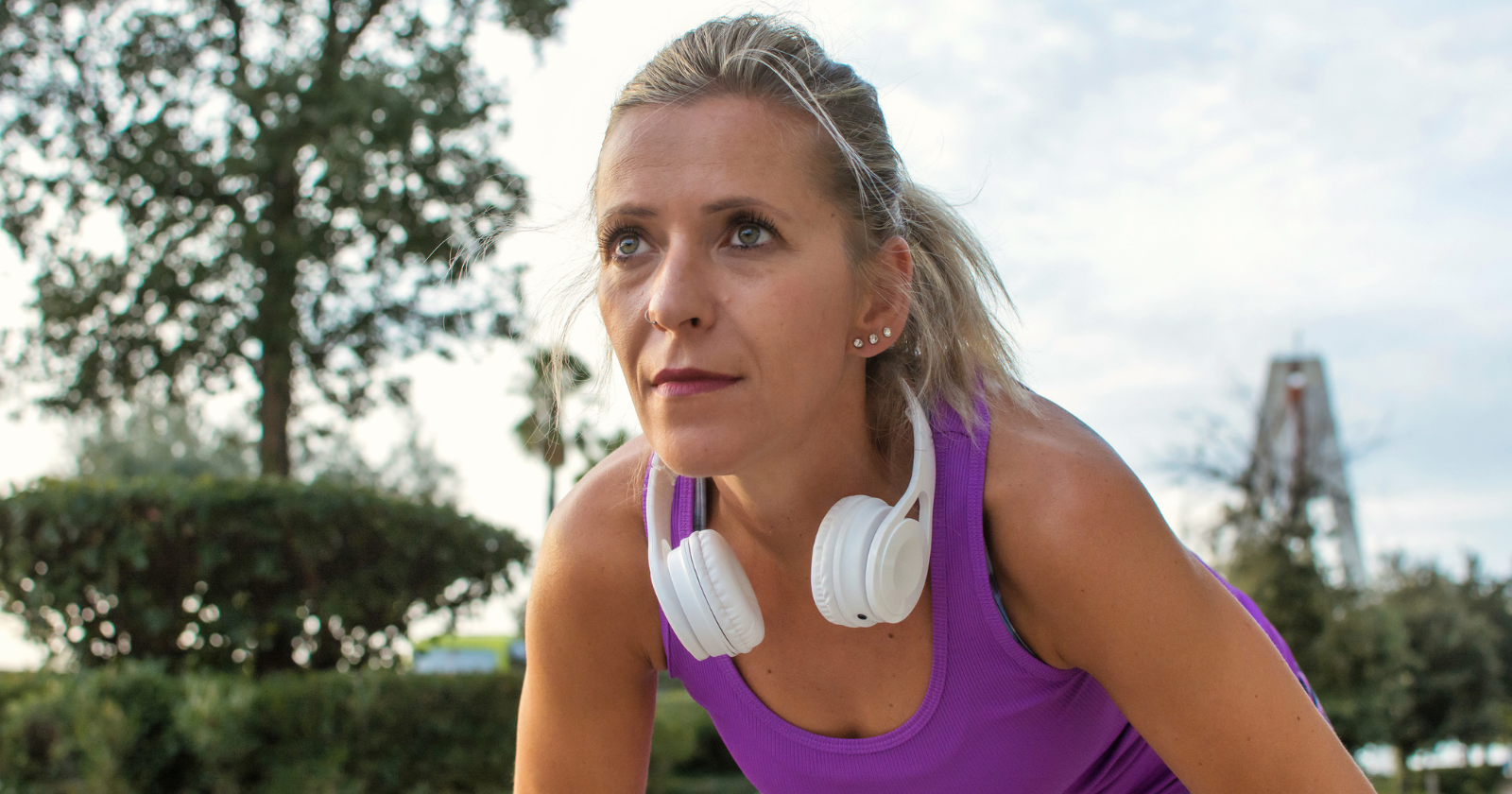
Every so often you meet someone at a dinner or event who looks quite a bit younger than their actual age, and when you ask what their secret is, they almost never say “good genetics” or “expensive creams.” They pause, and then they say something that sounds closer to philosophy than cosmetics.
Once you start noticing this pattern, you can’t unsee it. The people who visibly age more slowly than the calendar says they should share a particular inner posture toward aging itself. And the research agrees with them.
The most underrated number in aging research
Chronological age is how long you’ve been alive. Subjective age is how old you feel. The distance between the two turns out to be one of the most predictive numbers in all of health psychology, and almost nobody outside research circles talks about it.
A 2018 study published in Psychosomatic Medicine pooled data from three large national samples totalling more than 17,000 participants. Across the samples, people on average felt 15 to 16 percent younger than their chronological age. But here’s the part that stops you. Participants who felt approximately 8 to 13 years older than their actual age had an 18 to 29 percent higher risk of mortality over the follow-up period, even after adjusting for demographics, disease burden, physical function, depression, and physical inactivity.
Feeling older, independent of being older, raises the statistical likelihood that you’ll die sooner. Let that one sit.
The 7.5 years Yale found
If that sounds dramatic, it gets more dramatic.
Becca Levy at the Yale School of Public Health has spent decades studying what she calls stereotype embodiment, the process by which the beliefs a culture holds about aging quietly lodge themselves inside individual bodies and shape health outcomes. In a landmark study published in the Journal of Personality and Social Psychology, Levy and colleagues followed participants for more than two decades and found that people with more positive self-perceptions of aging, measured up to 23 years earlier, lived 7.5 years longer than those with less positive self-perceptions.
Seven and a half years. That’s a bigger longevity effect than most people get from controlling their blood pressure, their cholesterol, or their body weight. And it comes from what is essentially a bundle of beliefs about what aging means, absorbed slowly over a lifetime, usually without the person being aware of it.
The Harvard study that nobody can quite believe
The one that still amazes me every time I revisit it is Ellen Langer’s counterclockwise study, conducted at Harvard in 1979. Langer took a group of elderly men to a retreat centre designed to look exactly like 1959, two decades earlier. She asked them to live as though they actually were that age again. They talked about “current events” from 1959, watched those TV shows, and referred to themselves in the present tense of their earlier selves.
After one week, according to a Harvard Gazette interview with Langer, the men showed physical improvements across multiple markers. Their posture changed. Their gait changed. Observers, shown photos taken before and after the week and asked to rate them, judged the men to look visibly younger.
A week. That’s all it took to shift measurable biology. Not because the men did anything different in the gym or the kitchen, but because they’d been temporarily unplugged from the cultural story of what was supposed to be possible for their bodies at their age.
What the “decades younger” people actually do inside
When you read Langer and Levy side by side, and then think about the people you’ve met over the years who look strangely ageless, a pattern emerges. They’re not in denial. They know exactly how old they are. They’re not obsessed with “anti-aging” either, because that framing still treats aging as an enemy and keeps you fighting something you were never going to beat.
What they do is subtler. They refuse to take on the cultural script for what their age is supposed to mean. They don’t surrender interests, ambitions, curiosity, or playfulness on a timeline written by someone else. They stay, to use Langer’s word, mindful. They notice when a thought has arrived that says “people my age don’t do this” and they treat it as information to examine, not a rule to obey.
And because the mind and the body are not two separate systems, the body follows. Cortisol stays lower. Inflammation stays lower. Posture holds. Sleep patterns stay intact. The face, over many years, reflects all of it.
The Buddhist angle that keeps coming back
What he pointed at was the opposite. Because everything is in constant process, no fixed story about any of it can be fully accurate. Your body in your sixties is not the same system it was in your thirties, but the cultural narrative treats the two decades as fixed categories with fixed scripts. The script is the problem, not the passing of time.
The meditative posture toward aging is to meet each morning with curiosity rather than resignation. Research on mindfulness consistently shows that people who cultivate present-moment awareness tend to experience their bodies with less of the dread that cultural aging narratives impose. They listen to what the body actually reports rather than what the cultural script says they should feel.
The real anti-aging tool
If you want the single most useful thing you can do for how you’ll look and feel at 65, 75, or 85, it isn’t cream. It isn’t even genetics, most of which you can’t change.
It’s the quiet daily work of refusing to hand your life over to the cultural story of what decline at your age is supposed to look like. Stay curious. Keep learning. Keep moving. Keep your friends, keep your projects, keep the sense that tomorrow might contain something you haven’t met before.
The people who seem to age more slowly aren’t running from time. They’ve just stopped letting the culture tell them what time means.
