

People who learned to cook from their grandparents display these 8 characteristics that shortcut-dependent generations rarely developed

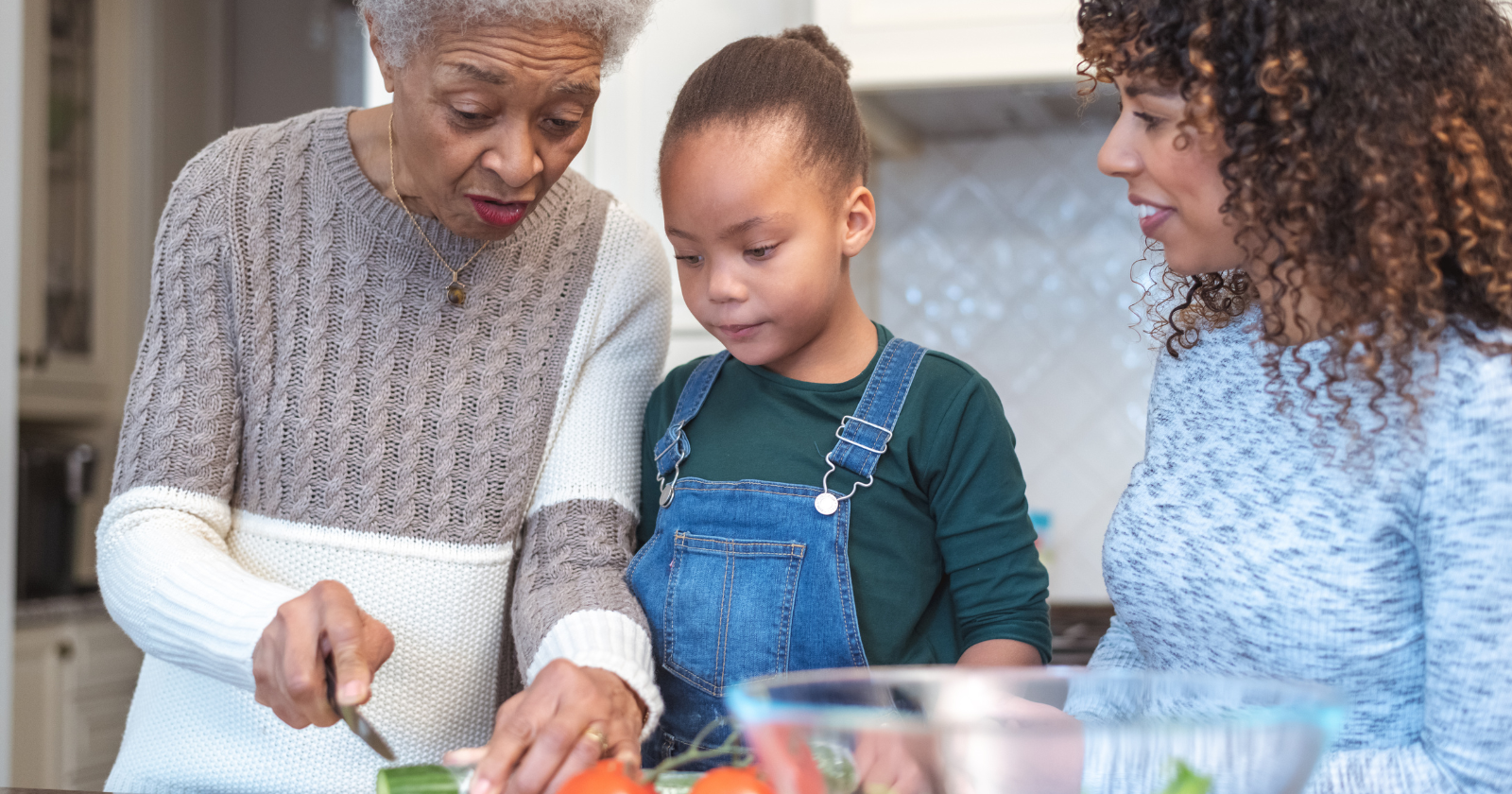
Cooking used to be something you learned by standing next to someone older than you, watching their hands, listening to their stories, and slowly figuring things out through trial and error.
It wasn’t efficient, it wasn’t optimized, and it definitely wasn’t fast.
Today, cooking is often treated like a problem to be solved as quickly as possible.
Meal kits arrive pre-measured, apps tell you exactly what to do, and shortcuts promise the same result with half the effort.
There’s nothing wrong with convenience. Most of us rely on it in some form.
But psychology suggests that people who learned to cook from their grandparents didn’t just learn how to make food.
They picked up a set of mental and emotional traits that are becoming increasingly rare in shortcut-dependent generations.
Traits that quietly shape how you deal with work, relationships, stress, and uncertainty.
If you grew up in a kitchen where recipes were loose suggestions and patience was non-negotiable, chances are these eight characteristics feel familiar to you.
Let’s get into them.
1) They are comfortable with slowness
Many people who grew up cooking alongside a grandparent recall that same quality: an unhurried presence, even when there was a lot happening in the kitchen.
Grandparents moved at their own pace, seemingly unconcerned with how long anything took.
Psychologically, this kind of environment trains your nervous system to tolerate slowness without anxiety.
You learn that not everything needs to happen immediately to be okay.
People who grew up cooking this way tend to be far more comfortable with long processes. They don’t spiral when results take time, and they don’t interpret delay as failure.
This shows up everywhere in adult life. Careers, relationships, personal growth, even mental health all operate on timelines that cannot be rushed.
Shortcut culture teaches us that slow equals inefficient. Grandparent-style cooking teaches us that slow often equals right.
In Eastern philosophy, patience is not passive. It’s an active trust in process.
Standing next to a stove while something simmers for an hour quietly teaches that lesson in a way no book ever could.
2) They learned intuitive problem solving
Grandparents rarely followed recipes exactly. Measurements were approximate, instructions were flexible, and adjustments happened constantly.
This teaches a very specific psychological skill: learning from feedback instead of instructions.
When you’re taught to cook by feel, you develop intuition through experience. You learn to notice subtle cues like smell, texture, and timing rather than relying on external validation.
People with this background are usually better at adapting when things don’t go according to plan.
They don’t freeze when instructions fail because they were never dependent on them in the first place.
Shortcut-dependent systems train compliance. Do this, then that, and expect a guaranteed result.
Grandparent kitchens train autonomy. You become responsible for noticing what’s happening and responding accordingly.
Intuition isn’t mystical. It’s pattern recognition built slowly through repetition, attention, and correction.
3) They respect effort more than efficiency
There’s something humbling about watching someone spend half a day preparing a meal that will be eaten in minutes. No shortcuts, no hacks, just care applied repeatedly.
Psychologically, this builds respect for effort itself, not just the outcome. You learn that effort has intrinsic value even when the reward is fleeting.
People raised this way tend to have a healthier relationship with work. They don’t constantly ask how to minimize effort, but how to do something properly.
Efficiency culture tells us that time saved is always a win. But effort builds things efficiency never will, like resilience, pride, and self-trust.
This dynamic shows up often in entrepreneurship and personal development. People chasing shortcuts often burn out faster because they never learned how to sit with effort.
Grandparents didn’t lecture about hard work. They embodied it.
That kind of lesson sticks.
4) They are less afraid of mistakes
Anyone who has cooked with a grandparent knows mistakes were part of the experience. Food burned, seasoning went wrong, and things didn’t always turn out as planned.
What mattered was how mistakes were handled.
You didn’t throw everything away. You adjusted, laughed, and tried again.
Psychologically, this creates a low fear of failure. Mistakes become information rather than evidence that something is wrong with you.
Shortcut-dependent environments often punish mistakes. If you followed the steps and failed, something feels broken.
Real kitchens teach that mistakes are normal and workable.
This aligns closely with mindfulness principles like non-judgmental awareness. You notice what happened without attaching shame or identity to it.
That mindset becomes incredibly powerful later in life when stakes are higher and mistakes are unavoidable.
5) They developed emotional regulation through routine
Cooking with grandparents often followed familiar rhythms. Same time of day, same movements, same sounds, same smells.
Psychology shows that predictable routines help regulate the nervous system. They create a sense of safety that allows the mind to settle.
People who grew up in these environments often have a greater ability to self-soothe without external stimulation. They don’t need constant novelty to feel okay.
Compare that to modern shortcut culture. Constant notifications, constant switching, constant dopamine hits.
Grandparent kitchens demanded attention and patience. You had to wait, watch, and stay present.
Research suggests that people with this background are often more comfortable being alone with themselves. They’re less reactive and less restless.
That calm didn’t come from discipline. It came from repetition.
6) They learned responsibility without pressure
No one turned cooking into a performance review. You were given small tasks that mattered but didn’t overwhelm you.
Stir this, watch that, don’t let it boil over.
If you messed up, it wasn’t a catastrophe. But you knew your role was important.
Psychologically, this is how healthy responsibility is formed. You learn competence without anxiety.
Shortcut culture often skips this step. Either everything is automated, or expectations are unrealistically high with no guidance.
Neither builds confidence.
Grandparents taught responsibility through participation, not pressure.
That’s why people who learned this way often carry a quiet confidence into adulthood. They know how to contribute without needing constant reassurance that they’re doing it right.
7) They understand that nourishment is an act of care
When a grandparent cooked for you, it wasn’t transactional. It was emotional. The food carried meaning beyond its nutritional content.
Psychology recognizes this as a form of attachment behavior. Providing nourishment is one of the most fundamental expressions of love and safety.
People who experienced this tend to associate food with connection rather than convenience. They’re more likely to cook for others as an act of care, and they understand that feeding someone is about more than calories.
Shortcut culture strips food down to function. Grandparent kitchens elevated it to relationship.
This difference matters more than most people realize. How you relate to food often mirrors how you relate to care itself — giving it, receiving it, and believing you deserve it.
8) They carry a form of cultural memory that grounds them
Cooking with grandparents was never just about food. It was a transmission of identity, history, and belonging.
The recipes, the techniques, the stories told while stirring — all of it wove together into a lived sense of where you come from.
Psychologically, this kind of cultural continuity provides a strong foundation for identity. People who feel connected to their heritage tend to have higher self-esteem and greater resilience during difficult times.
Shortcut-dependent generations often lack this grounding. When everything is outsourced and standardized, the personal thread that connects you to your past gets thinner.
Grandparent kitchens kept that thread strong. Every meal was a quiet reminder that you belonged to something larger than yourself.
That sense of belonging doesn’t expire. It becomes part of how you move through the world — with roots, not just routines.