

Alzheimer’s can begin years before memory loss. Some early signs may have nothing to do with forgetting.

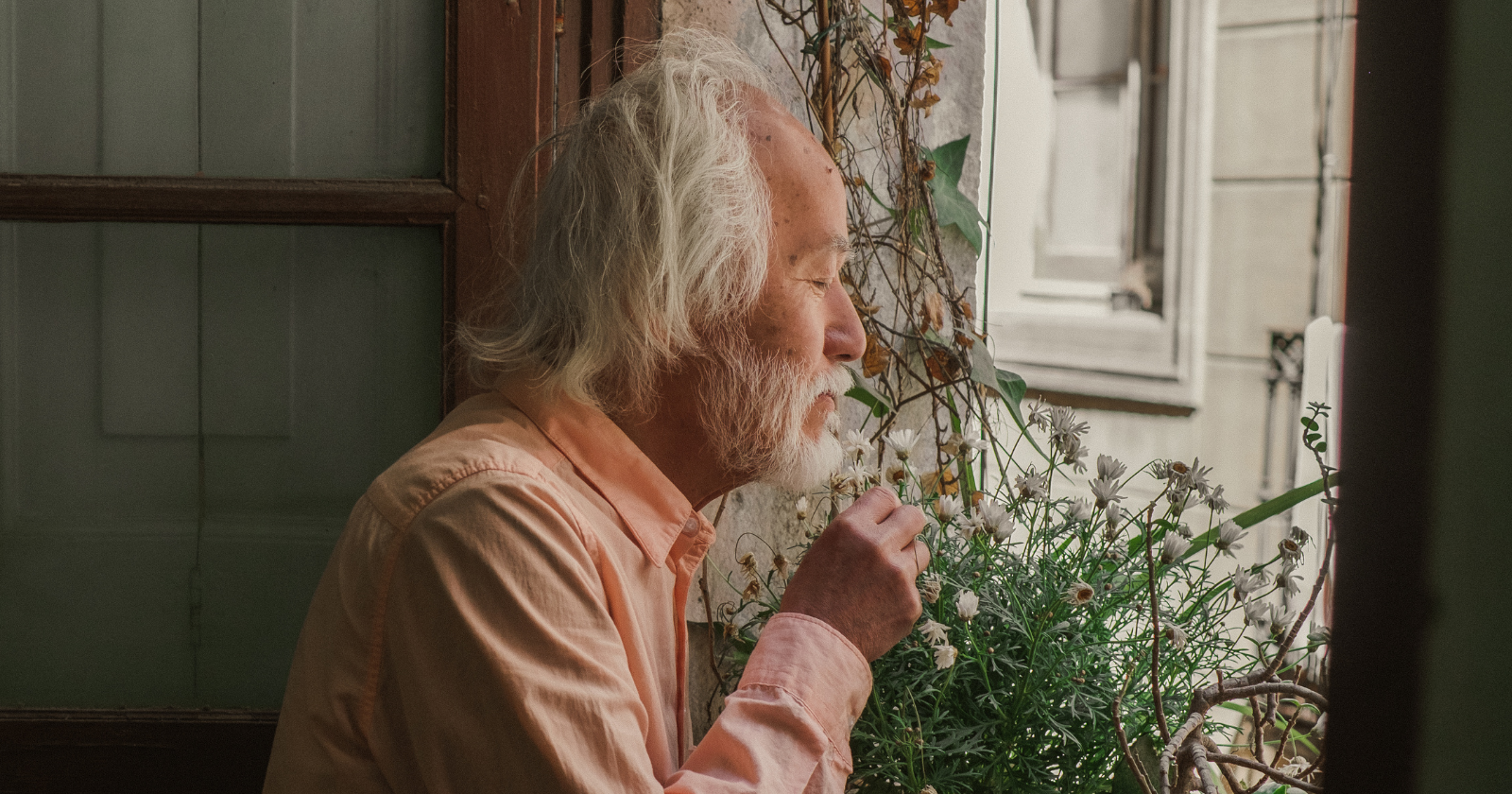
He asks me again where I flew in from. I tell him Singapore. He nods like it’s the first time he’s heard it, then asks the same question a different way fifteen minutes later: when did I get here, how long am I staying. I answer it again.
For a long time I thought this was when his Alzheimer’s started. The forgetting. The repetition. The afternoon I came over and he looked at me like a stranger for half a second before something behind his eyes caught up.
Now I’m not sure anymore.
What the biology actually says
The brain changes that lead to Alzheimer’s begin years, sometimes decades, before anyone uses the word. A landmark study of people with dominantly inherited Alzheimer’s found that amyloid plaques start accumulating roughly twenty-five years before the first clinical symptoms. Brain atrophy and cognitive decline don’t surface until much later, sometimes only five years out.
That means by the time a family notices, the disease has been quietly settling in for a generation. Not a few months. Not a year of “he’s slowing down.” Decades.
This is hard to hold. We’re trained by films and well-meaning brochures to watch for memory loss as the opening act. We wait for the lost keys, the missed appointment, the wrong name. By the time those arrive, the disease has been here so long it’s the late act, not the first.
The signs that look like aging
What comes earlier rarely reads as illness. Researchers studying prodromal Alzheimer’s describe a quieter set of shifts that families typically file under “getting old” or “that’s just how he is”:
- A slow narrowing of the interests someone used to chase
- A flattening of mood that isn’t sadness, more like the heat going out of a room
- The way certain stories stop getting told
- Loss of smell, sometimes years before anyone connects it
- Sleep that gets shallower and stranger
- A growing reluctance to plan anything, to drive anywhere unfamiliar, to call back
These look so much like ordinary aging that nobody flags them. Why would they. Old men get quieter. Old men lose interest in things. That’s what we’re told to expect.
But this is the part nobody warns you about: the disease is happening inside that quietness. The quietness can be the disease, just before it has a name.
The grief of re-reading
What no one prepared me for was the grief that comes after the diagnosis lands and you start looking backward.
You re-read every visit from the last five years. The first call that didn’t come when one always had, which you filed as forgetfulness because that was the script you’d been given. The afternoon someone else was driving him, when he had driven the whole family everywhere for as long as you could remember, and was now in the passenger seat without comment.
Each of these gets re-filed. Not “he was tired.” Not “he’s getting older.” Already this. Already starting.
The clinical word for this is something like retrospective revaluation. The everyday word is closer to: you lose him a second time, this time in the past tense. The man you thought you’d had until last year, you’d already been losing for ten.
There’s no rage in this grief, in my experience. It’s more like a tide pulling back from a shore you didn’t realize was a shore. You see things you didn’t see before. You see how long they’ve been there.
The onset date we want
What I keep coming back to is how badly we want an onset date. A day when it began. A clean line between him and the disease in him, so we know what to mourn and what to attribute to time.
There isn’t one. The biology doesn’t give us that mercy. The plaques start their slow business while he’s still cooking dinner and asking how my mother is and remembering my middle name. By the time the symptom we recognize finally surfaces, many of the people we’ve lost to this have been ill for as long as some of us have been alive.
This is the harder gift of the research, if it can be called a gift. It loosens our grip on the question of when. It also raises a more uncomfortable one: how much of who someone was, in their last apparently-well decade, was already shaped by what was coming? Were those silences his temperament, or were they the disease arriving early?
I don’t have an answer. I’m not sure there is one for any single person. The disease and the man become hard to separate the closer you look.
What it changes in the present
What it does change, for me, is how I watch the people I love who are still well.
I notice when my father stops calling. I notice when a friend’s mother loses interest in the garden she ran for forty years. I don’t pathologize any of it. Most of the time it’s nothing, a bad week, a quiet season, the texture of a long life. But I no longer assume that “she’s just tired lately” means what I used to think it meant.
The signs we were taught to watch for were not the early signs. The signs we weren’t taught to watch for are the ones we’ll have to learn to read, knowing most of what we read will be ordinary, and some of what we read won’t be.
Most of caring for someone with this disease happens in retrospect. The actual present, sitting with him while he asks the same question for the fourth time, is almost easier than the looking-back. He’s right there. He’s holding my hand. Whatever he is in this moment, he is fully it.
It’s the years before that I can’t stop walking through.
He asks me again, before I leave, where I flew in from. I tell him Singapore. He nods like it’s the first time. I hold his hand for longer than I need to, because I am still learning to count the years he’s been ill, and I keep arriving at numbers that don’t seem possible.