

Lonely men who rarely learned to express emotions properly usually had these 9 childhood experiences

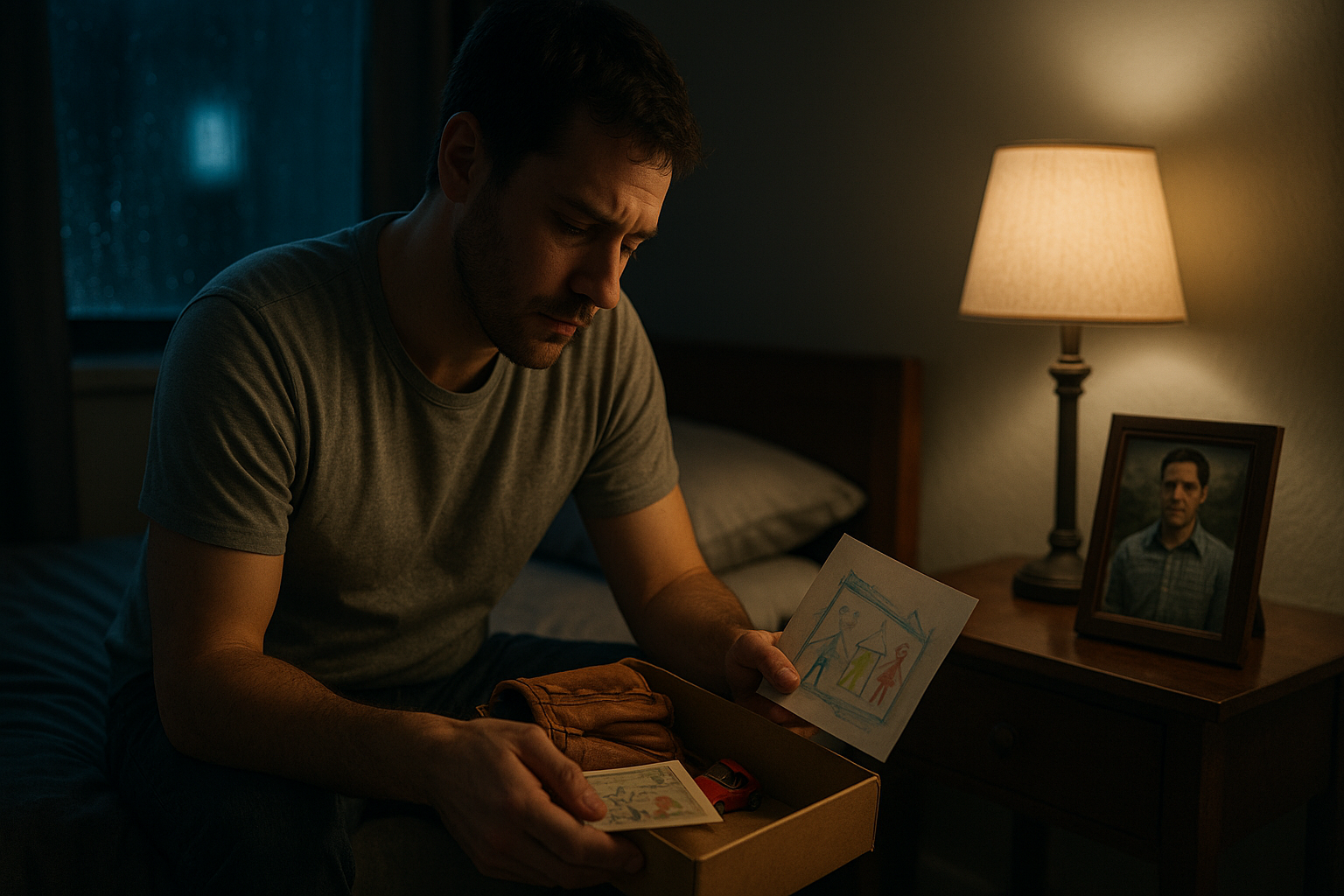
There’s a profound connection between our childhood experiences and the adults we become.
Often, men who struggle with expressing emotions and end up feeling isolated have had particular experiences in their early years.
They could have been subtle or glaring, but their impact runs deep, shaping emotional habits that can last a lifetime.
This doesn’t mean it’s a one-way street to loneliness, though. Understanding these experiences can be the first step toward breaking the cycle.
In this article, we’ll explore the nine childhood experiences common among men who find it challenging to communicate their feelings.
As we journey into the past, we’ll shed light on these patterns and hopefully provide some insight for those seeking to navigate their emotional landscape more effectively.
So, are you ready for some introspection? Let’s dive in.
1) Emotional disconnection in the family
Family connections are our first experiences of emotional interactions.
For some men, their childhood homes may not have encouraged open emotional expression.
This could be due to a number of reasons – perhaps their parents weren’t comfortable with showing emotions themselves, or maybe the family culture was one of ‘tough love’.
This emotional disconnection can result in a child growing up into a man who finds it challenging to express his feelings.
They might struggle with understanding their own emotions, let alone communicating them to others.
But don’t mistake this for a life sentence. Recognizing this pattern can be the crucial first step towards learning healthier emotional habits. And remember, it’s never too late to learn and grow.
So if you’re one of those men who grew up in an emotionally disconnected family, take heart. Your past doesn’t have to dictate your future.
2) Absence of positive role models
Believe it or not, role models play a significant part in shaping our emotional maturity.
Growing up, I didn’t have many around. My father, bless his heart, was a man of few words and even fewer emotions. Showing emotions was seen as a sign of weakness in our household.
As a result, I grew up believing that ‘real men’ don’t express their feelings. It took years of soul-searching and a few hard knocks in relationships to realize how flawed this perception was.
If you, too, lacked positive emotional role models in your childhood, remember this – it’s okay to express your emotions. It’s okay to feel.
And it’s more than okay to learn new ways of connecting emotionally with others.
3) Early exposure to trauma
Trauma in early childhood can significantly impact a person’s ability to express emotions later in life.
Experiences such as loss, abuse, or severe neglect can cause a child to shut down emotionally as a means of self-protection.
Harvard researchers found that children who experienced trauma were more likely to have difficulties understanding and expressing their emotions in adulthood. This could lead to feeling isolated and misunderstood.
It’s crucial for anyone who has experienced early trauma to seek professional help.
Therapy can provide the necessary tools to navigate and express complex emotions, fostering healthier relationships and a better understanding of oneself.
4) Lack of emotional education

Just as we’re taught maths and science in school, understanding emotions is a crucial part of our learning. But unfortunately, emotional education is often overlooked in traditional schooling.
Without this education, children might grow up without the tools to identify or express what they’re feeling.
This can lead to confusion and frustration in adulthood, especially when faced with emotionally charged situations.
But here’s the good news: emotional intelligence can be learned at any age. It requires self-awareness, patience, and practice.
If you find yourself in this boat, don’t be disheartened. It’s never too late to learn and improve your emotional vocabulary.
5) Extreme expectations and pressure
Children who grow up under extreme expectations and pressure may shove their emotions aside in an attempt to meet those demands.
The fear of disappointment or disapproval can lead them to suppress their feelings.
This suppression often carries into adulthood.
Men who experienced this as children may find it challenging to express their emotions openly. They might fear that showing vulnerability equates to failure or being less than perfect.
Remember, it’s okay to be human, it’s okay to have emotions, and it’s certainly okay to express them.
Redefining your understanding of success and self-worth can help break the cycle of suppressed emotions.
6) The stigma of masculinity
The societal concept of masculinity has often linked ‘being a man’ with being strong and silent. This stereotype can be incredibly damaging, especially to young boys growing up.
They learn to equate emotional expression with weakness, which can lead to a lifetime of internalized feelings and loneliness.
This isn’t just harmful emotionally, but also impacts mental health significantly.
If you’ve grown up under the weight of such stereotypes, let’s take a moment here. Being a man has nothing to do with suppressing emotions.
Strength isn’t about silence; it’s about embracing who you are, feelings and all. You’re not alone in this journey, and it’s never too late to seek help and learn new ways of emotional expression.
7) The fear of rejection
Fear is a powerful emotion, and the fear of rejection is a heavy one to bear. As a child, I remember the dread of voicing my feelings. What if they laughed? What if they thought less of me?
This fear often led me to bottle up my emotions, creating a wall between myself and the world around me.
It followed me into adulthood, making emotional expression feel like walking on a tightrope.
If you’ve ever felt this fear, know that you’re not alone. It’s okay to be scared. But it’s also important to remember that expressing your emotions doesn’t diminish your worth.
And sometimes, opening up might lead you to people who truly understand and accept you for who you are.
8) Frequent criticism and ridicule
A childhood marked by constant criticism can significantly impact a person’s ability to express emotions.
Repeated ridicule, especially for showing feelings, can lead children to suppress their emotions as a defense mechanism.
These children often grow into men who find it difficult to openly express their feelings, fearing criticism or mockery. This can result in feelings of loneliness and isolation.
If you faced such experiences as a child, remember that your past doesn’t define you. It’s okay to express your emotions, and it’s okay to seek help.
Change is possible, and it’s never too late to embrace your emotional self.
9) Lack of healthy emotional outlets
Without healthy outlets to express their emotions, children may grow up into men who struggle to communicate their feelings effectively.
Sports, arts, or even simple conversations can serve as conduits for emotional expression.
If you didn’t have these outlets as a child, it’s essential to recognize that it’s never too late to find them.
Exploring new hobbies, activities, or forms of self-expression can help you connect with your emotions and share them with others in a meaningful way.
Final thoughts: The journey of emotional growth
The journey towards emotional expression is a deeply personal and unique one. Our childhood experiences may shape us, but they do not define us.
For men who have struggled to express emotions, remember that it’s never too late to learn and grow.
American psychologist Carl Rogers once said, “The curious paradox is that when I accept myself just as I am, then I can change.”
Acceptance is the first step. Recognizing and accepting your past and your feelings can be the key to unlocking your emotional potential.
Emotions are a part of our human experience – they add colour to our world, help us connect with others, and guide us through life.
It’s time to embrace our emotions, express them, and let them be a bridge rather than a barrier.
The journey may not be easy, but it’s undoubtedly worthwhile. Here’s to growth, understanding, and a future where we can express our emotions freely.