

The strange (imagined) comfort of a 1970s Sunday afternoon

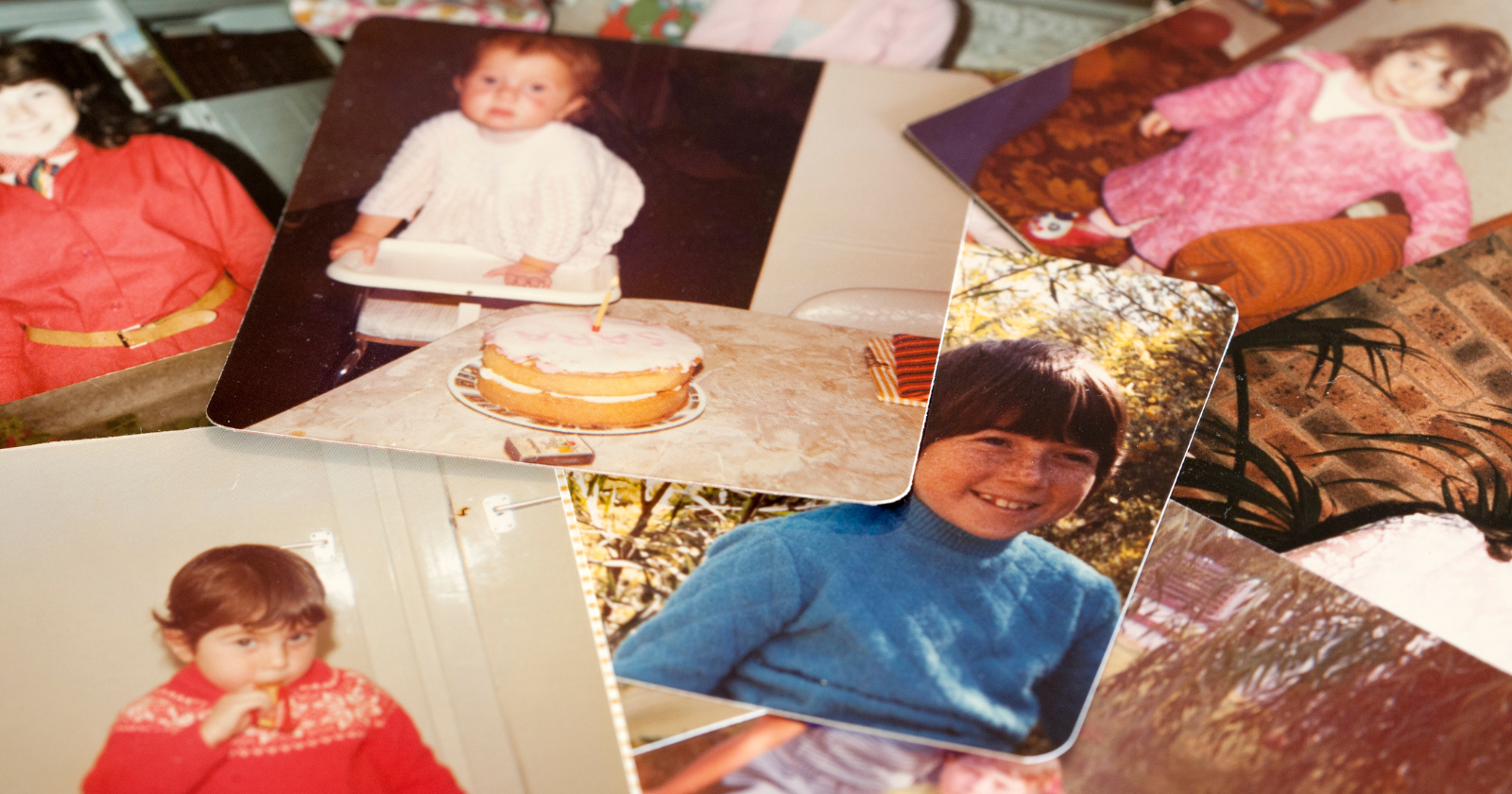
I was not born in the 1970s. I missed the decade entirely. The closest I have come to a 1970s Sunday afternoon is a few faded photographs of my parents in clothes they would now disown, and the way certain Irish houses still smell on a winter weekend — turf, tea, the soft furniture of another era. So when I say I find a 1970s Sunday afternoon strangely comforting, I am admitting the obvious: I am nostalgic for a time I never lived. The longing is real, but the memory is not mine to claim.
The picture in my head is borrowed and probably wrong in most of its details. I see a quiet sitting room. A television in the corner that no one is watching. A phone on the hall wall that does not ring. A newspaper that is finished by mid-morning and will not be replaced until tomorrow. Outside, a road with little traffic. Inside, a person — let’s say a parent in their thirties, around the age I am now — sitting in a chair with a cup of tea and no agenda. They have nowhere to be, nothing to refresh, and no expectation that anyone is trying to reach them.
That last part is the part that does the work. I can recreate the chair, the tea, and a passable version of the silence. What I cannot recreate, without effort, is the assumption that I am unreachable. My phone sits within arm’s reach almost every hour I am awake. A friend might call. Work might email. A piece of news might arrive that changes my mood for the rest of the evening. The architecture of my afternoon is built around the possibility of interruption, even when no interruption arrives.
The 1970s afternoon I picture is built around the opposite. Nobody can find you, and you have stopped expecting them to try. I think it’s hard to overstate how much the small absence of that expectation would change a day.
The science here is gentle but real. At Duke University, regenerative biologist Imke Kirste ran a study originally intended to measure how various sounds affected mice. Silence was meant to be the control, not the variable. She was surprised to find it was the silence that mattered. She described the finding this way: “We saw that silence is really helping the new generated cells to differentiate into neurons, and integrate into the system.” Two hours a day of nothing was the condition that prompted new brain cells to develop in the hippocampus. The mice were not meditating. They were simply not being asked to react to anything.
I think a lot about findings like this when I imagine the 1970s sitting room. The silence in that room is not earned or scheduled. It is the default. There is no app to mute, no setting to enable, no productivity rationale for the quiet. The quiet is just what a Sunday afternoon sounds like.
The other thing I imagine, and miss, is the lack of breaking news. Somewhere in the world on that Sunday afternoon, a war was beginning, a famous person was dying, a market was sliding, a celebrity was being publicly disgraced. None of it would reach the person in the chair until Monday at the earliest, and most of it would never reach them at all. The world’s worst news traveled at the pace of a printed paper or a six o’clock bulletin. You could live for an entire afternoon under the assumption that the world was more or less the way you left it that morning. That assumption now feels like a luxury I have to deliberately manufacture, usually by putting my phone in another room and accepting that I will not be the first person at the dinner table to know what just happened.
The price for skipping the news, in our version of the week, has gotten high. Falling out of the loop for a day feels like falling out of the conversation. I do not think the 1970s person felt that way. They were not behind. They were simply doing their Sunday.
The boredom piece, though, is the one I keep coming back to. The 1970s afternoon in my head has long stretches that are, by modern standards, unforgivably dull. A child staring at the carpet pattern. An adult watching rain through a window. A teenager flipping through the same magazine for the third time. We are not built to tolerate this anymore. Most of us reach for the phone the moment the dullness creeps in.
The psychologist Sandi Mann has spent years studying boredom, and her definition of it is plainer than I expected. “It’s a search for neural stimulation. When that search is not satisfied, we call it boredom,” she told BBC Science Focus. Her view, after running studies that show people are more creative after being made to do something tedious than before, is also unfashionable. “I’m a strong believer in being properly bored every day,” she added in the same interview.
The philosopher Andreas Elpidorou, who wrote a paper called “The Bright Side of Boredom,” frames it slightly differently. In his account, “boredom is best understood as a state that monitors and regulates our behavior.”
Perhaps, it tells you something is off. It nudges you toward whatever is more meaningful than what you are currently doing. Without it, you would stay in the unfulfilling thing forever. Read in that light, the bored child on the carpet is not stuck. The child is being told, slowly and quietly, that they need to invent something. The 1970s afternoon trusted the child to do it.
I do not think the people in my borrowed living room thought of any of this. They were not congratulating themselves for their stillness, their disconnection, their analog patience. They were just having a Sunday. The texture of the day was the air they breathed; it was not a wellness practice. I think this is part of why my version of nostalgia for it is uneasy. Aspiration is not the same as ease. If you have to schedule a 1970s Sunday into a calendar that pings, you have already broken the spell.
I had a small version of this during the long lockdown in 2020. I was in Vietnam at the time, caught by the rules a long way from home, and what hit hardest was not the rules themselves but the not-knowing-when-it-would-end. Underneath that heavier feeling, though, was something quieter that I have rarely been able to find since. Whole afternoons where there was nothing to do, nowhere to go, and no productive reason to refresh anything. I was bored in a way I had not been bored since I was a teenager. I read more. I cooked badly. I sat with my own thoughts, mostly because I had run out of other people’s. When the world came back, that texture left, and I have been trying to catch hints of it ever since.
I cannot visit the 1970s. The nostalgia is for a stage set I never stood on. But I can copy the architecture. The phone goes in the other room. The news is checked once and then closed. The afternoon is allowed to be dull. The mind is permitted to wander. None of this makes me a person in a wool jumper in 1974, listening to the rain in a sitting room with one lamp on. But perhaps it gets me, for a few hours, into the same approximate room.