

8 things people who grew up sharing a bedroom often do as adults without realizing it

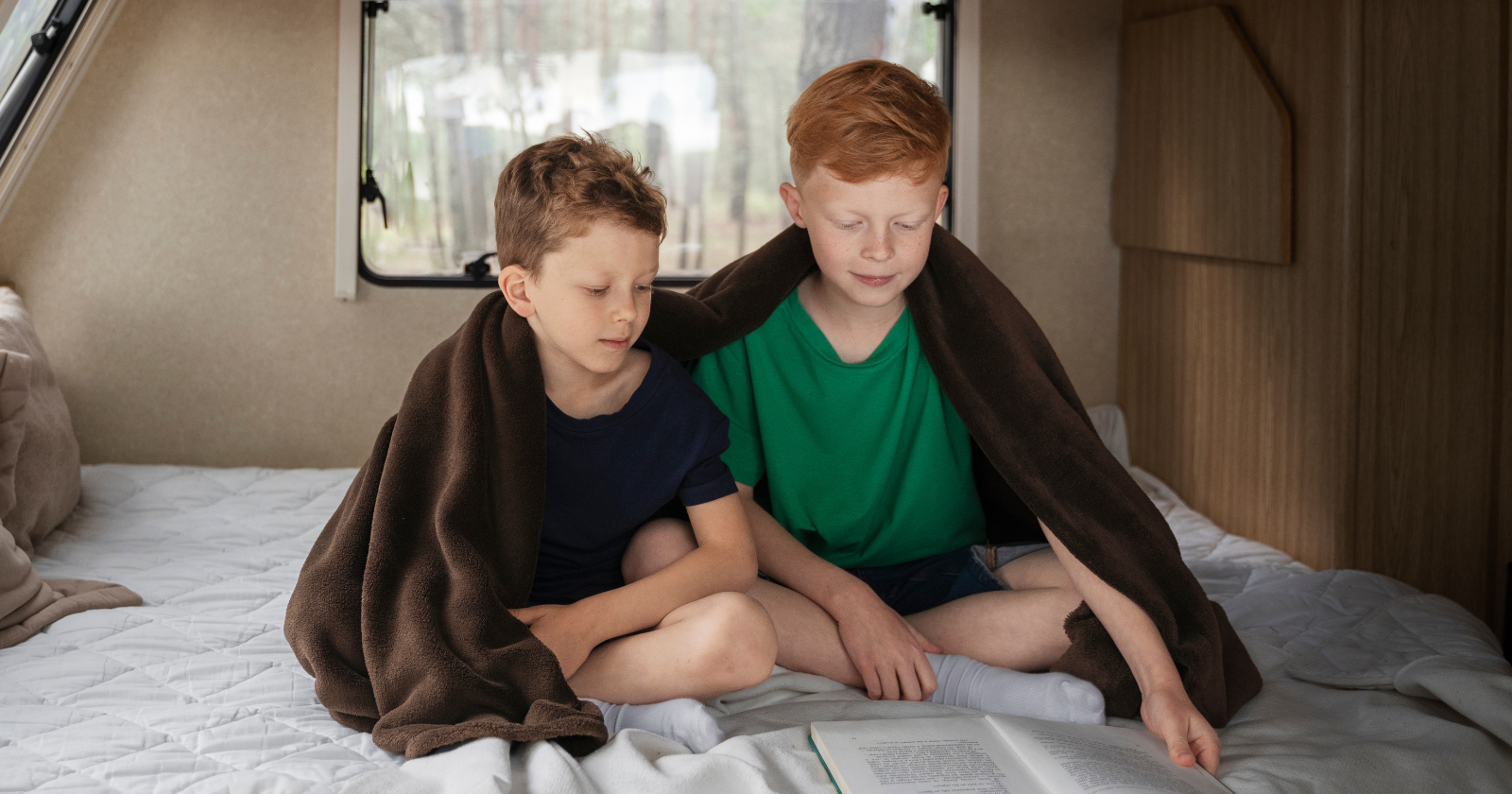
Do you ever think about how the bedroom you grew up in shapes you in ways that last far beyond childhood?
Millions of people grew up sharing a room with a sibling, and research in developmental psychology suggests those years create patterns that persist well into adulthood.
When you spend your formative years negotiating space, privacy, and peace with a sibling who’s literally always there, you develop habits that become so ingrained you don’t even notice them anymore.
These behaviors aren’t bad or good. They’re simply the lasting imprint of an experience that taught you how to exist alongside someone else in the most intimate of spaces.
Here are eight things that people who grew up sharing a bedroom tend to do as adults, often without any conscious awareness.
1. They’re hyper-aware of noise levels
People who shared bedrooms develop an almost supernatural sensitivity to sound.
You learned to tell the difference between actual sleep and someone pretending to be asleep so you’d stop talking.
You got really good at turning book pages silently, typing messages under the covers without those annoying keyboard clicks, and reading every shift in breathing or mattress creak like you were some kind of sleep detective.
And here’s the thing: this stays with you.
You’re probably the person who wakes up the second your partner gets out of bed at 3am. You hear the neighbor’s TV through the walls when nobody else notices. You automatically lower your voice during phone calls even when you’re home alone.
You’ve mastered the art of moving quietly through a house, opening doors without that telltale click, walking softly when others are sleeping.
Your brain just never stopped processing all those sounds because for years, they determined everything from whether you could keep reading to whether you finally had some peace and quiet.
2. They have strong opinions about bedroom temperature
The thermostat wars of childhood turn you into a temperature absolutist as an adult. When you shared a room, someone was always too hot while the other person froze.
Compromise usually meant you were both uncomfortable. You either sweated under covers you needed for comfort, or you shivered because your sibling was convinced they’d suffocate without fresh air blasting through the window in the middle of January.
Think of the classic sibling standoff over that bedroom window. One kid wants it open year-round, insisting they can’t breathe otherwise, while the other wakes up feeling like they’ve camped out in a freezer.
They try everything: taking turns choosing each night, using different blankets, even some ridiculous blanket clip system that’s supposed to create separate climate zones. Nothing works.
So now as an adult? Bedroom temperature feels personal and totally non-negotiable.
You probably know your ideal sleep temperature down to a couple of degrees. Maybe you’ve got a smart thermostat you program like you’re launching a rocket, or you travel with a portable fan because hotel rooms are never right.
After years of compromising, you’re done with that.
3. They’re protective of their personal space even when they have plenty
Here’s something funny: having tons of space as an adult doesn’t magically erase those territorial instincts you developed from years of scarcity.
You probably have your spot on the couch, your side of the bed that’s completely non-negotiable, or you get weirdly annoyed when someone moves your stuff without asking.
You might arrange furniture to create little zones even in open spaces, or you’ve got certain areas that everyone just knows to respect.
When you’re growing up, every single inch had to be defended. That invisible line down the middle of the room only worked if you both honored it, and let’s be honest, that didn’t happen nearly enough.
Your sibling borrowed your clothes without asking, your homework somehow ended up on their desk, and privacy was this thing you had to negotiate every single day.
So now you need clearly defined boundaries even when there’s plenty of room for everyone. You’re finally getting the security of having space that’s actually yours, and after going without it for so long, that feels pretty important.
4. They fall asleep easily with background activity
Total silence and complete darkness can feel kind of weird and unsettling when you shared a bedroom growing up.
You got used to falling asleep while your roommate was still up doing homework with their desk lamp on, scrolling through their phone, or having those whispered phone conversations.
You learned to tune out just enough to sleep while staying partly aware of what was going on around you.
This shows up in interesting ways as an adult. You’re the person who can nap on the couch with the TV on. Your partner reading in bed with the light on doesn’t bother you at all. You might actually find white noise comforting instead of just necessary.
Business trips where you’re sharing a hotel room? No big deal, while your colleagues who had their own rooms growing up are losing their minds.
You can also probably focus really well in busy coffee shops or libraries because you spent years doing homework while your sibling was playing video games or blasting music.
5. They’re quick decision-makers about small things
When you share a room, you learn to be efficient pretty fast.
You can’t spend twenty minutes deciding what to wear because your sibling needs the closet too.
You can’t sit there debating whether to turn off the light because whatever you choose affects someone else.
Those small everyday decisions had to be made quickly, either through fast negotiation or just making a call and moving on.
This usually sticks with you into adulthood. You’re probably that person who doesn’t agonize over which cereal to buy or where to eat lunch.
You make these little decisions fast and don’t look back, because somewhere along the way you learned that minor stuff doesn’t deserve that much mental energy.
Your friends might be amazed at how quickly you handle everyday choices while they’re still weighing pros and cons.
What’s interesting is this quick approach to small decisions often lives alongside taking your time with the big stuff.
Those major life choices are where you finally have complete control without factoring in a roommate, so you might actually slow down and savor that freedom.
6. They have an unusual approach to privacy
Your whole concept of privacy is probably different from people who always had their own rooms.
Physical privacy matters less to you than keeping your thoughts and feelings private.
You’re likely fine changing in front of people, having conversations while someone’s in the bathroom, or not really caring when people walk into rooms you’re in.
But at the same time, you’re protective about your inner world in ways that surprise people who think you’re totally open.
This makes complete sense when you think about it. Physical privacy just wasn’t an option in a shared bedroom. You couldn’t hide your daily routines, your body, or what you were doing moment to moment.
But you could absolutely keep your thoughts and feelings to yourself. You got really good at having private thoughts in shared spaces, keeping secrets while sleeping three feet away from someone.
As an adult, this creates kind of an interesting mix. You might seem super open about some things while being surprisingly guarded about others. You’re comfortable with people being physically close but careful about getting emotionally vulnerable.
7. They’re natural mediators and compromise-seekers
Sharing a bedroom was basically like getting a decade-long crash course in conflict resolution.
You couldn’t storm off to your room when you were mad because it was their room too. You couldn’t just decide things about curtains, bedtimes, or whether the door stayed open or closed without someone else weighing in.
Every single day brought small negotiations. Whose music gets played? When do the lights go off? Can a friend come hang out in the room? You had to figure out how to reach a compromise or live with ongoing tension in a space you literally couldn’t escape.
As an adult, this translates into being naturally skilled at mediation. You’re the friend who helps others work through disagreements. At work, you’re the person who finds a middle ground when teams are deadlocked.
You instinctively look for win-win solutions because you spent your childhood understanding that pure wins in a shared space always came at someone else’s expense, and you had to live with that person afterward.
8. They struggle with the guilt of wanting alone time
This might be the most subtle and lasting effect of all.
When you grew up sharing a bedroom, alone time was a luxury you rarely had. And when you did get it, whether your sibling was at a friend’s house or away at camp, it felt almost illicit. Like you were getting away with something.
As an adult, you might genuinely crave solitude but feel weirdly guilty about wanting it. You might struggle to tell your partner or family that you just need an hour to yourself without feeling like you’re being selfish or antisocial.
Psychology research backs this up. Studies on personal space and boundary-setting suggest that people who had limited privacy growing up can internalize the idea that wanting to be alone is somehow wrong or hurtful to others.
The truth is, needing alone time is completely healthy. But if you grew up sharing a bedroom, you might still be working through the belief that wanting space means rejecting the people you love.
Recognizing this pattern is the first step toward giving yourself permission to seek solitude without the guilt. You spent years learning how to share. Now it’s okay to learn how to take time just for yourself.
