

7 things Boomers were taught in school that would actually help today’s students

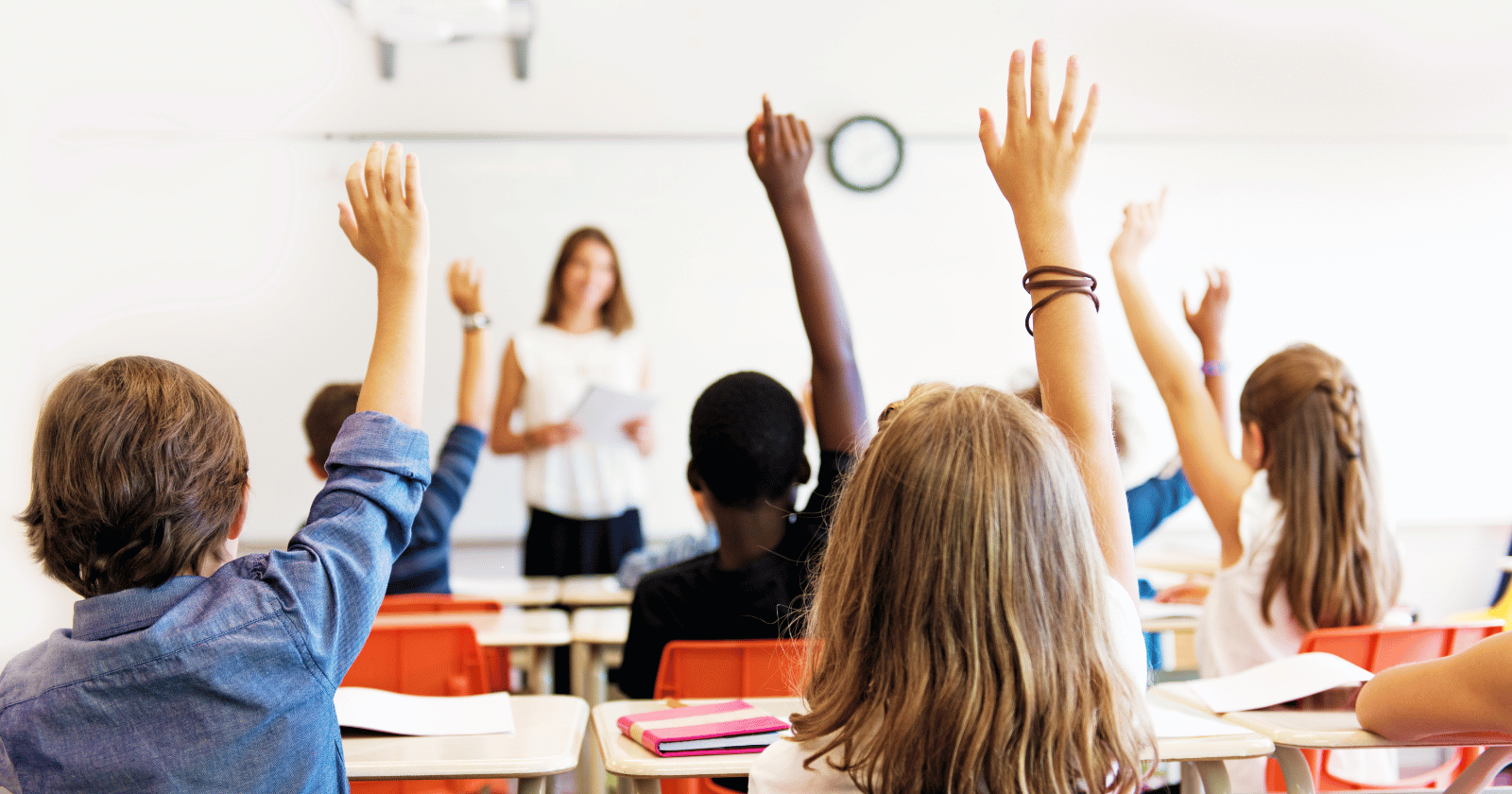
If you’ve ever spoken to a Boomer about school, you’ve probably heard something like: “We didn’t have calculators, we had to do it all by hand!”
And while some of their stories sound like distant echoes from a stricter time, a few of those old-school lessons might actually be what today’s students are missing.
I’m not here to glorify the “good old days.” Every generation has its flaws.
But I do think there’s something to learn from how Boomers were taught, the discipline, the structure, the focus on certain values that, somewhere along the way, got lost in the mix.
As someone who grew up with a tough mum and a demanding school system in Malaysia, I used to roll my eyes whenever older relatives said things like, “Kids these days have it easy.”
But as I got older, I started to see what they meant, not in a dismissive way, but from a place of curiosity.
What exactly made their system work? And could some of those lessons make students today a little more grounded, focused, and prepared for real life?
Here are seven lessons that deserve a comeback, not out of nostalgia, but because they still make sense for the world we live in now.
1. Showing up was half the grade
Boomers were taught that attendance mattered. You showed up even when you didn’t feel like it, not because you loved school, but because it was your responsibility.
There’s something grounding about that. In a world where remote work, flexible deadlines, and mental health breaks (all valid, by the way) can make “showing up” optional, the consistency piece is missing.
When you show up for something, a class, a project, a person, you’re telling yourself you’re reliable. You’re saying, “I can count on me.” That’s a quiet kind of power.
I learned this the hard way in my twenties. There were days when my anxiety told me to cancel every plan and avoid everyone. But the moment I started showing up anyway, to work, to workouts, to coffee dates I wanted to skip, life started to flow differently.
Discipline doesn’t kill creativity; it builds trust with yourself.
And trust is the foundation for every other kind of growth.
2. Handwriting taught patience
Remember cursive? Boomers had to perfect it. They were graded on their penmanship, which sounds absurd today, until you realize it taught them something we’ve replaced with instant typing: slowness.
Writing by hand forces you to pause, to think about what you’re saying before the words hit the page.
Psychologists have even found that handwriting helps with memory retention and cognitive processing. A 2024 study published in Frontiers in Psychology found that writing by hand activated broader brain connectivity patterns compared to typing on a keyboard.
We’re living in a copy-paste world. Maybe slowing down, even just to handwrite a note, journal entry, or to-do list, could help students connect deeper with their thoughts instead of racing through them.
I sometimes handwrite my ideas before typing them up. It feels almost meditative, like I’m emptying the noise out of my head onto paper. Maybe handwriting won’t change the world, but it might just help us think better.
3. Respect wasn’t optional
Boomers were raised to respect teachers, elders, and authority. Sure, it sometimes went too far, blind obedience isn’t healthy, but at its core, it taught self-restraint.
Today, students have more freedom to express themselves (which is a good thing), but some have lost the ability to do it respectfully.
You can disagree without being rude. You can stand up for yourself without belittling someone else.
Respect doesn’t mean you agree with everything someone says. It means you have enough self-control to listen before reacting.
And that’s a skill a lot of people, not just students, could use more of today.
I’ve noticed it in online spaces too. The way some people comment on posts or argue with strangers, it’s not about discussion anymore. It’s about being right.
Boomers were taught that respect was non-negotiable, and maybe that’s something we should reintroduce, not as a rule, but as a mindset.
4. Life skills were part of the curriculum
Ask a Boomer about “home economics,” and you’ll probably hear stories of learning how to cook, sew, or balance a budget.
Today’s students can code an app before they can fry an egg. That’s impressive, but not necessarily practical.
Home economics wasn’t just about domestic chores. It was about self-reliance. Knowing how to make a meal, fix a loose button, or understand interest rates taught students to function in the real world.
And that’s something we desperately need again.
I sometimes think about how many adults I know who panic at the idea of budgeting or cooking dinner from scratch. It’s not about perfection, it’s about competence.
When schools stopped teaching life skills, they left students to figure it all out on their own. And while independence is great, some structure in learning how to live might save a lot of people from financial or emotional burnout later on.
5. Tough feedback didn’t equal personal attack
Boomers grew up being corrected, red pen, big circles, and all.
Was it harsh sometimes? Definitely. But it also built resilience.
In contrast, today’s education system often walks on eggshells to protect self-esteem. Constructive criticism is softened or avoided altogether.
But as Carol Dweck (professor of psychology at Stanford University) has noted, a “growth mindset” thrives on challenge. Students who learn to view feedback as information rather than judgement become more adaptable and self-aware.
Being wrong isn’t failure, it’s data. And that’s something the Boomer generation understood deeply, even if they didn’t have the language for it.
When I first started writing, I hated edits. Every comment from an editor felt personal. But once I detached my ego from the feedback, I improved faster than I ever imagined.
Sometimes being told “this could be better” is the most respectful thing someone can do for you.
6. Detention actually worked
Okay, maybe “worked” is a stretch, but it did teach consequences.
Boomers grew up with clear lines, if you broke a rule, you faced the result. No endless second chances, no blaming the system.
And that predictability gave structure.
As someone who grew up in a strict household, I used to think punishment was always negative. But looking back, what actually mattered wasn’t the punishment, it was the accountability.
When I think about how schools handle behavior today, it feels like the focus has shifted entirely to emotional management (which is important), but the concept of ownership often disappears in the process.
You can have empathy and consequences. The two aren’t opposites.
We don’t need to bring back the ruler slap or after-school detention. But we do need to reintroduce boundaries that mean something. Without consequences, rules are just suggestions.
7. You learned how to deal with boredom
Before smartphones, students had to sit through dull moments, without endless scrolling to fill the gap.
That boredom, as psychologists now understand, actually sparked creativity. A 2014 study from University of Central Lancashire found that people who completed a boring task before a creative task performed better than those who didn’t.
Today, most of us can’t sit still for five minutes without reaching for our phones.
When I started leaving my phone in another room during breaks, I noticed something strange, I started having ideas again. Real, unprompted thoughts.
We’ve replaced curiosity with constant stimulation. But sometimes, our best insights come when the mind finally gets bored enough to wander.
Boomers didn’t have to “schedule digital detoxes.” They naturally lived them. And maybe that’s one part of their world worth stealing back.
Final thoughts
Boomers weren’t perfect, and their education system had its flaws, rigid, outdated, and often too uniform.
But beneath the strictness was something powerful: structure, patience, and personal responsibility.
Today’s students are growing up in a world of flexibility, technology, and choice, all incredible tools, but only if they’re anchored by old-school principles that keep us grounded.
Maybe the lesson isn’t to go back in time. Maybe it’s to bring the best of the past into the way we learn and live today.
Because while the world keeps evolving, the fundamentals, showing up, slowing down, respecting others, and taking ownership, never go out of style.