

8 things upper-middle-class travelers complain about on flights that make them look entitled

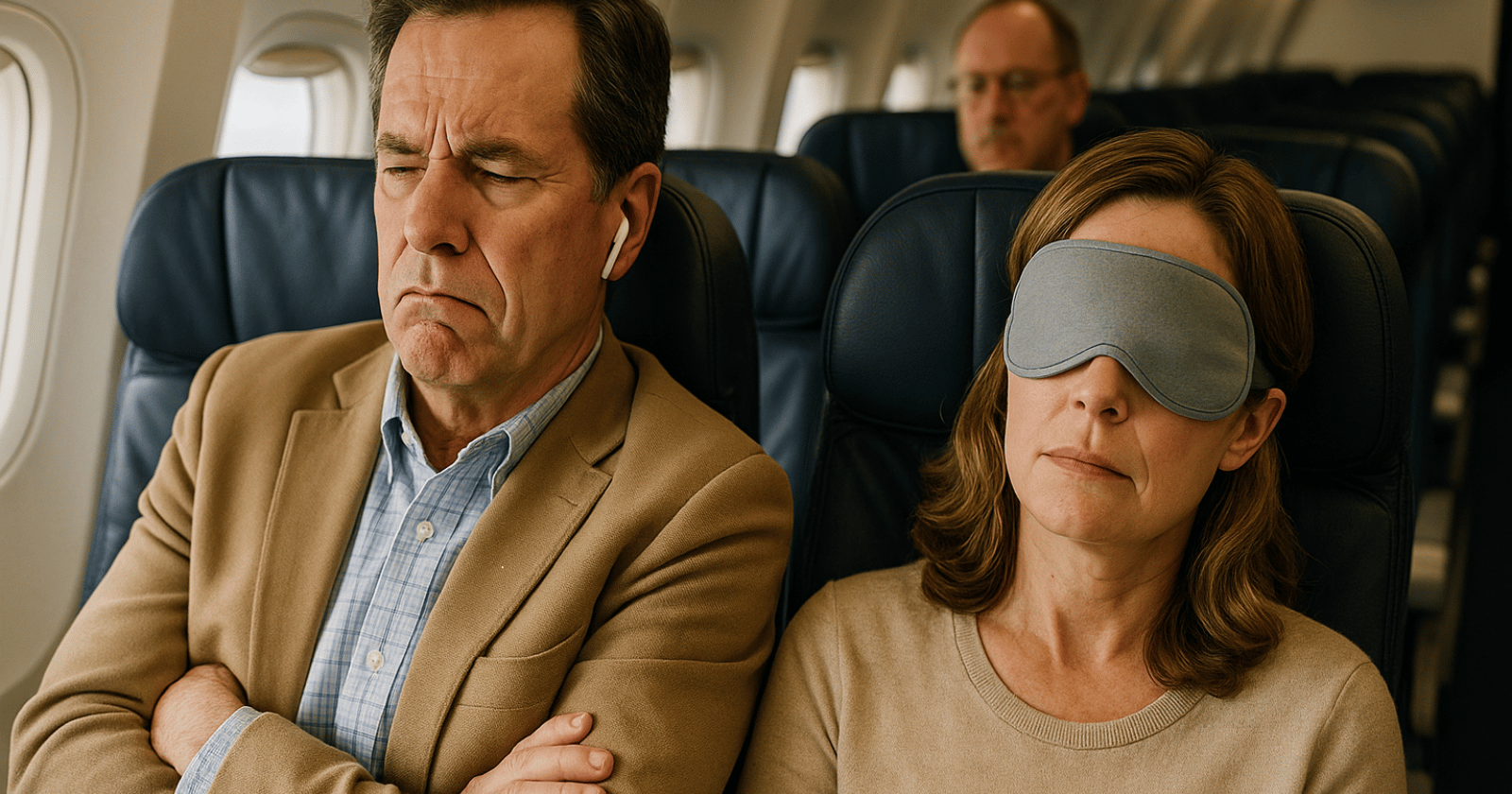
Air travel is one of those strange spaces where everyone—CEOs, students, parents, backpackers—gets shoved into the same metal tube and told to behave.
And yet, the complaints you hear on flights often say more about someone’s attitude than their actual comfort. Some people just can’t resist broadcasting their entitlement at 30,000 feet.
I’ve noticed it most among upper-middle-class travelers. Not because they’re bad people, but because they’ve grown used to convenience and choice. When that’s stripped away on a flight, the reactions can be… revealing.
Here are eight of the most common complaints that end up making them look entitled.
1. Complaining about seat size
We get it. Airline seats are not built for comfort. But here’s the thing: everyone is in the same cramped space unless they’ve paid for business class.
I’ve overheard countless travelers grumbling about “how ridiculous it is” that the seat doesn’t recline enough or that their knees are touching the seat in front.
Sure, it’s not ideal. But when someone turns it into a personal injustice, it reeks of entitlement.
A Buddhist monk I once read put it perfectly: “Pain is inevitable. Suffering is optional.” If you can’t accept the reality of airplane seats, the suffering is yours to carry—not the airline’s responsibility to erase.
I once sat next to a guy who spent the first two hours of the flight loudly complaining about his seat, even though he had the exact same amount of space as everyone else in economy.
The irony? His complaining probably made him feel worse than just accepting it and focusing on a podcast or movie.
Entitlement often looks like an inability to adapt. And a cramped seat is the perfect test of adaptability.
2. Complaining about the food
Airline food is… airline food. Nobody’s expecting Michelin stars at 35,000 feet.
Yet some travelers go into full restaurant-critic mode when a reheated chicken tray lands in front of them.
They sigh loudly, push the food around, and sometimes even lecture the flight attendants about “how much they paid for this ticket.”
It’s almost comical when you zoom out. You’re flying through the sky in a metal bird, covering in hours what once took weeks by land or sea. And the hill you want to die on is that the beef stroganoff tastes bland?
A little gratitude goes a long way. When I stopped expecting airplane meals to be anything other than fuel, I found myself more relaxed and less annoyed.
Sometimes I even pack a few snacks if I want something I’ll actually enjoy. Complaining doesn’t suddenly turn a rubbery pasta dish into handmade gnocchi.
3. Expecting special treatment from flight attendants
This one is subtle but telling. Some passengers act like the cabin crew are their personal staff.
I’ve seen people ring the call button every fifteen minutes for trivial requests—extra napkins, moving their bag, adjusting the overhead light—then roll their eyes when the crew doesn’t arrive instantly.
Entitlement shows up when someone forgets that attendants are juggling dozens, sometimes hundreds, of passengers. They’re prioritizing safety and logistics before comfort.
Eastern philosophy teaches about humility: recognizing that your needs aren’t more important than anyone else’s.
A flight is a crash course in that lesson. The crew are there to serve, yes—but they’re not there just to serve you.
The most respectful passengers? They ask politely, they wait patiently, and they recognize that every small kindness adds up in an environment where stress runs high.
4. Complaining about crying babies
I get it—nobody loves sitting near a screaming infant on a red-eye flight. But when travelers start sighing, glaring at parents, or muttering about “why they even bring babies on planes,” it just makes them look disconnected from reality.
Parents don’t want their babies crying either. They’re doing the best they can in a stressful environment.
Acting as if children shouldn’t be allowed to fly is a privilege-soaked perspective that ignores the realities of family, immigration, and travel.
I once saw a woman lean over to a mother and say, “Can you control your baby, please?” The mother looked exhausted and on the verge of tears. It wasn’t the baby that made the atmosphere tense—it was the judgment.
Compassion is underrated in these moments. A pair of noise-canceling headphones can solve most of the issue, but empathy solves the rest.
Sometimes compassion means recognizing that your discomfort is temporary—but the parent is living it in real time.
5. Complaining about boarding procedures
If you’ve flown enough, you’ve probably witnessed this: a passenger fuming about the “chaos” of boarding.
They complain that people are crowding the gate, or that their boarding group was called too late, or that the process “makes no sense.”
But here’s the truth—boarding a few minutes earlier or later doesn’t make a huge difference. The plane isn’t leaving without you. The frustration comes not from the process itself, but from an unwillingness to surrender control.
In mindfulness practice, we talk about letting go of the illusion of control. A boarding line is the perfect place to practice it.
You can either stew in resentment or use the downtime to breathe, check your messages, or simply observe the madness with curiosity.
The entitled traveler gets angry that the universe didn’t bend to their schedule. The grounded traveler sees it as another lesson in patience.
6. Complaining about Wi-Fi quality
This one’s almost comical. People get furious when the in-flight Wi-Fi isn’t blazing fast, as if streaming Netflix in a metal tube hurtling across the sky is a basic human right.
I once sat across from a guy who angrily refreshed his email for two hours, muttering under his breath about how “unacceptable” it was that he couldn’t send files.
Meanwhile, he was missing the fact that he had ten uninterrupted hours to rest, reflect, or just disconnect—a luxury in itself.
Of course, we rely on internet for work and connection. But getting annoyed that you can’t send large attachments at 35,000 feet shows how skewed expectations can get.
Instead of seeing in-flight Wi-Fi as a miracle, entitled passengers treat it as a failure if it’s not up to their usual home-office standard. A simple reframe—“this is bonus connectivity, not guaranteed”—changes everything.
7. Complaining about reclining seats
Few things stir up more mid-air drama than reclining seats. Some travelers loudly complain when the person in front dares to recline, calling it rude or “unnecessary.”
Others recline all the way back and get defensive when challenged.
Here’s the reality: reclining is built into the seat design. You’re allowed to do it. But weaponizing complaints against another passenger only creates conflict in an environment where everyone’s stuck together.
I once saw two passengers almost come to blows over this exact issue. The irony?
Both of them ended up miserable, arms crossed, refusing to recline at all out of spite. Their stubbornness caused more suffering than the actual seat position.
Eastern philosophy teaches about non-attachment—sometimes that means not attaching to an extra two inches of legroom.
8. Complaining about flight delays as if they’re personal
We’ve all been there—sitting in the airport, staring at the departure board, watching the delay time tick upward. It’s frustrating.
But here’s where entitlement shows up: some travelers act as if the airline personally wronged them.
They demand explanations, shout at staff, or insist that “this is unacceptable” because their schedule matters more than anyone else’s.
The reality is delays happen for countless reasons—weather, safety, maintenance. No staff member at the gate has the power to magically change that. Shouting only adds tension to an already stressful situation.
I’ve talked about this before, but mindfulness isn’t about controlling the situation—it’s about controlling your response.
Delays are a perfect chance to practice acceptance. Bring a book, strike up a conversation, or simply use the downtime to rest. The plane will leave when it leaves.
Flight delays are inconvenient for everyone. No one is plotting against a single passenger. Recognizing that reality can save a lot of unnecessary anger—and save you from looking like the most entitled person at the gate.
Final words
Air travel brings out strange behaviors because it strips us of choice and comfort. For upper-middle-class travelers used to control, that can feel unbearable.
But here’s the thing: complaining doesn’t make the seat bigger, the food tastier, or the Wi-Fi faster. It only makes the experience harder—for you and everyone around you.
The next time you fly, notice your reactions. Are you adding to your own suffering with complaints? Or can you take a breath, accept the imperfections, and practice patience instead?
At the end of the day, how we behave in those cramped cabins says more about us than the airline.
