

If you recognize these 8 household items, you definitely grew up middle class in the 80s or 90s

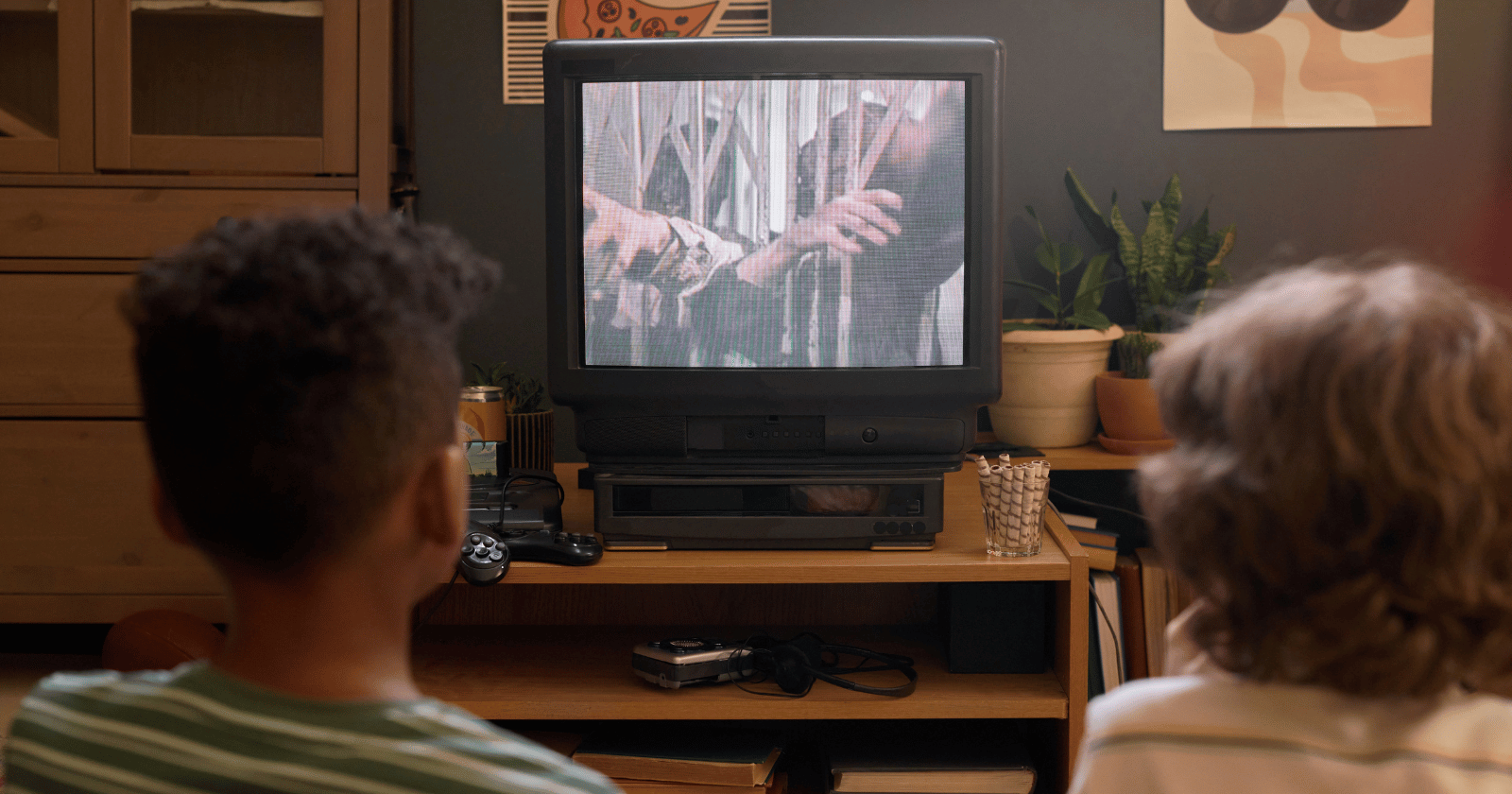
There’s something oddly comforting about remembering the stuff that used to fill our homes growing up.
Not the fancy things (those were for “other” people) but the everyday, quietly dependable objects that defined what middle class really looked like back then.
If you were a kid in the 80s or 90s, your house probably had a mix of cozy clutter, beige electronics, and patterns that still haunt your dreams (looking at you, floral couch).
And sure, our homes weren’t Pinterest-perfect. But they had character. They had stories. They smelled faintly of Pine-Sol and spaghetti night, and somehow that combination felt like security.
Let’s take a walk down memory lane.
Here are eight household items that scream middle-class childhood—nostalgia guaranteed.
1. The “good” china cabinet that nobody was allowed to touch
Every middle-class home had that cabinet. Usually glass-fronted, often locked, and filled with dishes so sacred they only came out when “company” was coming over.
You know the one: crystal bowls that never saw fruit, gold-rimmed teacups that weren’t even microwave-safe, and a dust pattern that could tell you exactly how long it had been since anyone dared to open the door.
The irony? Most of us didn’t even know where that china came from. A wedding gift? A department store clearance? Some mysterious family heirloom that no one actually used?
The “good” china wasn’t really about eating—it was about aspiration. It said, “We may not be rich, but we have standards.”
It was our parents’ quiet declaration that they’d made it far enough to own something too nice for everyday life.
And the funniest part? Half the time, when “company” actually came over, we still ended up using the regular plates. Because deep down, the good china wasn’t for people—it was for pride.
2. The giant wooden entertainment center
Before streaming, there was furniture. And not just any furniture—massive, multi-shelved entertainment centers that dominated the living room like monuments to consumer pride.
They had compartments for everything: the boxy TV, the VHS player, the stereo system with speakers the size of toddlers, and at least 27 framed school photos of you with unfortunate bangs.
Some had those glass doors that always left fingerprints, others had built-in lights that made the entire setup look like a museum exhibit.
And remember those drawers that never quite opened smoothly? The ones packed with remote controls, mystery cords, and old TV Guides? That was basically the analog version of a “folder dump.”
Design historians have noted that home entertainment furniture in the 1980s “reflected a cultural shift—the living room became both a performance space and a family hub.”
In fact, one retrospective on 1980s furniture describes that era as a “transformative era in interior– and furniture design,” shaped by bold forms and display-oriented pieces.
The entertainment center was the centerpiece of pride and togetherness.
Saturday nights meant family movie marathons, rewinding VHS tapes with that little plastic machine that sounded like it might explode, and the occasional argument over whose turn it was to adjust the antenna.
3. The Tupperware mountain (a.k.a. the plastic avalanche)
You haven’t known true fear until you’ve opened a kitchen cabinet and unleashed a tower of mismatched Tupperware onto your face.
There was never a matching lid in sight, yet somehow throwing any piece away felt like blasphemy. Those faded orange and pea-green containers had been through decades of leftovers, school lunches, and suspiciously labeled freezer meals.
And let’s not forget the holy grail: that one vintage Tupperware bowl your mom swore was “the good one.” Usually reserved for potato salad or pasta at potlucks.
These containers were more than kitchenware—they were heirlooms. They were hand-me-downs of domestic practicality.
Even now, Tupperware is having a nostalgic comeback, which makes sense. There’s something grounding about it. It reminds us of family dinners, midweek chaos, and the simple joy of reheating spaghetti in a container older than you.
Because for middle-class families, Tupperware was proof of stability. It meant there was always something saved for later. And that feeling? Priceless.
4. The crocheted toilet paper cover (yes, the one with the doll head)
If you didn’t have this in your bathroom, you definitely saw it somewhere and were traumatized enough to remember.
For reasons we may never fully understand, our parents and grandparents thought it was perfectly normal to decorate the toilet with a doll wearing a crocheted gown that hid an extra roll of paper.
Somewhere between “practical” and “haunting,” this item lived rent-free in the collective psyche of middle-class homes.
And it wasn’t alone—there were lace tissue box covers, seashell soap, embroidered towels that said Guests Only, and those fuzzy toilet seat covers that made sitting down feel like hugging a muppet.
It’s funny now, but back then, these touches were signs of care. Every bathroom was trying its best to be classy, even if it looked a little possessed.
Looking back, it’s kind of genius. Even if your bathroom was tiny, it had personality—and possibly a doll judging your every move.
5. The curio cabinet filled with collectible figurines
Whether it was Precious Moments, porcelain angels, or those miniature animal sculptures from gift shops, every family had a curio cabinet packed with tiny treasures.
It wasn’t about their value—it was about sentiment. Each figurine had a backstory. “Your aunt got me that one when you were born.” “That’s from our trip to Niagara Falls.”
And of course, as kids, we were explicitly warned never to touch them. Because one wrong move and you’d be grounded until the next millennium.
These collections weren’t really for anyone outside the family. They were small reminders of joy and belonging, displayed proudly like personal trophies of middle-class wholesomeness.
I once knocked one over while dusting as a kid and tried to glue it back before my mom got home. Spoiler: she noticed immediately. Moms in the 90s had Spidey senses for broken collectibles.
The curio cabinet was more than a display case—it was a memory bank. And each fragile figure inside held a little piece of who we were trying to be.
6. The floral couch with wooden armrests
You could spot this couch in any 90s living room: floral upholstery (bonus points if it had shades of burgundy or sage), stiff cushions, and carved wooden trim that left marks on your arms.
It wasn’t comfortable by modern standards, but it was the couch. The one you weren’t allowed to eat on. The one that hosted Christmas mornings, awkward family photos, and the occasional nap that left you half-dead from the upholstery pattern.
Some of them had plastic covers, which somehow made things worse. You’d stick to them in the summer and freeze in the winter, but god forbid you took them off.
Psychologist Dr. Lindsay Jernigan once noted, “Objects from our childhood homes can carry emotional imprints of safety, familiarity, and belonging.” And honestly, that checks out. Even if that couch scratched your elbows, it still felt like home.
Because home wasn’t supposed to be perfect—it was supposed to be ours.
7. The wall phone with the 10-foot curly cord
Before smartphones tethered us to screens, this phone literally tethered us to the wall.
Every middle-class kitchen had a landline with a spiral cord that stretched across half the room. You’d twist it around your fingers while gossiping with friends or yank it as far as humanly possible to whisper secrets in the pantry.
And remember memorizing phone numbers? That was a skill. You didn’t need contacts—you just repeated the digits until they were burned into your brain.
When the cordless phone finally arrived, it felt like the future. Until, of course, it died mid-call because no one remembered to charge it.
There was something intimate about those landline days. You couldn’t scroll while talking, and the background noise of someone cooking or the TV playing was part of the soundtrack. It was connection in its rawest, static-filled form.
If you’re old enough to remember the panic of accidentally hanging up on someone by pulling the cord too far—you’ve earned your nostalgia badge.
8. The family photo wall (featuring awkward school portraits)
Finally, the crown jewel of any 80s or 90s middle-class home: the photo wall. Usually in the hallway, sometimes up the stairs, and always mismatched in frame style.
Each picture told a story—the missing front tooth, the perm gone wrong, the awkward family portrait in matching denim.
It wasn’t curated for aesthetics; it was curated for pride. These were the physical likes and comments before social media existed.
Our parents displayed their kids’ photos like a living résumé of love and effort. Every new school picture replaced the old one, even if your smile looked like you’d been bribed with ice cream.
Sometimes, in the middle of a chaotic morning rush, you’d glance at those walls and remember—this was your story. Every crooked smile and bowl cut, immortalized in glossy 5x7s.
Today, our photos live in the cloud, perfectly filtered. But something about those grainy, off-center prints feels more real. They weren’t trying to impress anyone. They were proof that we were loved, awkward grins and all.
Final thoughts
If you grew up surrounded by these household relics, you weren’t just middle class—you were part of a generation that knew how to make ordinary things special.
Our homes weren’t minimalist or influencer-ready. They were lived in, layered with memories and quirks that made them unmistakably ours.
And maybe that’s the biggest takeaway. The middle-class homes of the 80s and 90s weren’t about perfection or prestige—they were about pride, practicality, and a little bit of chaos.
When I think about it now, those items weren’t just décor. They were symbols of love disguised as Tupperware lids, family portraits, and floral couches.
Because even if the patterns were questionable and the furniture too heavy, there was warmth in every detail.
And if you’re nodding along to all of this, smiling at the memory of a crocheted toilet doll—well, you definitely grew up middle class in the best decades to do it.