

I’m 65 and I realized the thing that was shortening my life wasn’t my cholesterol. It was the thirty-year grudge I carried against my father, and letting it go changed everything my body was doing.

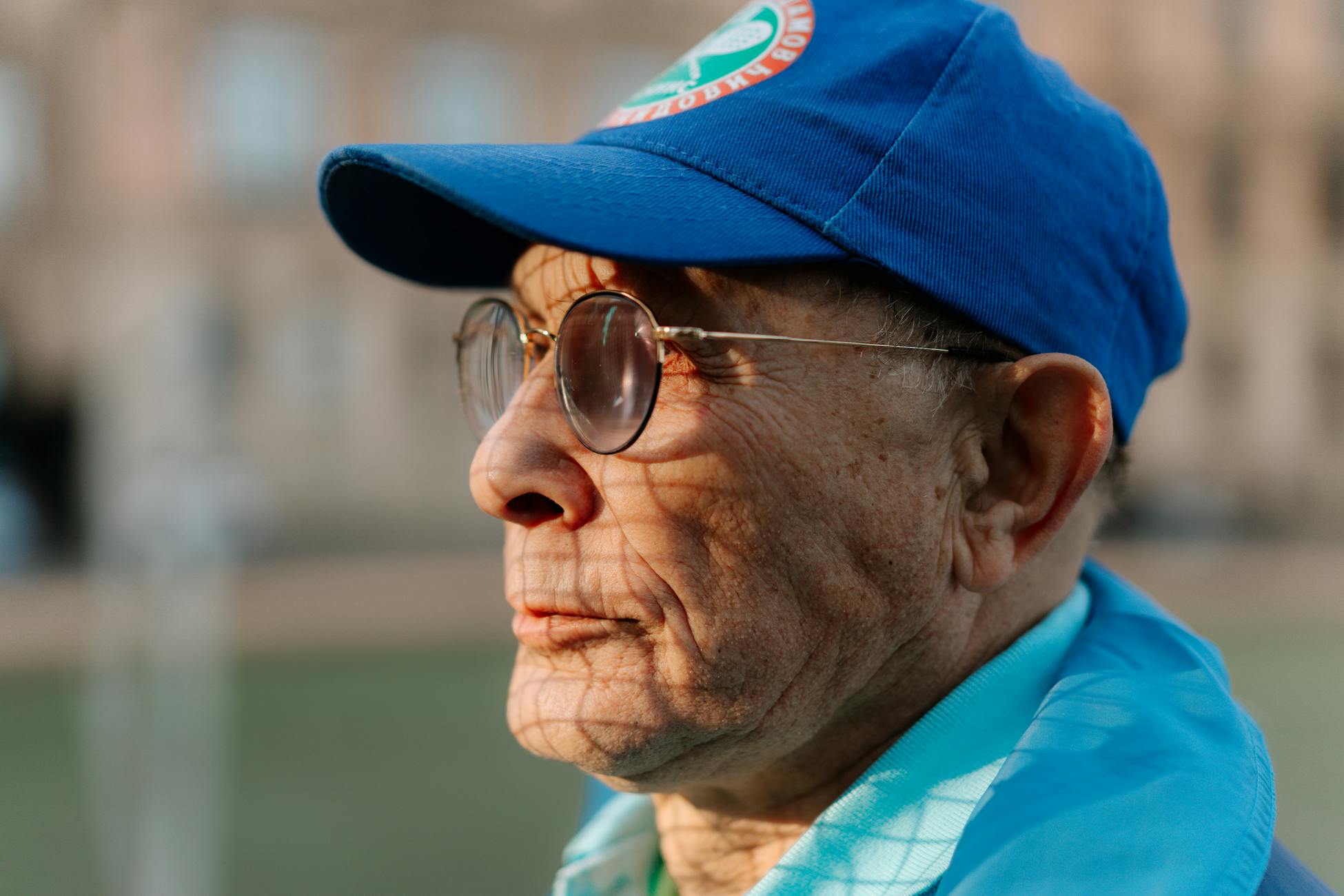
My friend Gerald, who turned sixty-seven last November, sat across from me at our Thursday diner booth and told me his cardiologist had used the phrase “inexplicable improvement.” Gerald’s blood pressure had dropped fifteen points in four months. His resting heart rate had settled. His sleep, which had been fractured for years, had somehow knitted itself back together. The doctor wanted to know what had changed. Gerald told him the truth: he’d written a letter to his dead brother. A brother he hadn’t spoken to for the last eleven years of the man’s life. A brother he’d carried rage toward like a second skeleton inside his body. Gerald never mailed the letter, obviously. But he’d written it, and then he’d sat in his truck in the driveway and read it out loud, and something in his chest released that had been clenched so long he’d forgotten it was clenched at all.
I listened to Gerald and felt something cold move through me. Because I knew exactly what he was describing.
The conventional wisdom about aging and health is mechanical. Cholesterol numbers. Blood pressure readings. BMI. A1C. We treat the body like a car that needs the right fuel and regular oil changes, and if the numbers look bad, we adjust the inputs. Eat less sodium. Take the statin. Walk thirty minutes a day. And I did all of that, faithfully, for years. Most people my age believe that if they manage the biomarkers, they’re managing their health. That tidy narrative has almost nothing to do with what was actually happening inside me.
What was happening inside me was a thirty-year grudge against my father, and it was doing more damage than bacon ever could.
My father worked double shifts at a factory in Ohio. He taught me work ethic by example, and silence by example, and emotional unavailability by example. He was not a bad man. He was a man shaped by immigrant parents who believed survival was the ceiling and everything above it was decoration. But when I was thirty-five, something happened between us that I carried forward like a stone in my shoe that I refused to remove because removing it would mean admitting it had been hurting me.
The specifics matter less than the shape of the thing. He said something about how I was raising Sarah, my eldest. He said it in front of my wife’s family at Thanksgiving. He said it with the casual authority of a man who believed his way was the only way, and I absorbed it like a punch I couldn’t return because I’d been trained never to hit back. I smiled. I changed the subject. And I didn’t forgive him for it for three decades.
I want to be precise about what “not forgiving” looked like, because it wasn’t dramatic. I didn’t stop speaking to him. I didn’t make scenes. I called on Sundays. I visited at holidays. I helped manage his care when the dementia came. From the outside, we had a functional relationship. From the inside, every interaction passed through a filter of resentment so familiar I mistook it for my personality.

Here’s what I’ve found about long-term resentment: it doesn’t feel like anger after a while. It feels like tiredness. It feels like a low-grade headache you stop noticing. It becomes the background hum of your nervous system, and your body responds to it every single day whether you’re conscious of it or not.
The science on this is sobering. Research suggests that holding a grudge can produce elevated cortisol and diminished oxytocin, which means your body is running a stress response even when you’re sitting quietly in your living room watching television. Cortisol, when it’s chronic, doesn’t just make you feel stressed. It reshapes your body. It affects your immune function, your cardiovascular system, your sleep architecture, your digestion. I was treating each of those symptoms individually for years, like a man patching leaks in a roof without ever looking up to see the tree that had fallen on it.
The concept that pulled everything together for me was something called allostatic load. The idea is that chronic stress accumulates in the body over time, wearing down your systems not through any single catastrophic event but through the relentless drip of unresolved tension. Thirty years of low-grade resentment toward my father wasn’t a psychological quirk. It was a physiological burden my body had been carrying like an extra fifty pounds I couldn’t see on the scale.
I discovered this almost by accident. At fifty-eight, I had a minor heart scare. It changed my perspective on everything, but at the time, I focused on the obvious targets: diet, exercise, stress at work. Nobody, including my doctor, asked me about my relationships. Nobody asked whether I was carrying unresolved anger toward anyone. The connection between emotional well-being and heart health is well documented, yet in practice, we still separate the emotional from the physical as if they happen in different bodies.
I’ve written before about not having the vocabulary for what I was feeling. That absence made the grudge worse, because I couldn’t name it, and what you can’t name you can’t examine, and what you can’t examine just sits in you and calcifies.
The turning point came about two years ago. My wife and I were driving home from visiting Michael, our middle son, and she said something that landed differently than she intended. She said, “You hold your breath every time someone mentions your father.” I told her she was being ridiculous. Then I paid attention for a week and realized she was right. My jaw tightened. My shoulders drew up. My breathing shallowed. Thirty years after a Thanksgiving comment, my body was still bracing for impact.
So I started doing something I’d resisted for decades. I started talking about it. Not to a therapist, at first, though I eventually went to one. I started with my journal, which I’ve kept nightly for about five years now. I wrote about the Thanksgiving incident. Then I wrote about the other things, the smaller ones that had accumulated like sediment. The time he told me insurance wasn’t a real career. The time he walked out of Emma’s school recital because he was bored. The time he shook his head at my garden and said, “Your grandfather would’ve grown something useful.”

Each memory, written down, looked smaller than it had felt. That was the revelation. Not that the injuries weren’t real, but that they had grown disproportionate to their original size because I’d never let air get to them. Resentment is anaerobic. It thrives in sealed containers.
The therapist I eventually saw used a phrase I keep coming back to: “Forgiveness is not agreement.” I didn’t have to decide my father was right. I didn’t have to rewrite history. I just had to stop requiring him to have been different. That distinction took me months to understand and about ten seconds to feel once I finally did.
My father had dementia by then. He didn’t know what I was forgiving. The forgiveness wasn’t for him. I know that sounds like a greeting card, but I mean it structurally. The grudge was a process running in my body, consuming resources, elevating inflammation, disrupting sleep, and the only person who could shut it down was me.
Research on forgiveness and physical health is still evolving, but what exists is striking. Studies examining the relationship between forgiveness and physical health suggest meaningful correlations between letting go and measurable improvements in cardiovascular function, immune response, and pain perception. The researchers are careful to note these are correlations, not proven causes. But when you’re living inside the data point, the distinction feels academic.
Within six months of actively working on releasing the grudge, here is what changed in my body. My blood pressure, which had been borderline high for a decade despite medication, dropped into normal range. My chronic back pain, which I’d managed with physical therapy and occasional frustration for years, reduced significantly. I don’t mean it vanished. I mean it went from a daily companion to an occasional visitor. My sleep deepened. I started dreaming again, which sounds trivial but felt like my brain had been given permission to process things it had been avoiding.
And when I ran my first marathon last month, my body did things I genuinely didn’t think it could do anymore. My recovery surprised my doctor. It surprised me more.
I want to be careful here. I’m not saying forgiveness cures disease. I’m not saying you can meditate away a blocked artery. Get your cholesterol checked. Take your medication. Listen to your doctor. What I’m saying is that for thirty years, I was addressing the symptoms while ignoring a root cause that no blood panel would ever detect.
I came across a video recently by Justin Brown that deals with the flip side of what I experienced—the practical steps for working through loneliness when you feel you have no friends—and it struck me how much his approach mirrors what I learned about grudges: the work has to happen inside you first, not through forcing connections that aren’t ready to form.
The relationship between chronic inflammation and serious disease is something I wish I’d understood earlier. Chronic emotional stress produces chronic physiological inflammation, and chronic inflammation is linked to outcomes that should terrify anyone who thinks grudges are harmless.
My father died eighteen months ago. By the time he went, the grudge was already gone. I’d let it go the way you let go of a rope you’ve been gripping so long your hand has cramped into its shape: slowly, painfully, with the strange grief of losing something that had become part of your structure. I held his hand in the hospice room and felt nothing but love and sadness, and if you’d told me five years earlier that would be possible, I would have called you naive.
I think about Gerald in the diner, telling me about his letter to his dead brother. I think about how many men our age are carrying these sealed containers inside them, wondering why their bodies are failing despite doing everything the doctor says. I think about how the generation that taught us to be stoic also taught us to store our pain like ammunition we’d never fire, and how that ammunition corrodes the magazine it sits in.
Writers on this site have explored how performing happiness can mask what’s really happening beneath the surface. I performed health the same way. Good numbers on paper. Compliant patient. Model of discipline. Meanwhile, the thing that was actually shortening my life was something I could have addressed at any point, if I’d known to look for it, if anyone had told me to look for it, if I’d had the courage.
I’m sixty-five. My cholesterol is fine. My heart is better than it’s been in a decade. And the change that made the difference wasn’t pharmaceutical or dietary. It was deciding, finally, that I’d carried something long enough. That my body had paid enough rent on a grievance my mind refused to evict.
If you’re reading this and recognizing yourself, I’m not going to tell you what to do. I’m not qualified, and honestly, I spent three decades not doing it myself, so I’d be a hypocrite. But I’ll tell you what Gerald’s cardiologist said: “Inexplicable improvement.” And I’ll tell you that sometimes the explanation is sitting right there in your chest, clenched tight, waiting for you to unclench it.
That’s where I am now. Unclenched. Still learning what that feels like.