

People who maintain one deep friendship past the age of sixty live on average seven years longer than people with large social networks but no one they’d call in a crisis.

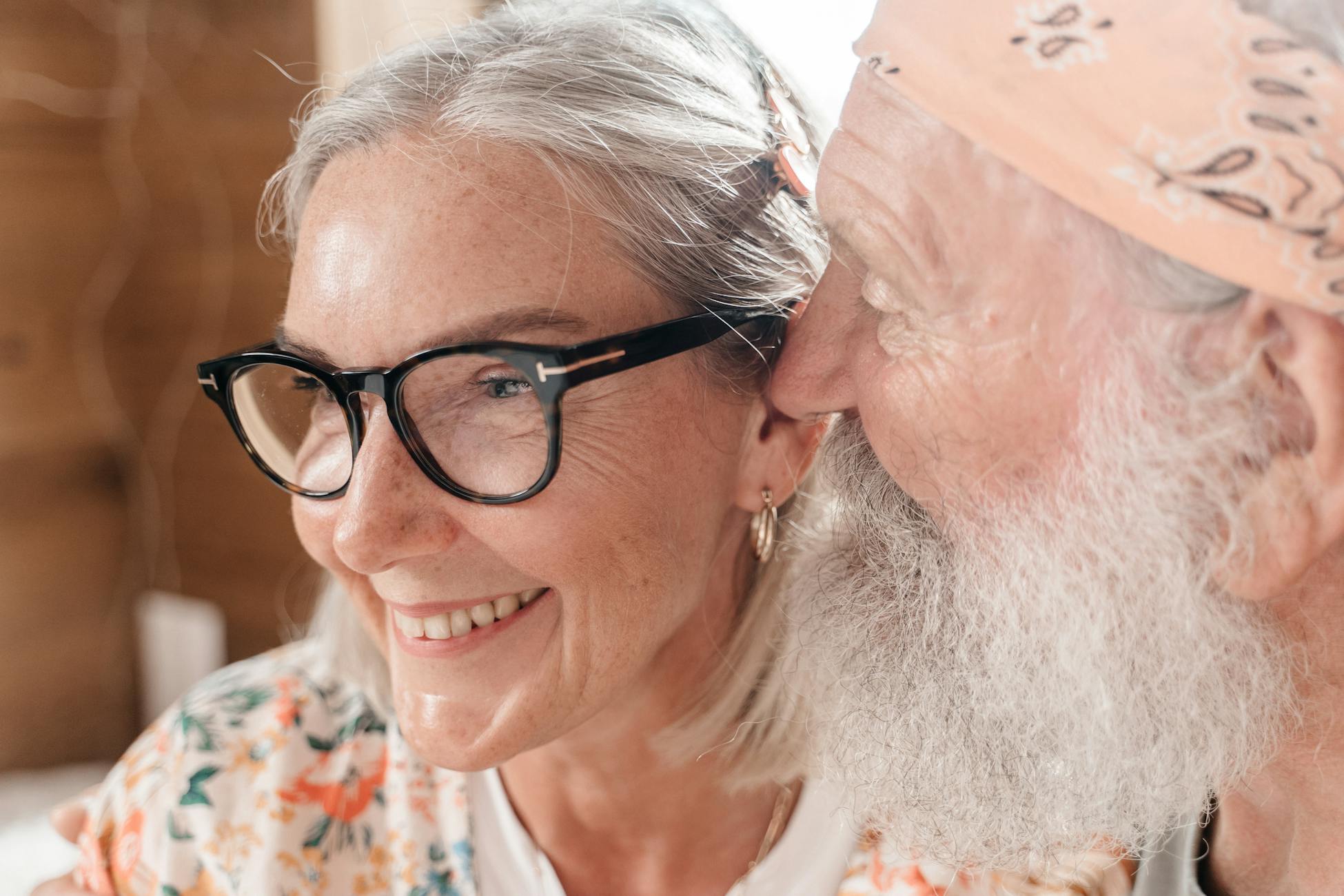
I’ve been thinking about Bob a lot this month. Not because anything happened to him, but because I realized, while walking Lottie through the neighborhood last week, that Bob is the only person outside my family whose absence would fundamentally change the shape of my daily life. We’ve lived next door to each other for thirty years. We disagree about almost everything political. He thinks my taste in music peaked in 1978, which is probably fair. And if I had a heart attack in my driveway tomorrow morning, Bob would be the first one there, before the ambulance, before my children could book flights home. That fact, when I sit with it, feels like it might be the single most important variable in whether I’m still around at seventy-five.
The conventional wisdom about aging well says to stay social. Join clubs. Volunteer. Keep your calendar full. Retirement articles and wellness blogs love to prescribe a large social network as the antidote to decline, as if longevity were a function of how many people recognize you at the grocery store. I bought into this for a while. After I retired at sixty-two and spent that foggy first year trying to figure out who I was without a business card, I signed up for everything: the book club, the chess group at the community center, the literacy center. I surrounded myself with faces. And I’m grateful for all of it.
But here’s what I’ve found: those activities, as enriching as they are, operate on a completely different frequency than what happens when Bob and I sit on his porch after a poker game and I tell him that my son Michael’s divorce still keeps me up at night, or that I’m scared about my memory, or that I don’t know what I’m doing with all this time. The acquaintances keep me busy. Bob keeps me honest. Those are different things, and I’ve come to believe the difference between them is profoundly important to how long and how well we live.
The loneliness hiding inside a crowded room
When I had my heart scare at fifty-eight, the cards and well-wishes poured in. People from the office, neighbors I barely spoke to, an old college friend who found out through the grapevine. The volume of concern was genuinely moving. But the person who sat with me in the hospital room while I cried about whether I’d see my grandchildren grow up was my wife. And the person who mowed my lawn every week for two months afterward without being asked was Bob. Everyone else sent a card and moved on. That experience taught me something I couldn’t have learned from a study: the size of your network measures something real, but what it measures has almost nothing to do with survival.
I later came across research suggesting that strong friendships may literally slow aging at the cellular level. The research suggests that deep social bonds affect biological processes tied to how quickly our bodies deteriorate. Not just mood. Not just mental health. The actual mechanics of aging. When I read that, my first thought wasn’t about science. My first thought was about Bob handing me a beer on a Thursday evening and saying, “You look like hell, Farley. Talk to me.”
That kind of friendship, the kind where someone can look at you and know something’s wrong before you say a word, doesn’t come from networking. It comes from decades of showing up. From weathering disagreements and disappointments and still choosing each other.

What the research actually measures
Stanford Medicine recently outlined five healthy habits for successfully aging past sixty and seventy, and social connection runs through the findings like a thread. The emphasis isn’t on the number of contacts in your phone. It’s on the quality and depth of the bonds you maintain. When researchers talk about social engagement protecting cognitive function and physical health, they’re describing something specific: relationships where you are known. Truly known. Where the mask comes off.
I spent thirty-five years in insurance wearing a mask. The professional persona. The steady, competent middle manager who had everything under control. I’ve performing a version of themselves that cost enormous energy, and I was no exception. The friendships I built during those years were mostly transactional. Lunches with colleagues. Holiday parties. The occasional golf game. Pleasant, fine, and completely useless when my life actually fell apart.
Bob was never part of that world. Bob knew me as the guy who burned the steaks at the Fourth of July barbecue and got teary-eyed at his daughter’s high school graduation. That’s why Bob is still here and those work friendships aren’t.
The crisis phone call test
I’ve started using a simple measure for my own relationships, something I think about when I’m journaling at night. I call it the crisis phone call test. If something went seriously wrong at three in the morning, who would I actually dial? Not who would I notify on social media. Not who would I text a vague update to. Who would I call, crying, scared, needing someone to just be there?
My list has three names on it. My wife. Bob. My daughter Sarah.
That’s it.
I know people who could fill a banquet hall with acquaintances and can’t name a single person they’d call in a genuine crisis. They’re surrounded by warmth and still fundamentally alone. I’ve written before about how unresolved emotional weight affects the body, and I think the same principle applies here. Carrying loneliness inside a busy social life is its own kind of unresolved burden. The body knows the difference, even when the mind pretends otherwise.
I’ve observed that people who expect nothing from others often end up with relationships that give them exactly that. Shallow by design. Safe, maybe. But ultimately empty when the stakes get real.
Why men are especially bad at this
I need to say something about men specifically, because I think we’re the ones dying from this. Men my age were raised to be providers, not connectors. We built professional identities, not intimate friendships. We had drinking buddies and golf partners and guys we watched the game with, and almost none of us had someone we could tell, without shame, that we were afraid.
I inherited my father’s inability to say what I actually feel. That emotional inheritance has been the project of my sixties to dismantle. When my father developed dementia, I watched a man who had never once told me he loved me lose the capacity to form new memories. Whatever was locked inside him stayed locked. I swore I wouldn’t let that be my story.

Bob and I had to learn, slowly and awkwardly, how to be honest with each other. It didn’t come naturally. There was a period in our forties where we barely talked, a disagreement about something political that seems absurd now. We lost two years to pride. When we found our way back, something had shifted. We’d both gotten older. We’d both had scares. And we stopped pretending everything was fine all the time.
That’s the friendship that changes your biology. The one where pretending ends.
The compound interest of showing up
People talk about friendship like it’s an accessory to a good life. Something you add once the important things are handled: career, family, finances. I’ve come to see it differently. Deep friendship is infrastructure. It holds everything else up.
When my wife went through breast cancer in her late forties, Bob’s wife brought us dinner three times a week for two months. When Bob’s mother died, I sat with him in his garage while he cried into a shop towel. These aren’t grand gestures. They’re the compound interest of three decades of showing up. Every poker night. Every borrowed tool returned. Every conversation that went past small talk into something real.
Writers on this site have explored the idea that sitting with loneliness without reaching for a distraction is a genuine capacity, and I believe that’s true. But I also believe there’s a difference between the productive solitude that builds self-knowledge and the chronic isolation that eats years off your life. One feeds you. The other depletes you. Knowing which you’re experiencing requires honesty most of us avoid.
Some people keep friendships at a deliberate distance to protect their emotional energy, and psychologists say that impulse makes sense up to a point. Boundaries are healthy. Self-protection is wise. But there’s a cost when the boundary becomes a wall, when protecting your energy means nobody ever gets close enough to matter.
What I’d tell someone who has no Bob
If you’re reading this and you can’t name a single person you’d call in a crisis, I’m not going to lecture you. I’ve done enough guilt-tripping to myself over the years. But I will tell you what I’ve observed.
I came across a video recently from VegOut about Bryan Johnson—the tech millionaire spending two million dollars a year trying to reverse aging—and it struck me how perfectly it illustrates what we get wrong about longevity: Johnson optimized everything except the relationships that actually matter, and the video shows the cost of that choice more clearly than any study could.

Friendship after sixty requires intention in a way it never did before. The structures that used to bring people together, the office, the school pickup line, the neighborhood where everyone had young kids, those are gone. What’s left requires you to choose, deliberately, to be vulnerable with another human being. To say something honest when it would be easier to talk about the weather. To call when you don’t have a reason.
I started this process clumsily. I joined the book club (I’m still the only man, and it still opens my eyes). I show up at the chess tables at the community center. I volunteer at the literacy center. These are all good things. But the friendship that has actually changed my health, my sleep, my sense of purpose, that friendship was built one awkward, honest conversation at a time with a man who happened to live thirty feet from my front door.
The wealth that actually matters in retirement has never been financial. My financial planner has never once asked me whether I have someone I can call at three in the morning. Maybe that should be the first question on the intake form.
What deep friendship actually means
Research has shown that social support predicts longevity and improved quality of life among older adults. The difference between superficial social networks and deep friendships isn’t just about how you feel. It’s about how long you live and how well you age. When I think about what’s going to keep me alive long enough to use the Spanish I’ve been learning, or to finish the birdhouse I’ve been building in the garage, or to see my son Michael find his footing after everything he’s been through, I don’t think about my cholesterol numbers or my step count or how many names are in my phone.
I turned sixty-five this month. I ran my first marathon. My knees hurt. My back hurts. But when I crossed that finish line and looked into the crowd, Bob was standing there holding a hand-lettered sign that said “ABOUT TIME, LEDGERWOOD.” He’d driven forty-five minutes to be there.
That sign is on my refrigerator now.
And honestly? I think about Bob.
I think about the fact that someone in this world knows exactly who I am and shows up anyway.
And that’s where I am now. Still learning. Still figuring it out. But no longer confused about what actually matters.