

If you still write things down on paper instead of your phone, you display these 8 unique traits

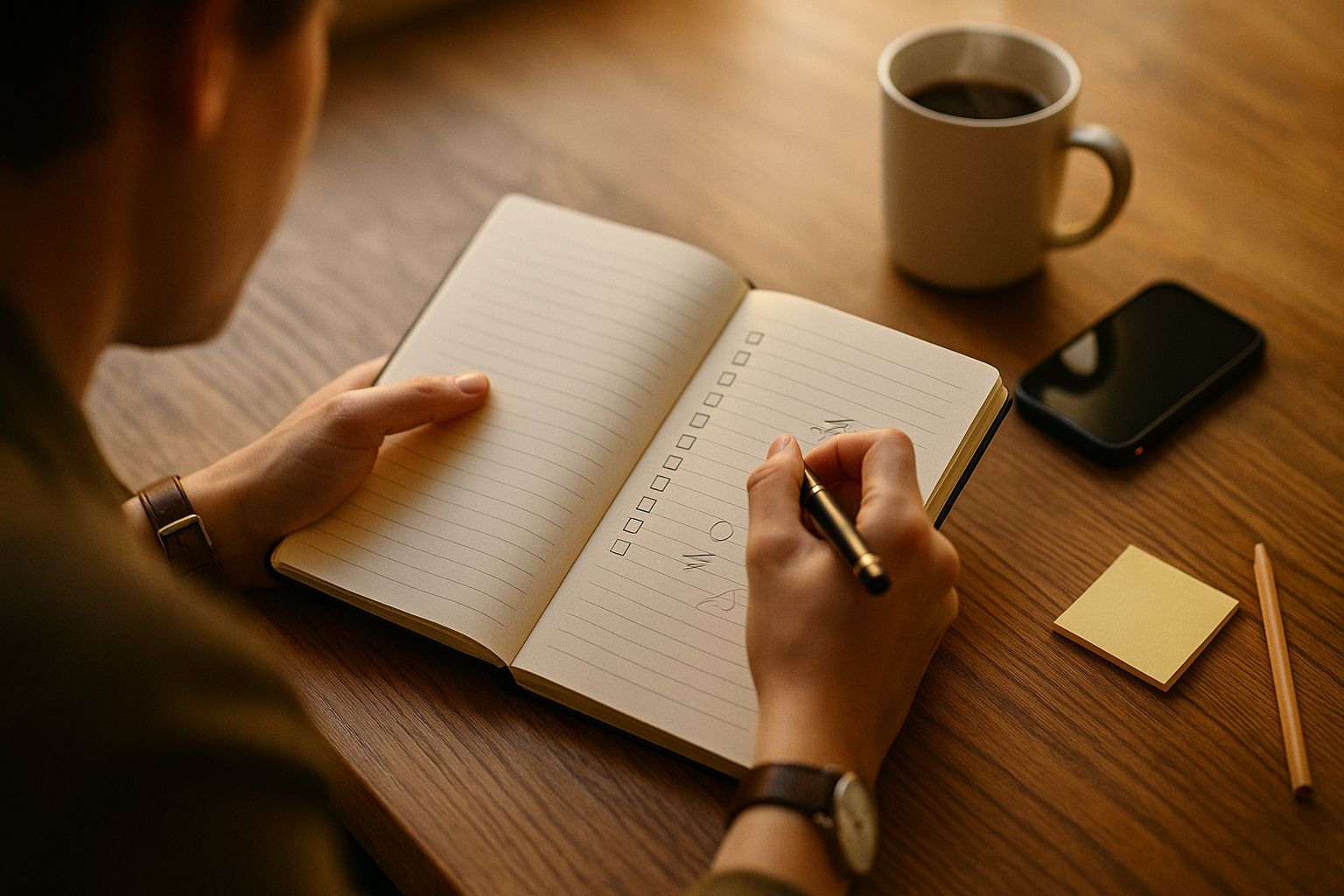
In a world where almost everything happens on screens, there’s something quietly rebellious about pulling out a pen and jotting something down on paper.
While most people tap away on their phone’s notes app, you’re flipping open a notebook or scribbling on a scrap of paper—and you don’t think twice about it.
It might seem like just a habit, but from a psychological perspective, it reveals a lot about how your mind works, how you process information, and what you value.
Here are 8 traits that people who still write things down on paper often display.
1. You value depth over speed
Phones are built for speed—type, save, done. But writing on paper forces you to slow down. You can’t write as fast as you can type, so you have to process your thoughts more deliberately.
This links to the concept of deep processing in psychology—the idea that when you slow down and think more carefully about information, you encode it more strongly in memory.
People who prefer pen and paper tend to enjoy this slower pace because it lets them fully engage with what they’re noting down. It’s less about ticking a box and more about giving an idea space to breathe.
Example: You don’t just jot down “meeting at 2 pm.” You might write “meeting at 2 pm – ask about new client feedback,” turning it into something you’ve already mentally prepared for.
2. You’re more tactile and sensory-oriented
Writing by hand is a physical act—you feel the pen moving, hear it scratch on the page, and see your own handwriting appear in real time. People who enjoy this process often have a kinesthetic learning style, meaning they absorb information better through physical action.
This tactile connection creates a sense of ownership over what you write. Unlike typed text, which looks the same no matter who writes it, your handwriting is uniquely yours. That physical imprint makes the information feel more personal and memorable.
Example: You might still keep a physical shopping list because crossing things off with a pen feels far more satisfying than tapping a checkbox on a screen.
3. You have strong recall skills
There’s a psychological phenomenon known as the generation effect—when you physically create something (like writing words), you remember it better than if you just read or typed it.
People who write things down by hand often find they don’t have to look back at their notes as much, because the act of writing reinforces the memory. This isn’t just about remembering facts—it’s about creating a mental map of ideas that you can retrieve later.
Example: You might write someone’s phone number once and remember it days later, even without checking your notes.
4. You value mindfulness and presence
Phones encourage multitasking. You might open your notes app to write something down, but end up checking a notification or replying to a message. Writing on paper, on the other hand, is a single-task activity—you’re there with your notebook, your pen, and your thoughts.
This ties into the concept of mindful attention—the ability to focus on one thing without distraction. People who gravitate toward paper often value this undivided focus, whether consciously or not.
Example: If you’re planning your week, you might light a candle, sit down with your planner, and give the task your full attention instead of half-watching TV while you type.
5. You’re more creative and open to free thinking
Writing by hand activates different parts of the brain than typing, particularly areas linked to visual-motor integration. This can make it easier to doodle, sketch, and make connections between ideas.
On paper, your notes can be messy, non-linear, and creative—something that’s harder to replicate on a phone. You might circle ideas, draw arrows, or scribble half-thoughts in the margins.
This flexibility is often linked to divergent thinking, the kind of thinking that generates new ideas rather than just recording existing ones.
Example: When brainstorming, you might fill a page with mind maps and sketches instead of a tidy bullet list.
6. You trust your own systems over technology
People who stick with paper often have a streak of self-reliance. They trust their own memory, organization, and record-keeping methods more than a digital app that might glitch, get deleted, or become incompatible with a new device.
It’s not about rejecting technology—it’s about having control. A notebook won’t crash. A sticky note won’t require a password. And there’s a certain satisfaction in knowing your information is physically in your possession.
Example: You might jot down important dates in a paper planner even though your phone calendar exists, just in case you lose your device.
7. You appreciate tradition and nostalgia
Psychology recognizes the role of associative memory—how sensory cues like the smell of paper or the sound of pen on page can evoke emotions and memories. Writing on paper often brings a sense of nostalgia, linking back to school days, letter writing, or keeping a childhood diary.
People who continue the habit often do so because it feels grounding. It connects them to a simpler, less distracted version of life, even if only for a moment.
Example: You might keep handwritten recipe cards because they remind you of cooking with a family member, even though the same recipes could be saved online.
8. You’re comfortable standing apart from the crowd
In a culture obsessed with efficiency and technology, choosing pen and paper can make you look old-fashioned—or even inefficient to others. But that’s where individualism comes in.
People who stick with paper despite the digital norm often have a strong sense of identity. They do what works for them, not just what’s popular. In psychology, this is related to self-determination—the ability to make choices based on personal values rather than external pressure.
Example: If everyone in a meeting is typing into their laptops, you’re the one with a leather-bound notebook, calmly writing things down by hand.
The deeper meaning behind the habit
From a distance, writing on paper instead of a phone might seem like a quirk. But it’s often tied to bigger traits: patience, independence, creativity, and a desire for focus in a distracted world.
It’s not about resisting technology—it’s about choosing the method that feels most natural and effective for you. And for many people, the sensory, creative, and mindful aspects of writing on paper simply can’t be replaced by a glowing screen.
Final thought:
If you’re someone who still reaches for a pen and paper, embrace it. In a world rushing toward ever-faster digital solutions, you’re choosing a path that values depth, presence, and personal connection to your thoughts.
Far from being outdated, this choice says something powerful about you: that you know how your mind works—and you’re not afraid to work with it.
