

The Dalai Lama says these 8 daily practices create genuine lasting happiness

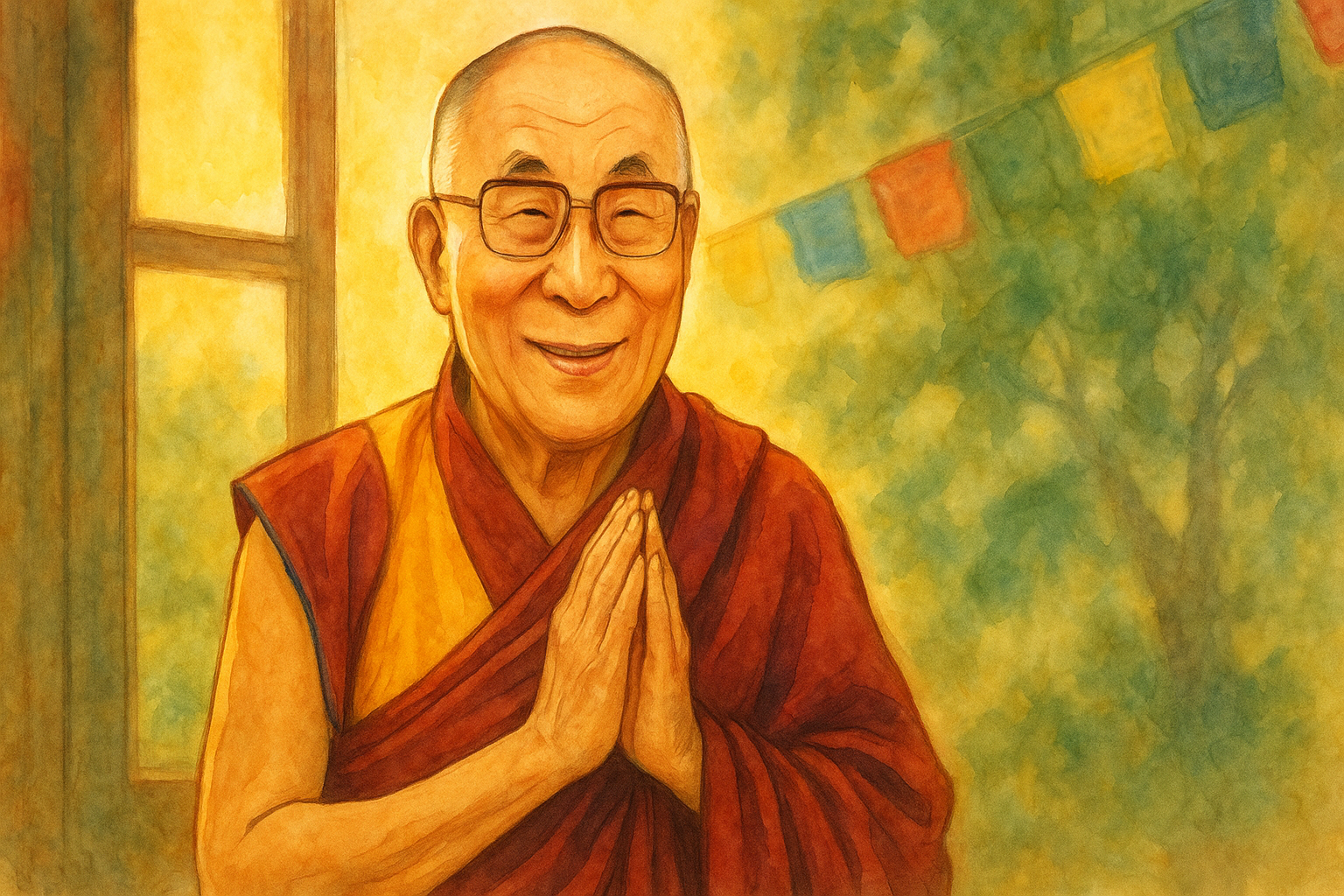
If you strip his message down to its core, the Dalai Lama is remarkably consistent: happiness is an inside job cultivated by how we train the mind and treat other people. In his own words, “The key to happiness is peace of mind… Inner peace has to be cultivated by each of us from within.”
Below are eight daily practices he repeatedly emphasizes—each anchored by a legitimate, sourced quote from His Holiness—plus simple ways to put them to work today.
1) Practice compassion (for others and yourself)
The Dalai Lama’s most-cited instruction is disarmingly direct: “If you want others to be happy, practise compassion; if you want to be happy, practise compassion.” The 14th Dalai Lama
Compassion isn’t sentimental; it’s a trained stance of warm-hearted concern. He adds that “the basic source of all happiness is… kindness and warm-heartedness towards others.”
When we actively care for others, fear and insecurity loosen their grip and our own wellbeing rises.
Try this today (5 minutes): Think of one person who’s stressed. Send a short message that lightens their load (“I’ve got the draft / I’ll take that call”). Tiny acts of service are compassion in motion.
2) Train your mind toward inner calm
Happiness, he teaches, depends more on mental habits than circumstances: “We should devote our most serious efforts to bringing about mental peace.”
The payoff is practical: with a calmer mind, decisions are better and emotions steadier.
Try this today (7 minutes): Sit comfortably, breathe naturally, and notice sensations of the breath at the nose. When the mind wanders, label it “thinking” and gently return. One short session a day builds the muscle of calm attention.
3) Widen your perspective: remember the oneness of humanity
Problems shrink when perspective widens. As he puts it: “We must continually consider the oneness of humanity, remembering that we all want to be happy.”
He also suggests that when difficulties arise, remembering that everyone suffers increases our determination and resilience.
Try this today (2 minutes): Before a tense meeting, silently repeat, “Just like me, they want to be happy and free from stress.” Notice how this softens defensiveness and opens cooperation.
4) Practice gratitude—especially for difficult people
Gratitude isn’t only for the pleasant. In a striking line, he writes: “For a person who cherishes compassion and love, the practice of tolerance is essential… we should feel grateful to our enemies, for it is they who can best help us develop a tranquil mind.”
This isn’t moral gymnastics; it’s training. Adversaries give us real-world reps in patience, clarity and non-reactivity—core skills for lasting happiness.
Try this today (3 minutes): Name one “teacher in disguise” (a critic, competitor, or toddler on a tear). Write one sentence: “Because of you, I’m practising ______ (patience/clarity/boundaries).” Feel the shift from resentment to growth.
5) Accept reality and drop unhelpful worry
Acceptance for him is rigorous, not passive. He recommends a two-step filter: “If the situation… can be remedied, then there is no need to worry… If it’s not fixable, there is no benefit in worrying whatsoever.” This clears the fog so you can either act or let go.
Try this today (4 minutes): List your top worry. Underline what’s controllable. If something is actionable, schedule the next step; if it isn’t, practise releasing it with three slow exhales and a quiet “not mine to fix.”
6) Be generous and serve—“wise selfishness”
He jokes to make a serious point: “If you really want to be selfish, you should be very altruistic!”
Caring for others boomerangs back as trust, community, and help when you need it. In another message he calls love and compassion “the ultimate source of human happiness.”
Try this today (10 minutes): Choose one generous act with no payback expected—make an introduction, share notes, tip big, or mentor a junior colleague. Notice your mood an hour later.
7) Keep a light touch: smile and use wholesome humor
Joy isn’t a luxury in his teaching; it’s a skill. He admits, “I love smiles… A genuine smile really gives us a feeling of freshness.”
Humor and warmth help ideas land and keep minds open—especially during conflict.
Try this today (1 minute): Before you answer the next email or call, lift the corners of your mouth and soften your eyes. Then respond. People recognize warmth—even through text and voice.
8) Walk humbly
Humility stabilizes happiness because it loosens ego’s chronic grasping. In his Nobel remarks he grounded himself plainly: “I am… humbled… a simple monk from Tibet. I am no one special.”
Humility creates approachability, dissolves “us vs. them,” and keeps learning continuous.
Try this today (3 minutes): Begin one conversation with “I might be missing something—how do you see it?” You’ll surface better solutions and earn goodwill you can’t buy.
Putting it together: a 15-minute daily routine
-
2 min perspective (“Just like me…”).
-
7 min breath meditation (train attention).
-
3 min gratitude (including a “teacher in disguise”).
-
3 min generosity planning (one concrete act today).
Thread these four with compassion, acceptance, humor, and humility during the day. They reinforce one another—what the Dalai Lama elsewhere calls making this “a century of compassion.”
Final word from His Holiness
He repeatedly returns to the same compass: cultivate inner peace and warm-heartedness. Or, as he writes, “The key to happiness is peace of mind… [and] the basic source of all happiness is… kindness and warm-heartedness.”
Do a little, every day. That’s the Dalai Lama’s recipe—not mystical, but practical, repeatable, and deeply human.
