

People who have lost someone they loved deeply often describe the same strange experience. The grief doesn’t become explainable. It becomes sacred. And that’s when healing actually begins.


Grief becomes easier to carry the moment you stop trying to make it lighter. That observation runs counter to nearly everything our culture teaches about loss, which is that processing it means explaining it, that healing means resolving it, that the goal is to “move through” the pain until you arrive somewhere recognizable on the other side. The people I’ve watched grieve most deeply, the ones who eventually found footing again, didn’t arrive at understanding. They arrived at something closer to reverence. The grief didn’t shrink. It changed texture.
The conventional wisdom about grief follows a tidy arc. You feel it, you name it, you work through it, you integrate the loss, you grow. Therapy helps. Journaling helps. Talking about it helps. And all of that is true, to a point. What nobody tells you is that the arc has a bend in it that doesn’t appear in any self-help book. There’s a stage where explanation fails entirely, where the loss stops being a problem to solve and starts being something else. Something that resists language. The people who try hardest to explain their grief at that point are often the ones who stay stuck the longest.
I’ve written before about awe and mystery and how they affect the body. What struck me while considering this was how closely the experience of awe might resemble the experience of deep grief. Both involve a sense of being made small by something vast. Both seem to dilate your perception of time. Both, when you stop fighting them, appear to affect the nervous system in profound ways.
There’s a term that keeps surfacing in bereavement literature: meaning-making. The idea is that grief becomes more bearable when we construct a narrative around the loss, when we find purpose or lessons or growth embedded in the devastation. And for early-stage grief, this seems to hold. Research on moving from grief to acceptance suggests that finding meaning is one of the most reliable pathways toward healing. But meaning-making has a ceiling. At some point, the meaning you construct starts to feel thin against the weight of what actually happened.
That’s the moment people describe as strange. The grief doesn’t become explainable. It becomes sacred.
Sacred is a word I use carefully here. I don’t mean religious. I don’t mean mystical. I mean the experience of encountering something that matters so completely that reducing it to explanation feels like a violation. The way a parent, years after losing a child, will say, “I can’t tell you why it happened, but I can tell you the love is still alive in me.” They aren’t explaining. They’re testifying. The distinction matters enormously.
And here’s the thing: people who reach this stage of grief often describe a strange relief. Not because the pain diminishes. Because the pressure to make the pain productive finally lifts. They stop asking what the loss meant and start carrying it the way you carry something precious. Carefully. Without needing to justify its weight.

The cultural pressure to narrate grief is immense. We ask the bereaved, “How are you doing?” which really means, “Have you organized this into something I can understand yet?” We send books about stages. We recommend therapists. We say, “They’d want you to be happy,” which is a sentence that has probably caused more quiet damage than any other well-meaning phrase in the English language. The implication is always the same: grief is a problem, and problems have solutions.
Some problems don’t have solutions. They have relationships.
What I mean by that is: people who grieve well (and “well” here means in a way that doesn’t destroy them) eventually develop a relationship with the loss itself. They talk to the person who’s gone, or they maintain rituals, or they find themselves pausing at odd moments, flooded with something that has no name. Clinical perspectives on grief suggest that managing emotions around loss requires ongoing engagement, not closure. The holidays come around, and the grief is there, and the person doesn’t try to resolve it. They let it sit at the table.
That’s the sacred part. Letting it sit at the table.
You see a version of this in the quietest person at the funeral, who sits still while everyone else narrates their shock. That person isn’t avoiding their feelings. They’re already in a conversation with something too large for words. Their silence is evidence of how much they’re carrying, not how little they feel.
I notice a parallel in my own experience, though on a much smaller scale. When I spent months optimizing every part of my life, tracking habits, building routines, turning myself into a project, the hardest thing I eventually had to confront wasn’t a failure. It was an absence. The version of myself I was chasing didn’t exist. And when I finally stopped chasing, there wasn’t a clean epiphany. There was just a quiet acknowledgment that something I’d been pursuing was gone. That I needed to carry the absence forward rather than solve it. Grief operates on the same principle, just with incomparably higher stakes.
Unresolved grief carries real consequences. When loss goes unprocessed, it doesn’t quietly fade. It can manifest in the body and behavior in profound ways. So the question becomes: what does it mean to “resolve” grief if resolution doesn’t mean explanation?
I think it means integration without comprehension. You integrate the loss into your daily life. You carry it. You let it inform how you treat people, what you prioritize, how you spend your time. But you don’t pretend to understand it. The moment you pretend to understand why someone you loved is gone, you’ve reduced the relationship to a lesson. And relationships are not lessons.
There’s a reason the grief industry (and it is an industry) leans so heavily on stages, frameworks, and timelines. Structure sells. Structure comforts. If I can tell you that you’re in stage three and stage five is acceptance, you feel oriented. You have a map. But the map is of a different territory than the one you’re actually standing in. Your grief is not a replica of anyone else’s grief. The person you lost is not interchangeable with the person someone else lost. The specific gravity of absence is always unique.
What some experienced therapists seem to understand, at least the good ones, is that their job may be less about explaining loss and more about sitting in the room while the bereaved discovers what the loss is becoming. That’s a fundamentally different posture than problem-solving. It requires patience most people, including most friends and family members, don’t have.
The people I’ve observed who navigate grief with something close to grace share a few quiet characteristics. They stop apologizing for their pain. They stop performing recovery for the comfort of others. They develop an almost protective relationship with the sadness, not wallowing in it, but guarding it against people who would trivialize it with platitudes.
That protectiveness is the sacred part. It says: this loss is mine, and I will honor it by refusing to make it small enough for a greeting card.
There’s a connection here to something I’ve been thinking about with people-pleasing and burnout. Grief, like burnout, is often worsened by the compulsion to make everyone else comfortable with your pain. The bereaved person who smiles at the funeral reception, who says “I’m fine” three weeks later, who returns to work on schedule because they don’t want to be a burden, is performing recovery the same way a people-pleaser performs agreeableness. Both are forms of self-erasure in the service of social ease.
Healing begins when you stop erasing yourself.
That sounds simple. It is staggeringly difficult. Because the social contract around grief is clear: feel your feelings, but not too loudly. Grieve, but not too long. Remember them, but move on. The contradictions are baked in, and the bereaved person absorbs them all.
What would it look like to grieve without a deadline? To carry loss the way you carry love, which is to say permanently, with no expectation that it will resolve into something manageable? I think it would look like the people I’ve watched who are five, ten, twenty years past a devastating loss and who still tear up at unexpected moments. They aren’t broken. They’re honest. The love didn’t stop when the person did.
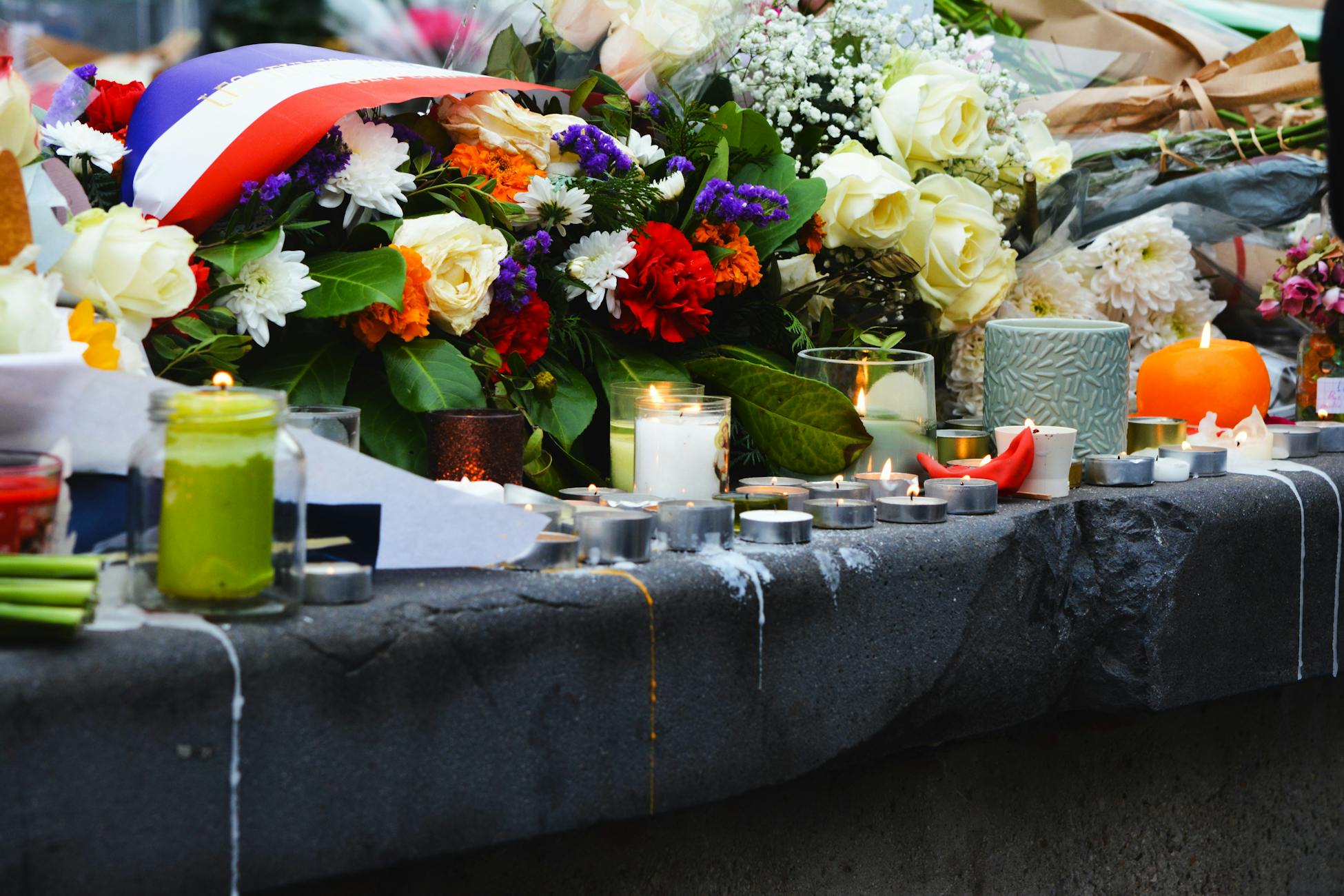
Navigating grief through spirituality and personal ritual has a long history precisely because spiritual frameworks don’t demand explanation. They offer containment. A prayer doesn’t explain death. A candle lit on an anniversary doesn’t explain absence. But both create a container for something that would otherwise be formless, and formlessness is what makes grief so terrifying in the early stages. You don’t know where to put it.
The shift from formless to sacred is the shift from “I don’t know where to put this” to “I will build a place for this inside me.” That’s what people are describing when they say the grief changed. It didn’t lessen. It got housed.
I keep coming back to the word sacred because no other word does the work. Important is too weak. Meaningful implies you’ve extracted a lesson. Painful only captures part of it. Sacred captures the specific quality of something that is simultaneously devastating and precious, something you would not trade even though it costs you enormously.
When I stop comparing one person’s grief to another’s, something clarifying happens. Each loss becomes its own universe. The person grieving a parent has a different cosmos than the person grieving a partner, who has a different cosmos than the person grieving a friend, who has a different cosmos than the person grieving a child. You can’t map one onto another. You can only stand at the edge of each and acknowledge its scale.
The healing, then, is architectural. You build a room inside yourself for the loss. You visit it. You maintain it. Some days the door is open and it floods everything. Other days you walk past it and feel only a low hum. But you never seal it off, because sealing it off means sealing off the love that created it, and most people, when they’re honest, would rather live with open grief than amputated love.
That’s the strange experience people describe. The grief doesn’t become explainable. It becomes sacred. And in becoming sacred, it stops being the thing that’s destroying you and starts being the thing that proves you loved someone with your whole life. That proof, unbearable and irreplaceable, is where healing actually begins.
