

Adults who regularly experience awe and mystery don’t just report higher life satisfaction. Their inflammatory markers drop, their generosity increases, and their sense of time expands measurably.


Dacher Keltner has studied emotions at UC Berkeley for many years, and somewhere along the way he became fixated on one that most psychologists had ignored: awe. He collected narratives from people across numerous countries, asking them to describe their most recent experience of it. What struck him wasn’t the grandeur of the stories. Many were quiet. A woman watching her toddler discover snow. A man standing in a cathedral he’d walked past a hundred times before, suddenly seeing the light differently. A teenager listening to a piece of music that made the room feel enormous. The experiences were modest, often fleeting. The physiological and psychological effects, Keltner found, were anything but.
Most people, when they think about well-being, think about what you add to your life. More exercise. More connection. More purpose. The conventional wisdom about health and happiness runs along a familiar track: optimize your habits, manage your stress, build routines that compound over time. I spent six months doing exactly that, tracking every morning routine and productivity metric I could measure, and what I found at the end of it was a tighter schedule and a hollow feeling I couldn’t quite name. What nobody told me, and what I’ve since come to understand through a different body of research entirely, is that one of the most powerful predictors of psychological and physical well-being has nothing to do with discipline. It has to do with the capacity to feel small.
Awe is the emotion you experience when you encounter something vast that challenges your existing framework for understanding the world. That’s the working definition most researchers use. The vastness can be physical, like standing at the edge of a canyon, or conceptual, like suddenly grasping the scale of deep time or the complexity of a single cell. The key ingredient is what psychologists call a “need for accommodation.” Your mental models can’t quite absorb what you’re perceiving, so they stretch. That stretching, it turns out, does something measurable to the body.
Research on the psychology and effects of awe has shown that people who regularly experience it display lower levels of pro-inflammatory cytokines, particularly interleukin-6 (IL-6). Chronic inflammation is linked to depression, cardiovascular disease, and autoimmune conditions. It is, in many ways, the body’s slow-burning alarm system. And awe, more than other positive emotions like joy, amusement, or pride, appears to quiet it. The mechanism isn’t fully understood, but the association is robust enough to have caught the attention of immunologists alongside psychologists.
That finding alone would be remarkable. But it’s only one piece.
What happens to generosity under awe
When people are induced into states of awe in laboratory settings, even through something as simple as watching a nature documentary or standing in a grove of tall eucalyptus trees, their subsequent behaviour shifts. They become more generous. More willing to give time and resources to strangers. More likely to describe themselves as part of something larger than their individual concerns. Research into how the brain regulates generosity points toward specific neural regions involved in prosocial decision-making, and studies suggest the emotional state of awe may activate prosocial circuits.
This makes intuitive sense if you think about it from the inside. When you feel awe, the boundaries of your self-concept blur. You stop being the centre of your own narrative for a moment. The mental chatter about status, performance, and comparison goes quiet. And in that silence, other people become more visible. Not as instruments of your social needs. As beings occupying the same bewildering space you do.
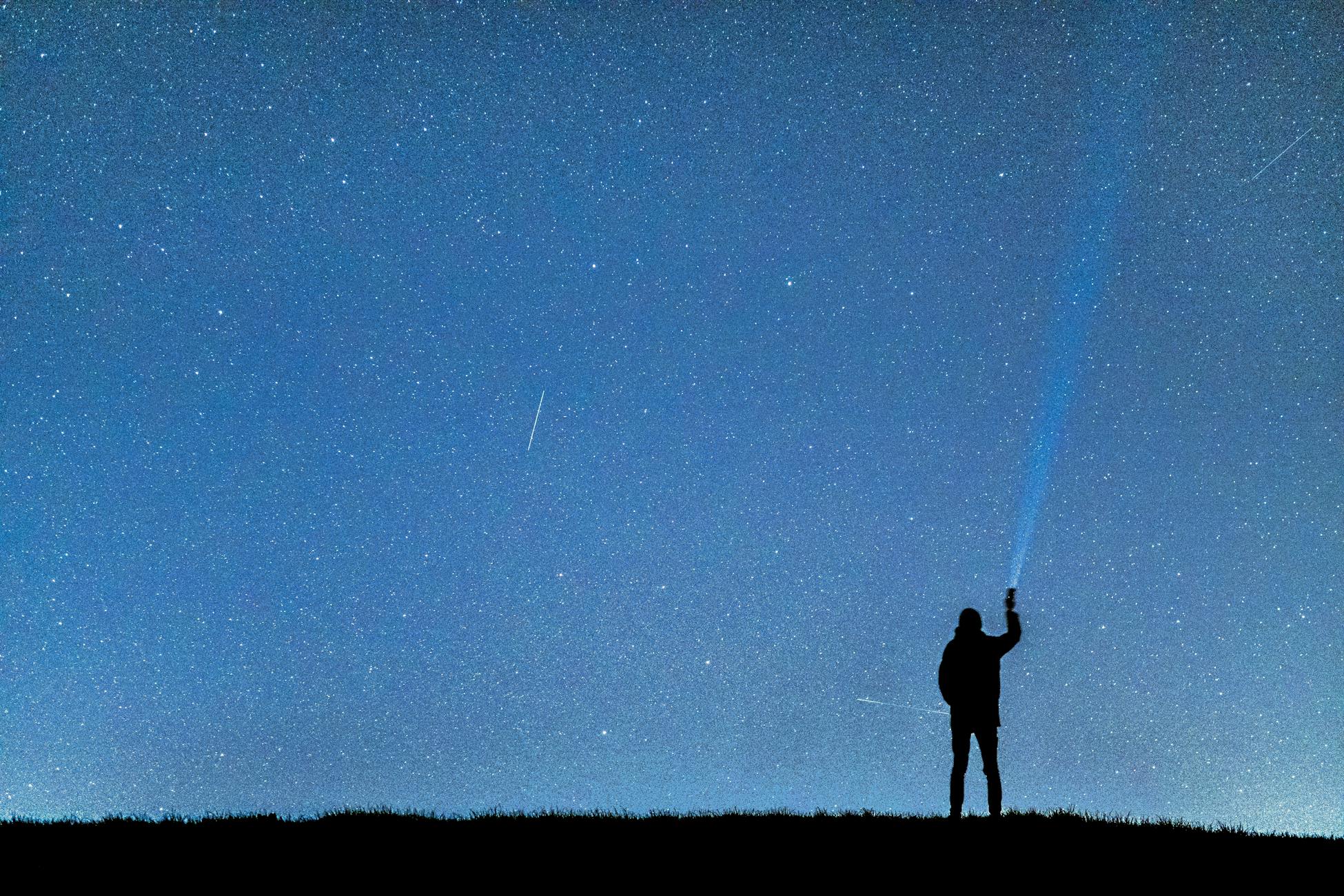
The generosity effect isn’t trivial. It scales. Research suggests communities and cultures that build regular encounters with vastness into daily life, through ritual, through architecture, through proximity to natural landscapes, tend to produce higher baseline levels of cooperative behaviour. The research on prosocial behaviour suggests this pattern begins early in life and deepens with repeated exposure.
The time expansion effect
Here’s the part that stopped me cold when I first encountered it. People experiencing awe report that time feels like it slows down. They perceive themselves as having more of it. And this perception changes their behaviour: they become more patient, more willing to volunteer, less rushed in their decision-making. In an era where the dominant complaint is that there isn’t enough time, the idea that an emotion can expand your subjective experience of it feels almost subversive.
Think about what that means for a moment. We spend enormous energy trying to save time. We optimise, automate, delegate, hack. And yet the felt experience of temporal abundance, the sense that you have enough time, doesn’t come from efficiency. It comes from encounters with something that makes clock time feel irrelevant.
I’ve noticed this in myself, though I didn’t have the language for it until recently. On mornings when I wake at 5:30 and immediately open a task list, the hours feel compressed. They evaporate. On mornings when something catches me off guard, a particular quality of light over Saigon, or a piece of writing that I have to read twice because I can’t quite hold it, the same hours feel spacious. Nothing about the clock changes. Everything about my relationship to the clock does.
Why modern life systematically strips awe away
Most adults in industrialized societies have engineered awe out of their daily experience. Screens fill peripheral vision. Routines become frictionless. We move through the world in a state of perpetual familiarity, navigating environments designed for convenience rather than wonder. The architecture is functional. The commute is predictable. Even travel, which used to be an encounter with genuine strangeness, gets pre-digested through algorithms that show us what to expect before we arrive.
This matters because awe isn’t something you can schedule like a workout. It requires a particular kind of openness, a willingness to be interrupted by something you didn’t anticipate. And that willingness is the first casualty of a life built around control.
I’ve written before about how life feels lighter after sixty once you stop performing for an audience that was never watching. Awe has a similar mechanism. It dissolves performance. Research suggests you can’t be in a state of wonder and simultaneously be managing your self-presentation. Which might explain why studies have found patterns suggesting people who chase status report less awe, and people who report more awe tend to be less focused on status.
The quiet people who already know this
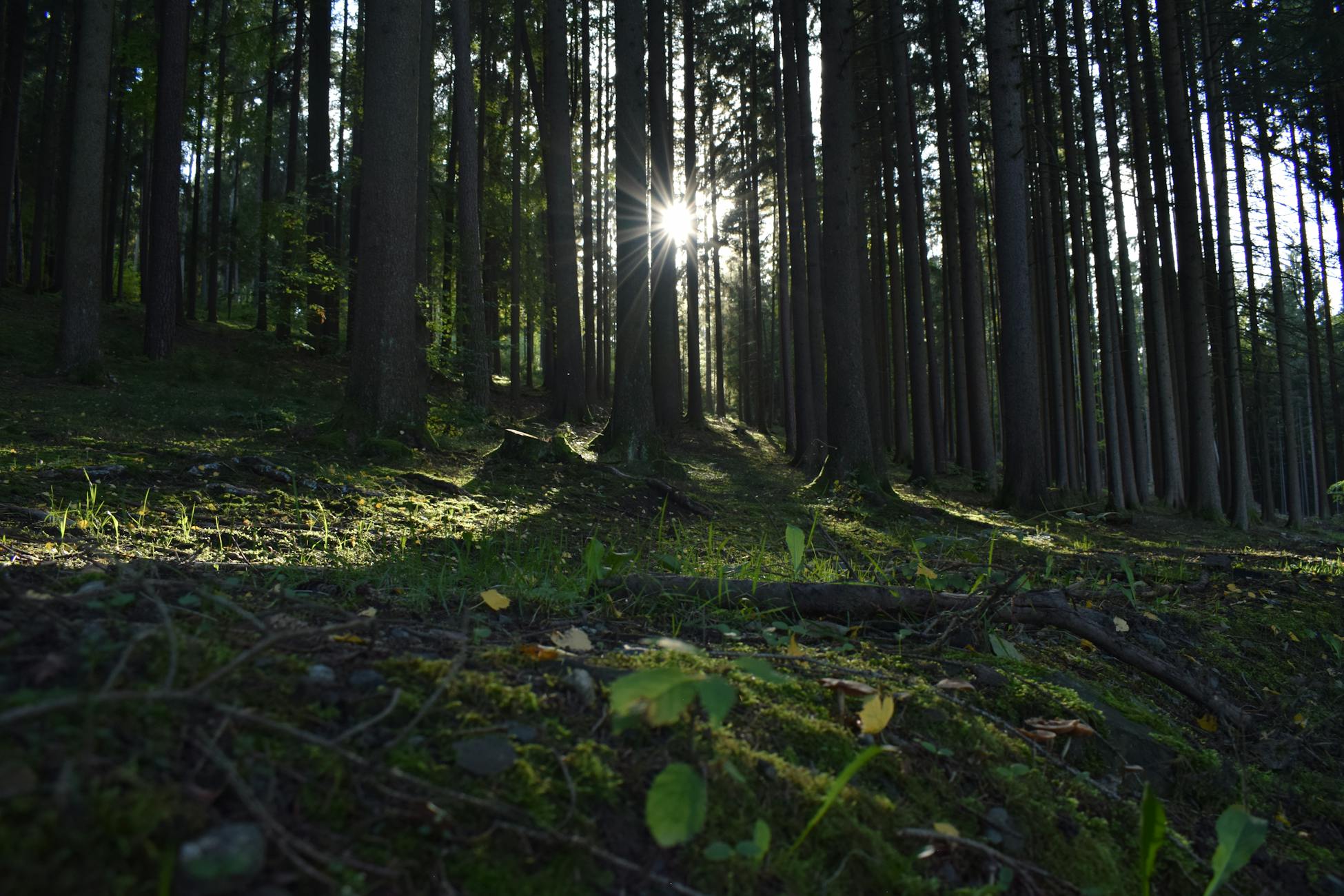
You’ve met the person I’m describing. The one who pauses at something everyone else walks past. The one who spends an extra thirty seconds watching a murmuration of starlings instead of checking their phone. They don’t look productive. They don’t look optimized. They look, to the efficiency-minded observer, like they’re wasting time.
They’re not. They’re engaging in something that a growing body of evidence suggests is one of the most health-promoting, pro-social, psychologically stabilizing activities a human being can undertake. And they’re doing it without a habit tracker, without a morning routine, and without anyone telling them they should.
There’s a link here to the hardest internal work a person can do. Cultivating openness to awe requires you to lower your defences. You have to stop narrating your experience and actually inhabit it. You have to tolerate the discomfort of not understanding something immediately. That tolerance, that willingness to sit with mystery rather than resolve it, is its own form of psychological maturity.
Awe as the antidote to self-referential thinking
Research suggests one of the hallmarks of depression and anxiety is excessive self-referential thinking: the mind locked in a loop about itself. What I did wrong, what I should do next, how I’m perceived, whether I’m enough. Awe disrupts this loop by redirecting attention outward toward something that dwarfs personal concerns. It’s a cognitive reset that happens not through willpower or reframing, but through encounter.
This is different from distraction. Distraction numbs the self-referential loop without resolving it. Awe replaces it with a different kind of attention altogether: absorbed, expansive, ego-quiet. Researchers studying how awe helps people navigate life’s challenges describe it as a state where the default mode network, the brain’s self-narrative centre, temporarily goes offline. What remains is perception without narration. Seeing without storying.
For someone who spent their twenties performing a version of themselves for other people, that state feels like coming home. The performance requires constant self-monitoring. Awe makes self-monitoring impossible. It’s hard to worry about whether you’re being impressive when you’re genuinely staggered by something.
Where to find it when you’ve forgotten how
The research on awe suggests it doesn’t require travel to remote places or encounters with extreme natural beauty, though those help. Everyday sources of awe include music, moral beauty (watching someone act with extraordinary courage or compassion), intellectual discovery, and even the perception of vast time, such as looking at an ancient tree or a fossil.
What these sources share is unfamiliarity within the familiar. A piece of music you’ve heard before that suddenly opens up a dimension you missed. A conversation that veers into territory neither person expected. A moment where the ordinary world reveals that it was never ordinary at all.
The practical implication isn’t to seek awe deliberately, which tends to produce a performative version of the experience. It’s to stop blocking it. Put the phone down when you’re walking. Look up at buildings you’ve passed a thousand times. Let a conversation meander without steering it toward a point. Give your attention to something without knowing in advance what you’ll get from it.
The paradox of smallness
The deepest paradox in the awe research is this: feeling small makes people larger. More generous, more connected, less inflamed, more temporally abundant. The experience of personal insignificance, which our culture treats as a threat to be avoided, turns out to be one of the most reliable pathways to well-being.
This runs counter to everything the self-improvement industry sells. You’re supposed to feel powerful, capable, in control. Your morning affirmations are supposed to reinforce your significance. Your goals are supposed to make you feel like the protagonist of an important story. And yet the data keeps pointing in the opposite direction: that the moments when you forget you’re the protagonist are the moments your body calms down, your mind opens up, and your behaviour toward others becomes genuinely kind rather than strategically nice.
The people who understand this, the ones who build encounters with vastness into their ordinary weeks, aren’t doing it because they read a study. They’re doing it because something in their experience taught them that the small self is the braver self. The one willing to be astonished. The one willing to admit it doesn’t have the whole picture.
That admission, quiet and private as it tends to be, might be the healthiest thing a person can practice.
