

The stay-at-home parents who seem to be doing it well aren’t usually the ones with the cleanest houses — they’re the ones who’ve stopped measuring their day in tasks completed


The stay-at-home parents I’ve watched flourish are not the ones with the tidiest homes. They’re the ones who stopped treating the day like a checklist.
I’m 77 now, and I’ve had decades to watch how people raise children — my own sons and famililies in their busy years. I’ve sat in their kitchens. I’ve watched the dishes pile up and the laundry baskets multiply. And I’ve noticed something that runs counter to almost everything you hear about “good” parenting at home.
Most people believe a well-run household is the proof of a well-run parent. The folded washing, the wiped benches, the children scrubbed and the dinner on the table by six. That’s what we were taught looked like competence. But the parents I see actually thriving — the ones whose children seem easy in their own skin, the ones who themselves still laugh at the end of the day — are not measuring themselves that way at all.
They’ve stopped counting tasks. They count something else entirely.
When I was in my forties, running a business and helping raise children, I believed the day was a list. Wake up, get the kids ready, get to work, get home, fix things, fix more things, sleep. The list was the day. If I crossed everything off, the day was good. If I didn’t, I’d lie in bed cataloguing what I’d failed to do. I can tell you, that habit didn’t make me a better father. It made me a tired one.
I see the same trap now in young parents who don’t even leave the house for paid work. The list just shifts shape. The kitchen becomes the office. The chores become the KPIs. And the small person on the floor with the wooden blocks becomes, in some quiet awful way, an interruption to the metrics.
Many stay-at-home parents report experiencing tension between household tasks and quality time with children, sometimes realizing that their most productive cleaning days coincided with less parent-child engagement.
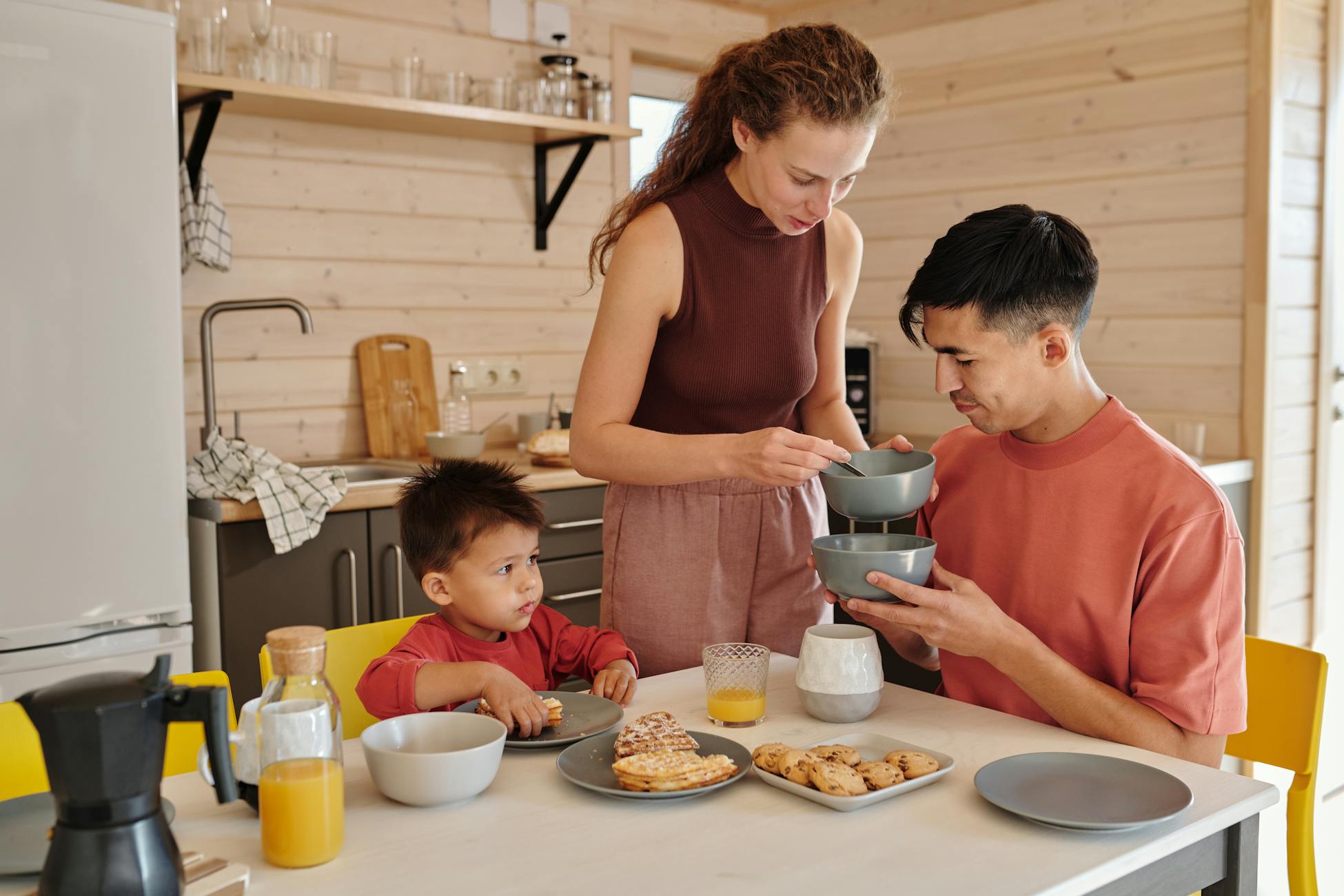
There’s something psychologists have written about — the difference between a process focus and an outcome focus. Focusing on the daily process rather than an ever-growing list of completed tasks often serves us better, because the daily defeat of an unfinished list grinds people down. I think about that often when I watch a young parent unable to sit still on the rug because there’s a sink full of plates calling them.
The plates don’t care. The plates will be there in an hour. The child on the rug, doing whatever odd small thing children do at that age, won’t be doing it in an hour. Or ever again, really.
The parents who seem well to me have made a quiet peace with mess. Not the kind of mess that’s neglect — I’m not talking about that. I mean the ordinary mess of a house with a small person living in it. Toast crumbs. A toy under the couch. Three loads of washing waiting their turn. They’ve stopped seeing those things as evidence of failure.
They’ve also stopped performing the day for an invisible audience.
That’s the bit that interests me most. There’s a kind of parent who is forever curating — the photo, the lunchbox, the craft activity, the tidy shelves behind them on the video call. It’s exhausting just to watch. And perfectionism in parents has real costs, both for them and for their children, and not many of them are obvious from the outside.
The well ones aren’t performing. They’re just there.
I watched one of my sons one Sunday afternoon. He was lying on the floor while his daughter put little plastic horses on his chest, one at a time, in a serious and silent ceremony. The dishwasher hadn’t been emptied. There was a basket of washing on the couch behind him. And he was, by any measure I now use for these things, having a beautiful day.
If you’d asked me at 40 whether that was a good use of an afternoon, I might have hesitated. I would’ve thought he should empty the dishwasher first, then play. Reward after duty. That’s how I was wired.
These days I think the wiring was the problem.
Parental burnout is real and it’s well-documented. It’s described as a chronic stress syndrome marked by emotional exhaustion and a growing detachment from one’s children, and the parents I’ve seen edge closest to it are not the lazy ones. They’re the conscientious ones. The list-keepers. The ones who measure themselves the hardest. There’s even recent work suggesting parental stress can quietly affect children’s physical health in ways most of us never connected. The cost of the clean kitchen, in other words, is not zero.
I’ve written before about how the happiest people my age let their world get smaller on purpose. They stopped trying to be in fifteen places. They picked the few things that mattered and let the rest go. I think the well stay-at-home parents have figured this out forty years earlier than the rest of us did. Their world has narrowed to a child, a kitchen, a small patch of garden, a few good friendships. And inside that small world they’ve stopped competing with anyone, including the version of themselves that exists in their own head.
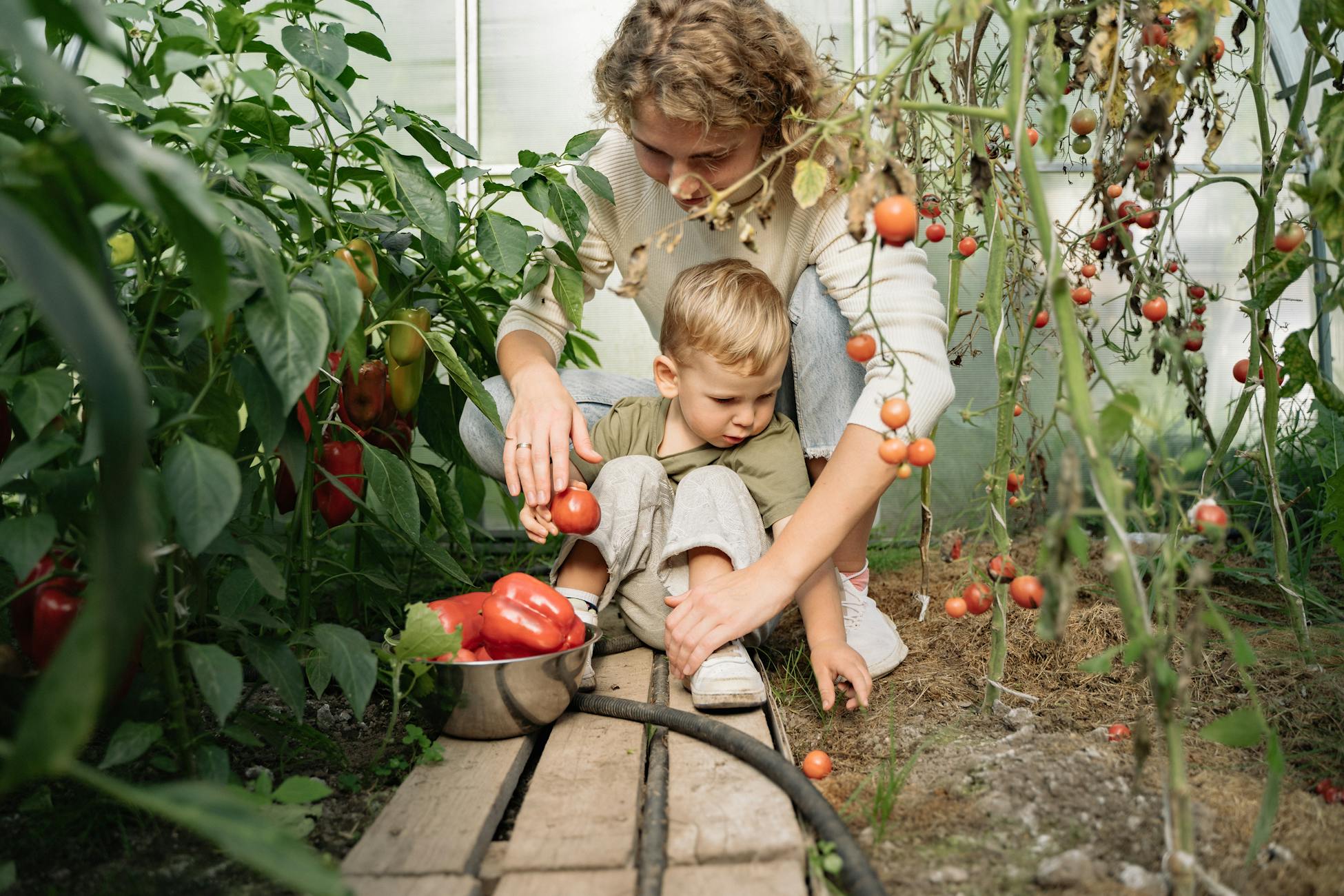
Another thing I’ve noticed: the well ones speak about their day in stories, not numbers.
Ask a stressed parent how the day went and you’ll get a tally. Three loads of washing, dropped one at swimming, picked up the script, did a shop, made dinner, bathed them, read two books, fell asleep on the couch. It’s an inventory. It’s defensible. It would hold up in court.
Parents who are thriving often describe their days differently, recounting small moments of connection like watching nature with their children rather than listing completed tasks. Parents might recall memorable conversations about their children’s imaginative aspirations, or moments of physical affection and connection before the day’s activities began.
That’s a different way of accounting for a life. It’s the difference between a ledger and a memory.
I think this matters because of something I’ve come to believe about goals in general. There’s good thinking around the idea that goals only nourish us when they actually line up with our values. A clean bench is not a value. Being present with your child is. The trouble is, the clean bench gives you a hit of completion every single day, and presence doesn’t announce itself. Presence is invisible. You only know it was there years later, when your grown child mentions some small ordinary moment they remember.
I came across a video recently by Jeanette Brown that examines why retirees often feel drained despite having more free time—it turns out the culprit isn’t age but the same trap of filling days with endless activity rather than meaningful presence, which mirrors exactly what exhausts stay-at-home parents who measure success by their to-do lists.

None of mine remember the state of the house.
I’ll tell you what they remember. They remember their mother singing while she cooked. They remember me reading the same book to them seventy times. They remember a holiday where it rained for a week and we played cards. They remember nothing — not a single thing — about whether the laundry was folded.
When asked what made them feel loved as children, some adults recall their parents’ practice of stopping activities to give full attention during conversations.
That was the answer. Sitting down. That was the metric, if there had to be one.
Mindfulness has become a buzzword and I’m wary of buzzwords, but the underlying idea is sound and very old. The simple practice of being fully present in the moment you’re actually in is, as far as I can tell, the whole game. Not just for parents. For everyone. But for stay-at-home parents especially, because their day is made almost entirely of moments that look unimportant from the outside and turn out to be the only ones that mattered.
If I could go back and say something to myself at 38, knee-deep in business stress and trying to be a good father in the gaps, I’d say this. The day is not a list. The house is not a report card. Your children are not measuring you the way you’re measuring yourself. They’re measuring whether you sat down.
The stay-at-home parents I see doing it well have figured this out, somehow, without needing to get to 77 first. Their houses are usually a bit untidy. Their hair is often unbrushed. Their day, by any traditional accounting, is a series of unfinished things.
And their kids, when you watch them, are the easiest kids in the room.
That’s not nothing. That might be everything.