

People who prefer rainy days over sunny ones usually possess these 8 introspective traits

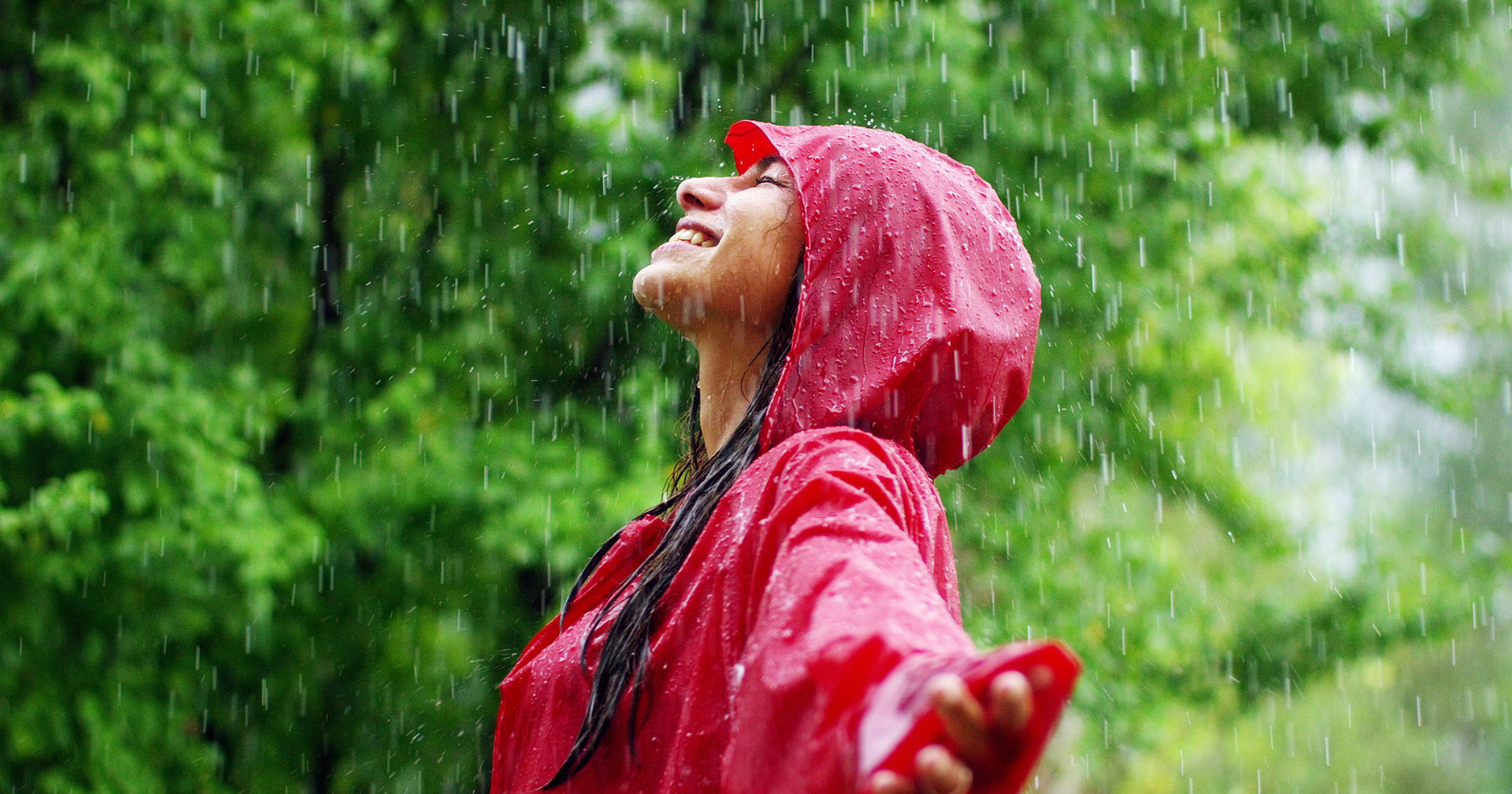
Some people crave sunshine the way others crave coffee. They need the warmth, the brightness, the blue sky overhead.
But then there are the rest of us, the ones who secretly (or not so secretly) love a dark, gloomy, rainy day.
I’ve always found it fascinating how polarizing weather can be.
A rainy day might make one person miserable, while another feels like they’ve been handed a permission slip to breathe, slow down, and finally think.
Psychologists have actually looked into this, and it turns out that people who genuinely prefer rainy days often share a handful of deeper, introspective traits.
And honestly, they’re traits worth embracing, especially in a world that constantly pressures us to be on, productive, and relentlessly upbeat.
Let’s dive into the eight introspective qualities commonly found in people who love the rain.
1) They’re deeply reflective thinkers
Ever notice how rain has a natural pause effect?
When I was studying psychology, one of the things that stuck with me was how environmental cues can shape our mental state.
Rain slows things down, literally and mentally. Roads get quieter. People move slower. The world becomes softer around the edges.
For reflective thinkers, this environment is pure gold.
Rain creates the perfect sensory backdrop for introspection. It gives the mind permission to wander inward and explore deeper questions.
Rain lovers don’t just tolerate this inward turn, they seek it.
They’re often the kind of people who journal, meditate, or enjoy long stretches of solitude because it helps them understand themselves better.
2) They’re naturally observant
Here’s something I’ve talked about before: when you slow down, your attention sharpens.
On a rainy day, everything looks different. Sounds different. Smells different.
The world forces you to notice small details like raindrops racing down a window, the sound of tires on wet pavement, or the darker shade of green on freshly soaked leaves.
People who love rain tend to have an innate ability to pick up on subtle cues in their environment and in others.
Psychologists often link this to high sensory awareness and a strong connection to the present moment.
Mindfulness practices even encourage using rain as a focal point because it is such a rich sensory experience.
Rain lovers don’t just move through the world. They notice it.
3) They feel comfortable with their own emotions (even the heavy ones)
This might be the most interesting trait of all.
Rainy days often evoke a mood that is calm but slightly melancholic, and not everyone is okay with that feeling.
Many people instinctively avoid anything that hints at sadness or emotional heaviness. But rain lovers do not panic when their emotions deepen.
They’re comfortable experiencing the full emotional spectrum, not just the positive stuff.
That ability is a strength. Emotions are not problems to fix. They are messengers.
The people who find beauty in rain usually understand this intuitively. They don’t fight sadness or try to bury it. They let emotions flow naturally, the way rain does.
It is no surprise that many creatives, writers, musicians, and introspective thinkers gravitate toward rainy days. It is easier to feel, and feeling deeply is their superpower.
4) They value authenticity over forced positivity

Sunny weather carries this strange cultural expectation that you should be happy. People often assume that bright skies equal a bright mood.
But rain lovers usually do not buy into that type of forced positivity. Their emotional world does not depend on external conditions.
They prefer authenticity, whatever they are truly feeling in the moment.
If they wake up feeling quiet, thoughtful, or even a bit heavy, they do not try to plaster over it with sunshine.
These are the friends who would rather sit down for an honest conversation over coffee than pretend everything is fine because the weather is nice.
Psychology calls this emotional congruence, the ability to align your inner world with your outer behavior.
Rainy days naturally support that mindset.
5) They’re drawn to creativity and imagination
If you grew up loving rainy days, chances are you were the kind of kid who could entertain yourself for hours with books, drawing, music, or daydreaming.
The sound of rain naturally stimulates a creative state. The steady rhythm acts like white noise that frees the mind and makes it easier to enter flow.
Writers like me, artists, musicians, and even entrepreneurs often describe rainy days as their peak creative environment.
I cannot count the number of times I have read a Buddhist text or stumbled on an insight during a rainy afternoon that later made its way into my writing.
Rain lovers understand the quiet magic of imagination, and they protect it.
6) They appreciate solitude rather than fear it
A lot of people confuse solitude with loneliness, but they are completely different experiences.
Rain loving people tend to thrive in solitude. They don’t rely on constant external stimulation or nonstop socializing to feel satisfied.
They’re comfortable simply being with their own thoughts.
And solitude is not about isolation. It is about self connection.
Psychologists often connect this preference to a strong internal locus of control. Instead of needing the outer world to entertain or validate them, rain lovers feel grounded from within.
There is a quiet confidence in that.
It is also one of the reasons rainy days feel less like an interruption and more like an invitation.
7) They have a calming, grounding presence
People who love rainy days often carry that same calmness within themselves.
They aren’t usually the loudest ones in the room. They don’t need to dominate conversations. They have a grounding presence that other people sense immediately.
If you are drawn to the peacefulness of rain, you probably have some of that peacefulness in your personality. You’re attracted to things that soothe rather than overstimulate.
In Buddhism, which I have explored for years, there is a concept of quiet strength. It refers to the type of strength that does not need recognition or praise.
Rain lovers often embody this without realizing it. They know how to slow down, breathe, and center themselves.
Other people feel at ease around them because of it.
8) They think deeply about meaning and purpose
This is a big one.
Rainy days naturally pull your attention away from the frantic pace of everyday life. The distractions fade. The noise quiets. Suddenly there is room for bigger thoughts to surface.
It is why many people say they think more clearly or more deeply during rainy weather.
Rain lovers often have a strong introspective streak.
They spend more time than most questioning, imagining, exploring, and trying to understand the bigger picture.
They ask themselves things like:
- What am I really trying to build or grow?
- Does my life align with my values?
- What would a more meaningful path look like?
This does not mean they are overly serious or brooding. It simply means they are not afraid to look inward and explore the questions that matter.
In a world obsessed with doing, they are comfortable being.
Final words
Loving rainy days is not just a quirky personality trait. It often reflects emotional depth, self awareness, and a grounded way of experiencing life.
If you happen to be someone who feels more yourself when the clouds roll in, maybe there is nothing strange about that at all.
Maybe it is a reflection of qualities that make you thoughtful, creative, calm, and deeply connected to your inner world.
Sunshine has its place, of course. But rainy days invite us to slow down and listen, and for many of us, that is exactly what we need.
Sometimes the most meaningful growth happens on the days when the world feels still, quiet, and soaked in rain.
