

The hardest part of retiring isn’t finding something to do. It’s sitting in a room where nobody knows your professional history and discovering whether you still feel like someone worth talking to.

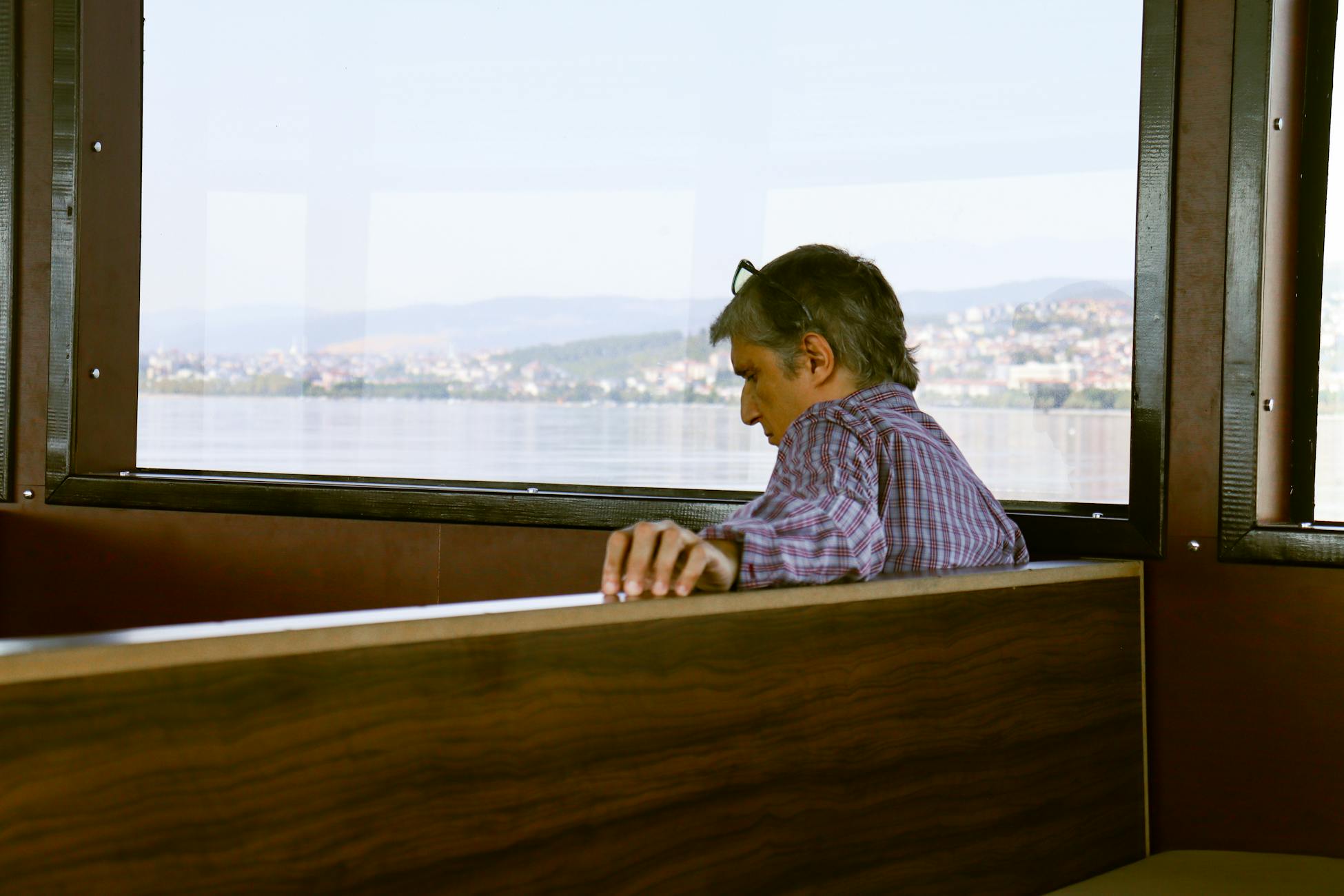
A few months after I retired from my role as Associate Director of Teaching and Learning, I sat in a craft class surrounded by strangers. Nobody asked what I used to do. Nobody asked because nobody cared. The instructor called me by my first name, handed me some material, and moved on. I remember staring at my hands and thinking: without the title, without the staff who relied on me, without the emails and the crises and the meetings, who exactly is sitting here? The clay didn’t care. And for the first time in decades, neither did anyone else in the room.
The conventional wisdom about retirement preparation focuses almost entirely on two things: finances and hobbies. Save enough, find something to do, and you’ll be fine. That framing misses something fundamental. The hardest part of retiring has nothing to do with filling your calendar. The hardest part is walking into a space where your professional history is invisible and discovering whether you still feel like a person worth knowing. Whether your sense of being interesting, valuable, or even likeable can survive the absence of a role that once supplied all of those feelings automatically.
Most retirement guides won’t tell you this. They’ll tell you to volunteer, learn an instrument, travel. All fine activities. But none of them address the specific terror of social encounters where you can’t lead with your credentials. Where the conversational scaffolding you relied on for thirty or forty years has been quietly removed, and you’re standing in the middle of a room with nothing but yourself.
I’ve written before about how people who built their identity around professional competence don’t just retire from a job. They retire from a self. What I didn’t fully explore then is what happens in the social dimension of that collapse. Because identity isn’t only an internal experience. We construct it in the mirror of other people’s responses to us. And when those responses change, or vanish, the mirror goes dark.
During my thirty-plus years in education, I was introduced at events by my title. People knew my name before I entered rooms. Colleagues sought my opinion, deferred to my experience, laughed at my observations partly because I was genuinely funny and partly because I was the boss. I don’t say that bitterly. I say it honestly. Professional authority generates a kind of social gravity that makes interactions easier. You don’t have to earn attention in a meeting when your name is on the agenda.
Then you retire. And you walk into a pottery class, or a neighbourhood barbecue, or a hiking group, and nobody has read your CV. Nobody is going to read your CV. You are, for the first time in memory, just a person in a room. That exposure is extraordinary.

Margaret described this experience with painful precision. She’d been a hospital administrator for twenty-seven years. Six months after retirement, she joined a book club at her local library. “I kept waiting for someone to ask what I did,” she told me. “Not because I wanted to brag. Because I genuinely didn’t know how to have a conversation without it. My job was my opener, my interesting fact, my proof that I was someone worth listening to. Without it, I felt invisible.”
Margaret wasn’t invisible. She was just visible in a new way. And she hated it.
Research on major life transitions has explored how professional identity contributes directly to self-worth and social value perception. When that identity is removed, people don’t simply feel less busy. They feel less real. The role wasn’t decoration. It was structural. Remove it and the psychological architecture shifts in ways that are hard to see from the outside but devastating from the inside.
What made this worse for Margaret, and for me, and for many others, is that the discomfort is almost impossible to articulate without sounding vain. “I miss people knowing I was important” is not a sentence most of us can say out loud. It sounds like ego. It sounds like you haven’t done the inner work. But it has nothing to do with ego in the way we typically understand it. It has to do with the simple human need to feel relevant in a social context.
I later came across research from UC Berkeley’s Greater Good Science Center examining how retirement affects health and happiness. What struck me was how consistently the research pointed to the loss of workplace social structure as a driver of existential anxiety and even depression. The job wasn’t just providing tasks. It was providing a social ecosystem in which people felt known, recognised, and positioned. Retirement doesn’t just remove the work. It removes the audience.
And audiences matter more than we want to admit.
Consider what happens at a dinner party when someone asks, “What do you do?” For working people, the answer is automatic and informative. It places you socially. It gives the other person a framework for understanding you: your intelligence, your status, your interests. When you’re retired, the answer “I’m retired” lands with a thud. It communicates almost nothing. The other person nods politely and moves on, or worse, tilts their head sympathetically as though you’ve just told them something sad.
The real test of retirement identity isn’t whether you can fill your days. It’s whether you can sustain a conversation with a stranger at that dinner party without once referencing what you used to be. Whether you can hold someone’s interest with who you are right now.
That is terrifying for most former professionals. Because many of us, myself included, spent decades becoming extremely good at a very narrow thing and allowed that narrow thing to serve as our entire personality in social settings.

Research tracking large populations of over-50s has found that retirees show more signs of depression than those who are still working, and that the psychological impact of retirement depends significantly on factors beyond financial preparation. Income helps. But structure, social recognition, and a sense of purpose help more. When all three disappear simultaneously, as they do for many high-achieving professionals on their last day of work, the result can be a quiet unravelling that looks from the outside like relaxation.
I experienced this myself during the first six months after I left my role. I had things to do. I had plans. I had my husband, my children, trips organised, books I’d been meaning to read for years. What I didn’t have was a single new social context in which people treated me as though I mattered. Not because they were unkind, but because they had no reason to. I was a stranger. And I had no practice being a stranger who still felt like herself.
A piece on this site explored how competence becoming irrelevant is its own form of grief. I’d extend that further. Social competence, the ability to navigate rooms confidently, to know your place in a conversation, to trust that you have something worth contributing, can erode just as quickly when the context that supported it vanishes. The skills don’t disappear. But the confidence that you have the right to use them does.
A retired engineer named David, told me he’d started lying at social events. “I tell people I’m a consultant,” he said. “Because when I say I’m retired, the conversation ends. When I say I’m a consultant, they ask what kind. And then I have something to talk about.” He wasn’t embarrassed by retirement. He was embarrassed by the social vacuum it created.
David’s instinct, to reach back for the professional identity that once made social interaction effortless, is extraordinarily common. I see versions of it in nearly every person I work with. The business card may be gone, but the compulsion to present credentials persists because it was never really about status. It was about belonging.
Research into identity loss after retirement from high-commitment professions confirms that for people whose work became their defining framework, the transition involves far more than adjusting routines. It involves a fundamental reconstruction of how they relate to other people. Because the relationship template was always filtered through role. Colleague. Manager. Expert. Authority. Remove those filters and what remains is a person who has to learn, often for the first time since adolescence, how to simply be in a room.
The generation currently entering retirement faces this without a cultural script. There is no established narrative for how to be socially visible after sixty that doesn’t rely on being adorable, wise, or conveniently invisible. And for those of us who were neither adorable nor particularly wise during our working years, but were competent, driven, and deeply embedded in professional ecosystems, the absence of that ecosystem leaves a social crater.
So what helps? In my experience, both personal and professional, the people who navigate this best do something that sounds simple but requires enormous courage. They stop trying to be interesting and start practising being interested.
That sounds like a greeting card. It isn’t. The shift from projecting your worth to genuinely attending to other people is one of the hardest psychological pivots I’ve witnessed in coaching. Because attending to others without the armour of a professional role means being present as yourself. Not the Associate Director. Not the person who managed 400 staff through COVID. Just Jeanette. Just Margaret. Just David.
And “just” anything feels insufficient when you’ve spent your life being more than just.
Counselling during retirement is increasingly recognised as a legitimate and often necessary support, not because retirees are broken but because the transition asks something of people that no previous life stage prepared them for. It asks them to be valued for their presence rather than their performance. For many high achievers, that has never happened. Not once. Not since childhood, when being good at school became the first identity they ever wore.
I’ve written before about sitting with the emptiness long enough to discover it wasn’t empty at all. The social version of that is sitting in a room where nobody knows you long enough to discover that you’re still someone. That the funny remark you make about the pottery instructor’s shoes lands because you’re genuinely witty, not because you’re the boss. That the person next to you at the barbecue leans in because you’re curious about their garden, not because your title preceded you.
These are small moments. They are also the moments that rebuild an identity from the ground up.
My craft class didn’t care about my career. Neither did the woman beside me, who turned out to be a retired nurse with extraordinary stories about working in remote Australia in the 1980s. She told me those stories because I asked. She didn’t ask what I used to do. She asked whether I’d ever done this particular craft before. I said no. She laughed and said, “Good. Then you’ve got nothing to unlearn.”
She had no idea how much I needed to hear that.