

A copyeditor reads the Book of Genesis

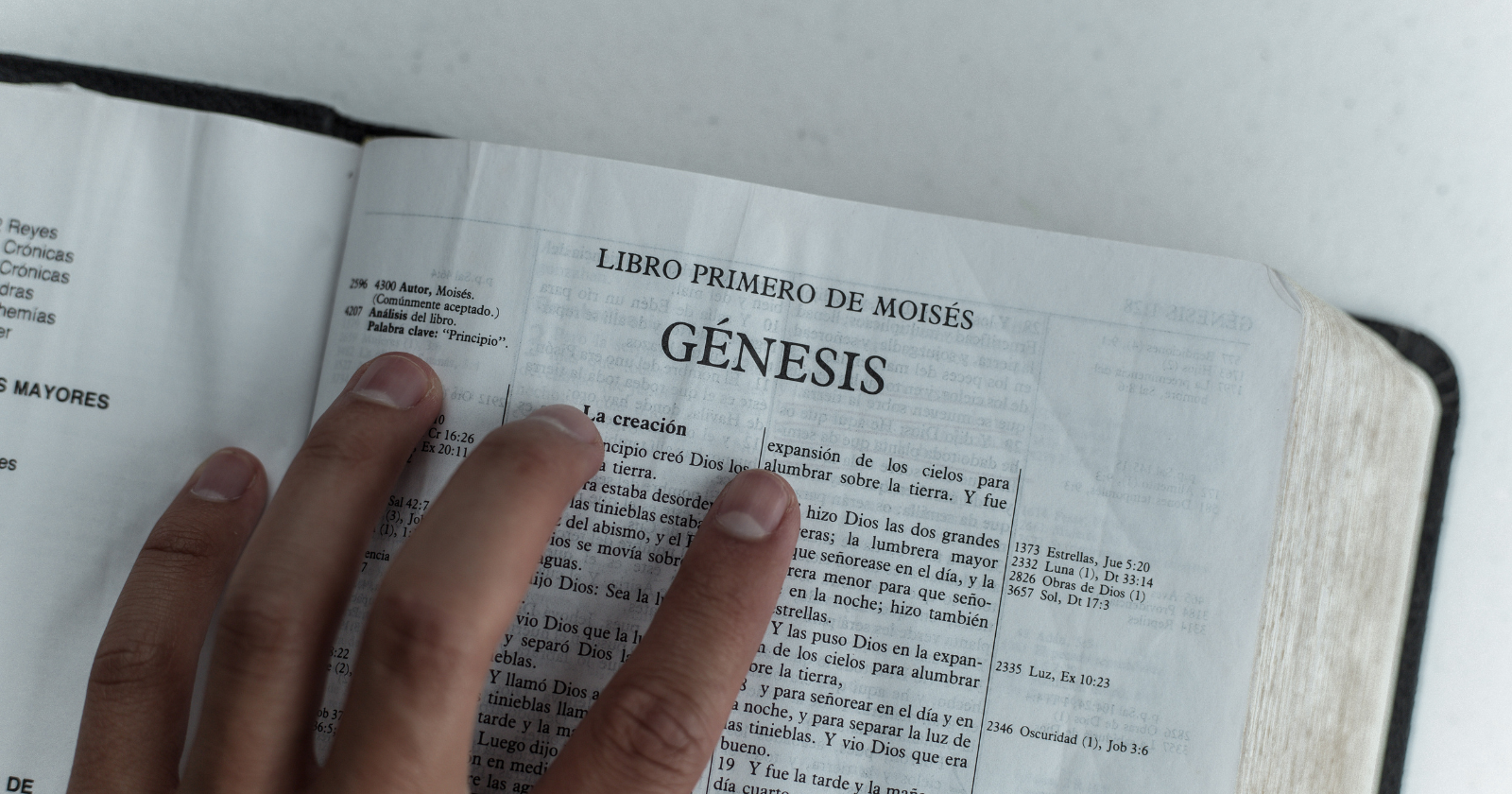
Editor’s note: First published in 2013, this article was revised in July 2026 and consolidated with three companion pieces from the same era into the single version you’re reading now.
A manuscript arrived on our desk some years ago: no title page, no covering letter, just a very confident opening chapter and an author with, by any measure, an extensive back catalogue. We put a red pen through it the way we’d put a red pen through any submission. What follows is that assessment, tidied up and reissued as one piece rather than scattered across the several posts we originally ran it in.
To be clear about the brief here: this is a read of the writing, not the theology. Whether the manuscript is inspired is somebody else’s department. Ours is whether the sentences hold up — and on that front, there was plenty to flag.
What’s working
Credit where it’s due first. The opening line is doing exactly what an opening line should: it sets the scale of the story in a single clause and gives the reader nowhere to go but forward. The naming beats — light called one thing, dark called another, the waters split and relabelled — are clean, and they give the chapter a rhythm that a lot of first-time authors never find. Whoever structured this as a seven-part sequence understood pacing at the macro level, even if (see below) the micro level needed another pass.
Repetition
The recurring problem in the opening chapter is the same beat landing over and over: something is proposed, then confirmed as complete, then confirmed again as good. Once establishes the pattern. Five or six times in a row reads like the author didn’t trust the reader to remember the last paragraph — or didn’t trust themselves. A structural edit would cut at least half of these confirmations and let the ones that remain actually carry weight, rather than blurring into background noise.
Point of view
The manuscript holds a stable third person for most of the chapter, then makes a single, unexplained shift to first-person plural — a “let us” — with no other character introduced before or after, and no return to the plural afterward. Readers will reasonably ask who “us” refers to. If there’s a co-author involved in this project, house style says: credit them on the cover, not two-thirds of the way through chapter one and never again.
Continuity and world-building
Several details don’t track across the chapter. Light and dark are separated early on and given names — then the very next lines switch to a different pair of terms without explaining how the two map onto each other. Later, animals are sorted into three categories with no stated rule for which creature belongs where, and flying creatures are twice described as moving through open space above the earth despite an earlier scene establishing a solid dome dividing sky from water — which raises the obvious question of how they get through it. None of this breaks the story on its own. Together, it’s exactly the kind of thing a continuity pass exists to catch before a reader starts making a list.
We understand a second draft was attempted at one point, and it’s worth a quick note here since it’s part of the same editorial history.
That revision dropped the day-by-day scaffolding almost entirely and told the story as one continuous scene, which solved the repetition problem above by cutting it out rather than fixing it. But it introduced a new continuity issue of its own, bringing in a supporting cast partway through with no prior introduction, which is the same note as the “us” problem above, just relocated to a different draft.
Fixing one structural issue by creating another is common enough in revision that we don’t hold it against the author; it’s exactly why a second editorial pass matters as much as the first.
Pacing and structure
The chapter is organised as a seven-day countdown, which is a strong structural device — a ticking clock with a clear endpoint. The trouble is what happens at that endpoint: day seven, which the whole structure has been building toward, is handed off almost as an afterthought, with far less weight than day six gets. A stronger edit would either build day seven up as the payoff the structure has been promising the whole way through, or restructure the chapter so the ending doesn’t read as a shrug after six days of momentum.
Sentence-level clarity
Some individual lines do real work efficiently: short, declarative, nothing to trim. “Let there be light” is about as tight as a sentence can get. Others try to do too much in one breath, stacking several actions and qualifications into a single sentence until the reader loses track of the subject. Plural agreement is inconsistent in a few places too — collective nouns are sometimes treated as singular and sometimes as plural within the same short passage. A consistent house style applied just to this one issue would tidy up a noticeable share of the manuscript without touching a single plot point.
Our assessment
There’s a good, ambitious book in here: an origin story with real scope, a clear seven-part structure, and individual moments — the light/dark split, the naming of the waters, that opening line — that land cleanly on their own. What it needs is a firmer editorial hand across the whole: fewer repeated confirmations, one consistent narrative voice, a continuity pass on the animal categories and the mechanics of the sky, and a rebalanced final act that gives day seven its due.
We’ve sent our notes back to the author’s people. As of this update, we’re still waiting on a revised draft. The acknowledgements page maintains there was only ever one author involved in the project — which, given that unexplained “us” in chapter one, is a note we’ve left in the margin for next time.