

Perfectionism is an editing problem: Why “one more pass” is where manuscripts go to die

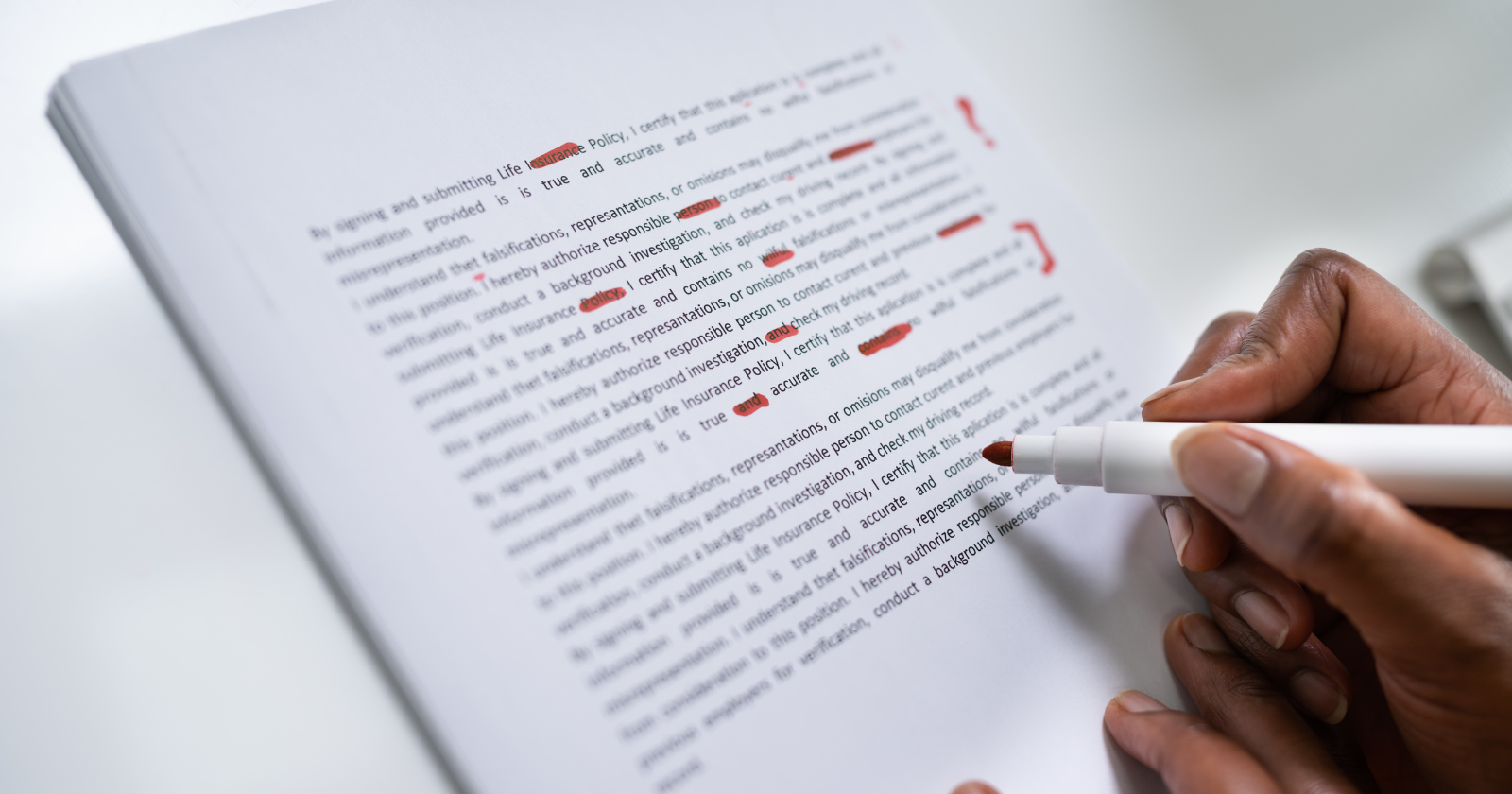
Every editor knows the manuscript. It arrives with an apology attached: the author has been working on it for four years, has rewritten the opening chapter eleven times, and wants “one more pass” before anyone else sees it. The prose in that opening chapter is polished to a shine. Chapter nine is a skeleton. There is no chapter twelve.
After editing manuscripts for more than a decade, I’ve come to think of perfectionism not as a personality quirk that writers happen to have, but as a specific, recurring structural problem — one that shows up in the work itself, in predictable places, and does predictable damage. “One more pass” is where manuscripts go to die.
The polish gradient
You can usually spot a perfectionist’s manuscript without meeting the author. The first twenty pages are immaculate. Somewhere around the middle, the sentences loosen. The final third reads like a first draft, because it is one — the author has spent their revision budget on the opening, returning to it again and again the way a tongue returns to a chipped tooth.
Editors call this the polish gradient, and it inverts what revision is for. The parts of a book that most need attention are the parts the author avoids, and the parts the author revisits are the ones that least need it. The eleventh pass over chapter one is not quality control. It is a way of not writing chapter twelve.
Perfectionism is rising, and it isn’t helping
This isn’t just an editor’s anecdote. In a meta-analysis of more than 40,000 university students published in Psychological Bulletin, Thomas Curran and Andrew Hill found that perfectionism has increased significantly since 1989 — particularly what they call “socially prescribed” perfectionism, the belief that others demand flawlessness from us. Writers, who work in the most visible and judgeable of mediums, get a concentrated dose of this.
The research is equally clear that perfectionism does not produce better work. It correlates with procrastination, with abandoning projects, and with what psychologists Paul Hewitt and Gordon Flett have documented across decades of study: a chronic gap between the standard and the self, in which nothing produced ever counts as evidence of competence. In manuscripts, that gap has a physical form — the unfinished final third.
What “one more pass” actually does
There is a version of revision that improves a manuscript, and editors can see it working: the author cuts a digression, sharpens an argument, fixes the pacing of a scene. And there is a version that only reorders it — commas moved, synonyms swapped, a sentence recast on Tuesday and restored on Thursday. The first kind converges: each pass produces fewer changes than the last. The second kind circles.
The circling kind has a tell. Ask a writer what the next pass is for, and the convergent reviser can answer: “the dialogue in the middle chapters is stiff.” The circler answers: “it’s just not ready.” Readiness that cannot be specified is not a property of the manuscript. It is a property of the writer’s tolerance for being read.
The editor’s cure: a definition of done
Anne Lamott’s advice about first drafts has survived thirty years of repetition because it is structurally sound: the first version of anything is allowed to be bad, because its job is to exist. What editors add to that is a discipline for the other end of the process — a definition of done. Not “when it feels ready,” but something checkable: every chapter has been revised the same number of times; every source is verified; a reader who is not you has read the whole thing once.
When I work with authors stuck in the one-more-pass loop, we agree on the list in advance, and the list is finite. The manuscript is done when the list is done. This feels mechanical, and that is precisely its value. It moves the decision to ship out of the domain of feeling — where perfectionism always wins — and into the domain of checkable fact, where it can’t.
The cost is not hypothetical
For thesis writers, the one-more-pass loop has a deadline attached, and the loop always loses. A PhD candidate who spends August perfecting a literature review that was already serviceable in June has not bought quality; they have sold a month of analysis chapters they now have to write in a panic. We see the result in October: an immaculate chapter two and a results section written at 2am. Examiners, it turns out, read the whole thesis.
Working authors pay differently. A book that circles in revision for an extra two years enters a different market than the one it was written for. Agents move on. The topical hook expires. The author’s own voice has shifted, which triggers — of course — another full revision, because now the early chapters “don’t sound like me anymore.” I have watched this cycle consume five years of a genuinely good book’s life.
And there is a quieter cost that never shows up on a schedule: writers who conclude, after years of circling, that they “can’t finish things.” They usually can. What they can’t do is finish things while holding a standard that redefines itself upward every time they approach it — a moving goalpost that research on perfectionism, from clinical studies of its links to distress and avoidance to Curran and Hill’s generational data, describes with depressing consistency.
What a professional pass actually fixes
It also helps to know what a genuinely useful revision pass looks like, because it is nothing like the eleventh polish of chapter one. When our editors take a full manuscript pass, the highest-value fixes are structural: an argument that arrives before its evidence, a character who changes motivation between chapters, a middle section that repeats the opening because the author forgot they’d already said it. These are whole-manuscript problems. They are invisible to a writer who revises the same twenty pages in a loop, and obvious to anyone who reads the draft end to end — which is why one of the most useful things a stuck perfectionist can do is stop revising and read their own book straight through, once, like a reader.
That reading almost always relocates the anxiety. The opening chapter, it turns out, was fine. The problem was somewhere the author hadn’t looked yet.
Perfect is a direction, not a destination
None of this is an argument for lower standards. Professional editing exists because standards matter, and because a second, disinterested set of eyes catches what the author cannot. It is an argument about sequencing: standards applied evenly across a finished draft beat standards applied obsessively to an unfinished one.
The writers who publish are rarely the ones who never wince at their own sentences. They are the ones who learned to wince, note it, and keep moving — because chapter twelve doesn’t exist yet, and no amount of polishing chapter one will write it.