

Why some words survive translation and others just get replaced

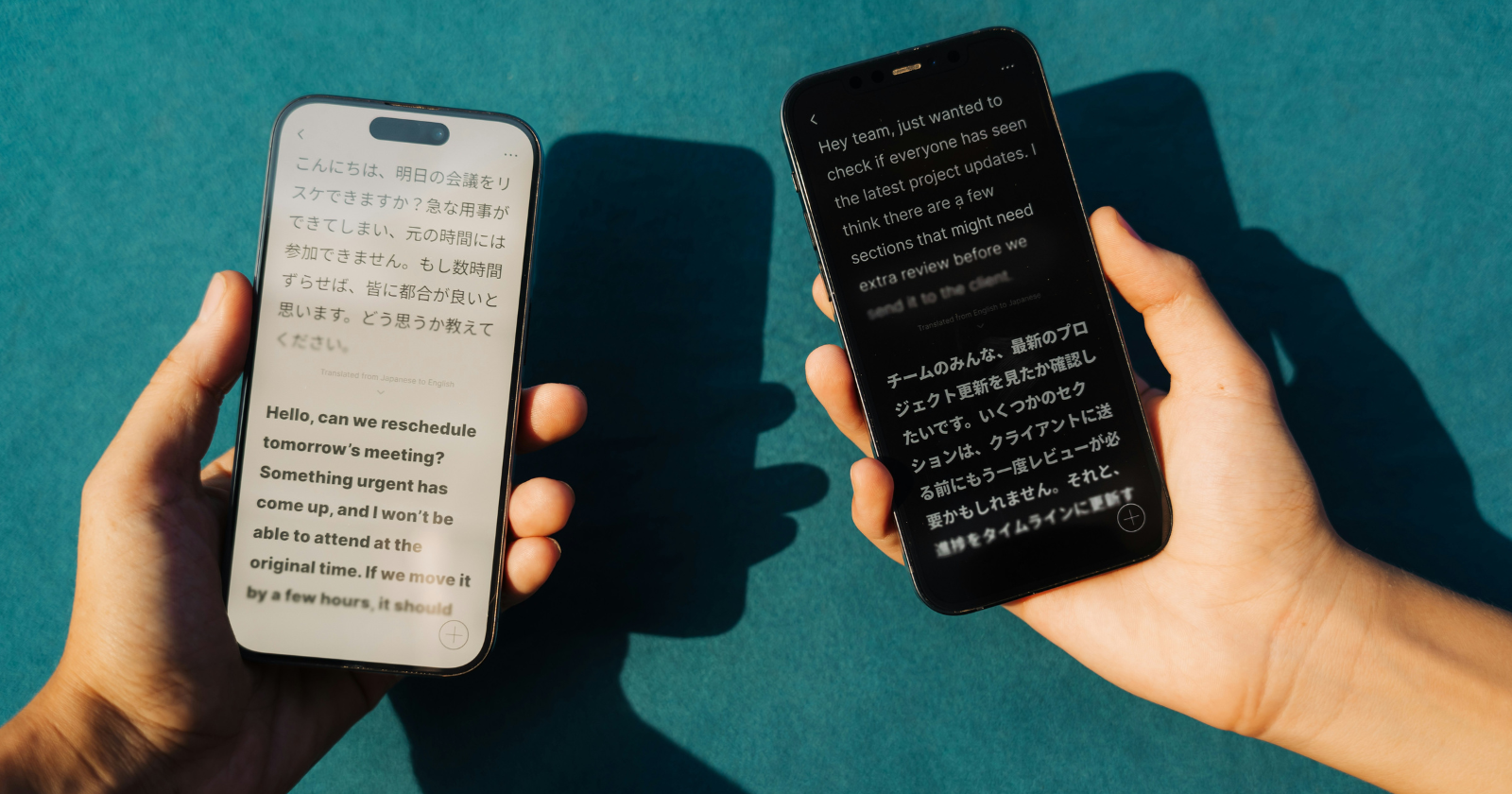
English runs on borrowed words most speakers never think twice about. Kindergarten came from German. Karaoke came from Japanese. Déjà vu and zeitgeist and schadenfreude arrived, kept their original spelling, and simply moved in.
Meanwhile, for every word that survives the crossing intact, thousands of others get quietly swapped out the moment they meet an English speaker, replaced by a translation and forgotten in their original form within a generation.
The usual explanation is that the survivors made it across because English simply had no word for what they meant. It is a tidy story. It is also not really what is going on.
The common assumption
Ask most people why a word like schadenfreude stuck around instead of getting translated and they will say some version of the same thing: English does not have a word for the specific pleasure of watching someone else fail, so it had to reach outside itself and grab one.
The assumption baked into that answer is binary. Either a language has an equivalent word, in which case translation does the job and the foreign term fades, or it does not, in which case the foreign term survives by necessity.
That framing treats untranslatability as an on-or-off switch. A concept either fits neatly into an existing English word, or it does not fit at all and has to be imported wholesale.
Why that is not quite right
Professional translator Christelle Maginot, writing for the American Translators Association, points to a different picture, one where untranslatability is closer to a spectrum than a switch. She quotes philosopher Alasdair MacIntyre’s observation that “some degree of partial untranslatability marks the relationship of every language to every other.” Under that view, almost nothing translates perfectly.
Most words that cross between languages arrive a little bent out of shape, carrying slightly the wrong weight or missing a shade of meaning the original had. The real question was never whether a word is translatable. It is how much gets lost in the translating, and whether that loss is big enough for a writer to bother reaching for the original term instead.
Schadenfreude does not survive because “the specific pleasure of watching someone else fail” is impossible to say in English. That phrase says it. Schadenfreude survives because the phrase is clunky and the single foreign word is not, and enough writers decided the trade was worth making.
What actually decides if a word survives
Maginot’s own term for the underlying problem is more useful than “untranslatable.” She describes it as “a lacuna, or lexical gap,” a specific hole in a language’s vocabulary rather than a total wall. A lexical gap does not mean nothing can be said. It means nothing can be said in one economical, precise word, the way the source language manages it. English can describe déjà vu as the eerie sense of having already lived through a moment that is actually new. It just cannot do it in two syllables.
That gap is where a loanword earns its keep. A borrowed term survives translation when it is doing real work a paraphrase cannot match cheaply: naming something exactly, in fewer words, with a precision the closest English phrase only approximates. Writers adopt it not because they are forced to, but because the shortcut keeps proving useful enough, sentence after sentence, that eventually it stops reading as foreign at all.
Why other words do not make the cut
Most foreign words that enter an English speaker’s path never reach that point, and the reason is almost the mirror image of the survivors’ story. English usually already has a serviceable equivalent sitting close enough that the gap barely registers as a gap.
A French phrase for a kind of stubbornness, a German compound for a specific mood, a Japanese term for a particular type of quiet: if an English word or short phrase covers the same ground closely enough, there is no real lexical gap driving anyone to hold onto the original.
The borrowed version gets used once, in a translation, and then the English equivalent takes over because it works fine and nobody had a reason to fight for the original.
This is also why the words that do survive tend to cluster around specific, hard-to-paraphrase emotional or social experiences rather than physical objects. Concrete nouns almost always have a workable translation sitting close by. A table is a table in any language, near enough that nobody feels a gap worth crossing for. The feelings and social situations that resist being folded into an existing English word are the ones most likely to arrive as loanwords and stay that way, because that is exactly where the lexical gap tends to open widest, and where a single borrowed word can outperform an entire explanatory sentence.
Fashion plays a role too, though a smaller one than people assume. A borrowed word needs enough writers and speakers repeating it, in the same form, for it to stop looking foreign and start looking adopted. Plenty of perfectly serviceable loanwords with real, defensible lexical gaps behind them never catch on simply because too few people ever needed to reach for them twice. Survival takes both a genuine gap and enough traffic through that gap to wear the word into the language permanently.
What this means for how a language actually grows
Once the mechanism is visible, the pattern of English vocabulary starts to look less random. It is not that some languages are mysteriously richer in untranslatable concepts and others are not. It is that every language absorbs the borrowed words it genuinely needed a shortcut for, and lets the rest dissolve quietly into translation. The words still sitting in a dictionary a hundred years after they crossed over are not survivors by accident. They are the ones that kept earning their spot, sentence after sentence, because nothing native did the job quite as well.
It also means the list is not finished. Every language contact event, a new wave of media, a trend that starts somewhere else and spreads, throws fresh candidates at English, and the same quiet sorting keeps happening. Most will be translated and forgotten within a few years. A handful will find a real lexical gap, get used enough times to stop feeling foreign, and end up sitting in a dictionary the way schadenfreude and zeitgeist do now, doing a job an English phrase never quite managed to do as well.