

Why we misread: what skim-reading does to comprehension

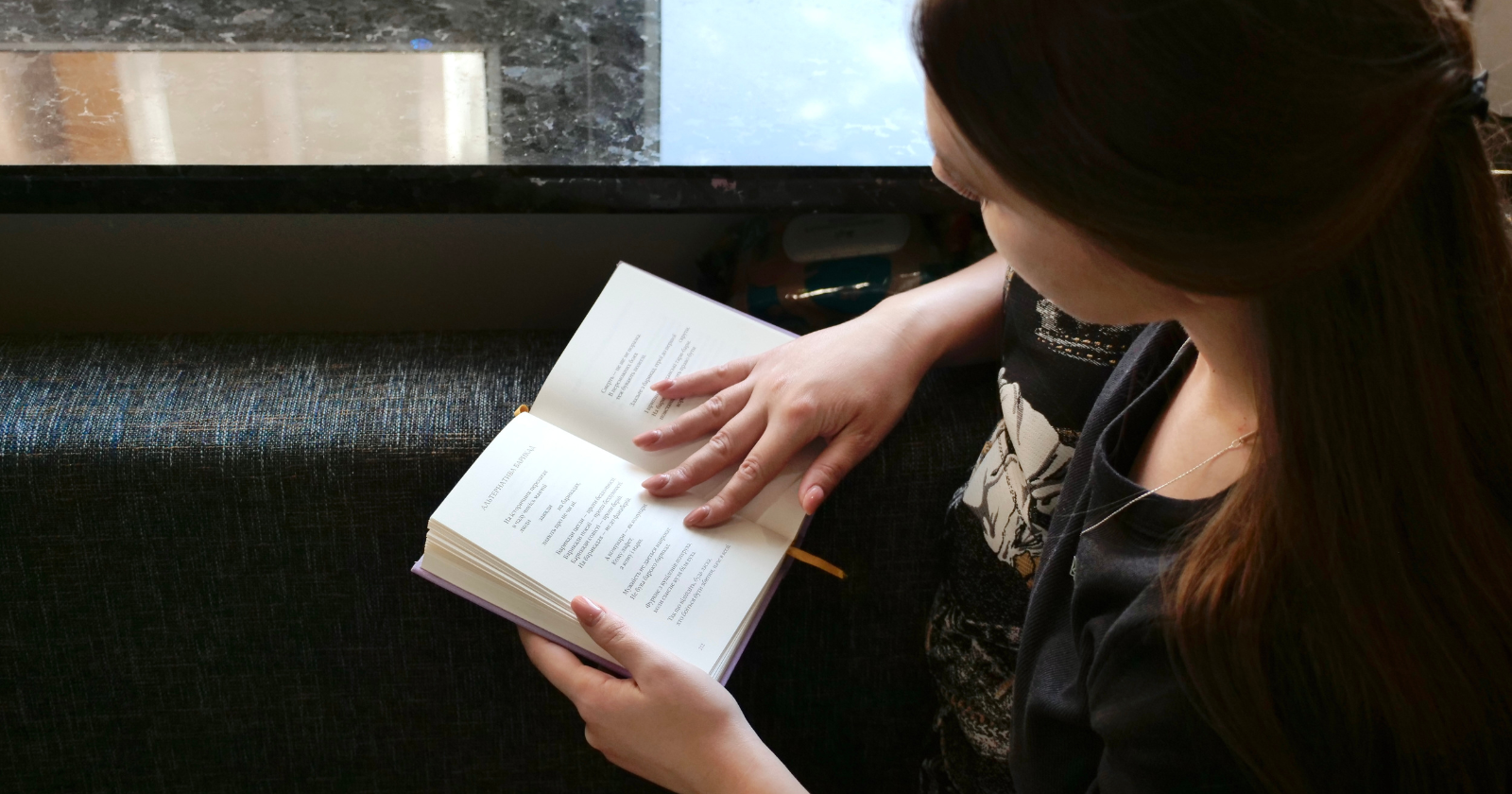
A reader opens a long article on their phone, gets three paragraphs in, and starts thumbing down the screen in short, fast strokes — eyes catching a bolded phrase here, a number there, landing properly only when something looks like a conclusion. Ask them five minutes later what the piece actually argued, and the answer is usually a rough gist stitched together from fragments, confident in tone and thin in substance. Skimming isn’t laziness — it’s a reading strategy that works well enough that most people never notice how little they retained.
Editors notice, because manuscripts arrive from writers who skimmed their own sources, and because readers’ comments on published work often reveal they absorbed the headline argument while missing the qualification two paragraphs later that changes its meaning. Skimming is not a failure of attention so much as a different reading strategy — one with real costs that are easy to overlook because it feels, subjectively, like reading.
Skimming is a strategy, not a shortcut
The clearest picture of what skimming actually does comes from eye-tracking research. In a widely cited study, Geoffrey Duggan and Stephen Payne tracked readers’ eye movements during skim-reading and found they were not simply reading faster — they were “satisficing”: reading through a passage until the rate of new information dropped below a threshold, then jumping ahead to the next section that looked promising. The study, published through the ACM digital library, found that reading times were shorter and comprehension was reliably poorer under skimming instructions than under careful-reading instructions, even though skimming readers could often identify a text’s main topic.
That last detail matters. Skimming does not feel broken from the inside. Readers who skim can usually say what a piece was “about.” What they lose is the texture underneath — the specific evidence, the qualifying clause, the order in which an argument built its case. A reader who can name the topic but not reconstruct the argument has done something closer to sorting the text than reading it.
Screens make the problem worse, but not for the reason people assume
It is tempting to blame phones and screens generally, but the research is more specific than that. A 2018 meta-analysis by Pablo Delgado, Cristina Vargas, Rakefet Ackerman, and Ladislao Salmerón, covering 54 studies and more than 170,000 participants, found a consistent comprehension advantage for paper over screens — but the effect was concentrated in expository, information-dense text rather than narrative, and it grew when readers were under time pressure or had to scroll rather than page through the material. Reading a novel on a tablet showed little disadvantage; reading a dense report under time pressure did.
Scrolling turned out to be one of the more specific culprits. Continuously moving text removes the fixed spatial landmarks — this paragraph was two-thirds down the left page — that print readers rely on, often without realising it, to build a mental map of an argument’s structure. Take away the map and readers fall back on a flatter, more linear pass through the material, which is closer to skimming even when they intend to read carefully.
The editor’s version of the same problem
In manuscripts, this shows up as a specific and recognisable failure mode: a writer cites a source they clearly skimmed rather than read, reproducing its headline claim while missing a caveat that sits in the same paragraph. It isn’t dishonesty so much as what skim-reading produces when applied to research instead of leisure reading — a confident summary standing in for verified understanding. Editors catch this constantly, because checking a citation properly means doing the slow reading the writer didn’t, and the gap between the two is often obvious once someone does.
The same failure mode explains why writers struggle to proofread their own work. A familiar draft invites the reading style tuned for familiar material — fast, pattern-matching, filling gaps with what the brain expects rather than what is on the page. The text has become, to its author, something to skim rather than something to read.
What deep reading is actually doing differently
Cognitive neuroscientist Maryanne Wolf, director of the Center for Reading and Language Research at Tufts University, has spent much of her career describing what she calls the brain’s “deep reading circuit” — the network engaged when a reader slows down enough to draw inferences, hold competing ideas in mind, and connect new material to what they already know. In Reader, Come Home (2018), Wolf argues that habitual skimming does not just fail to build this circuit; over time it can crowd it out, training the brain toward a faster but shallower default mode even when a reader sits down intending to read closely.
This is a claim about habit formation, not a single reading session. One skimmed article does not rewire anyone’s brain. But a reading diet made up mostly of skimmed material trains a set of expectations — about how much effort a text deserves, how quickly meaning should arrive — that a reader then carries into material that actually needs the slower circuit. The manuscript that took a writer years to compose deserves a reader whose default setting is not tuned for satisficing.
Writing that survives being skimmed
None of this is an argument that skimming is a vice to be eliminated. Readers skim because most text does not reward closer attention, and a skilled skimmer triaging a crowded inbox is doing something sensible. The more useful question for anyone producing text is what happens to their argument when — not if — a reader skims it.
Writing that survives skimming puts its real claims in the sentences a skimming eye actually lands on: the start of paragraphs, the position just after a subheading, the first clause of a sentence rather than the last. It avoids burying the qualification that changes everything in the middle of a long paragraph, because a reader who is satisficing will never reach it. This is not a trick for gaming attention; it is an acknowledgment that a text’s structure is doing communicative work whether or not the writer planned it that way. The alternative — writing as though every reader will give the piece the slow, careful attention its author gave the draft — is a bet that loses most of the time.